The political instability in Bangladesh is further exacerbated by the interim government’s failure to maintain law and order. Instead of fostering a sense of safety and tranquility, the nation has been plagued by a series of violent incidents that highlight the government’s fragile grip on security and communal peace … writes Anwar Hussain
Since the mass protests on August 5, 2024, which led to Prime Minister Sheikh Hasina’s ousting and subsequent self-exile, Bangladesh’s political environment has been framed by the interim government, under Nobel laureate Muhammad Yunus, as a fresh start for democracy. Yunus and his team pledged an ambitious agenda- to restore law and order, implement constitutional and electoral reforms, conduct ‘free and fair elections’, uphold human rights, foster national reconciliation, combat corruption, protect vital industries, facilitate the eventual return of Rohingya refugees, reform institutions such as the police and judiciary, and enhance digital infrastructure. However, over a year later, the situation on the ground starkly illustrates a lack of significant progress on nearly all these commitments, alongside rising social unrest, institutional decline, and political elite increasingly eager to deflect blame externally, particularly towards India – a nation that plays no substantial role in Bangladesh’s internal governance issues.
On December 12, Osman Hadi a youth leader of Inquilab Manch, was shot on head in Dhaka by unknown assailants who later succumbed to injuries on December 18. Rumors were spread against India being responsible for the incident. However, Bangladesh police said they have yet to trace prime suspect of the killing and have no specific information about the same. Veteran BNP leader Nilofer Moni Chowdhury alleged that the suspected shooter was linked to Jamat-e-Islami student wing Chhatra Shibir. Yunus administration has failed to control the chaos spread across Bangladesh and using India as scapegoat to veil its failures. It is more a political violence encouraged by Yunus government baiting India to gain an advantage.
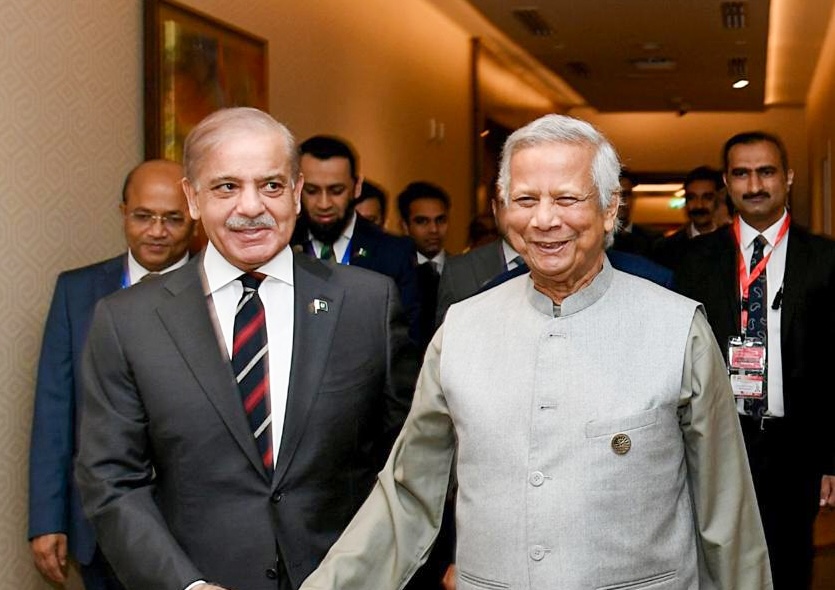
The most crucial promise made by the interim government was to conduct elections that would restore democratic governance. Yunus publicly vowed to hold a ‘decent, acceptable, clean, and enjoyable election’ scheduled for February 2026.1 Yet, rather than instilling confidence in this timeline, the actions of the interim administration indicate a reluctance to engage in electoral competition.
Key political players, notably Sheikh Hasina’s Awami League, have been effectively sidelined, with officials from Yunus’ government explicitly stating that the Awami League may be prohibited from participating in future elections due to its perceived illegitimacy following the upheaval of 2024.2 Such remarks undermine the very essence of inclusive elections and suggest a trend towards political manipulation rather than a genuine democratic transition. The Bangladesh Nationalist Party (BNP) has also expressed significant discontent with Muhammad Yunus’ interim government, primarily regarding its ambiguous and indefinite election strategy and perceived lack of transparency.3
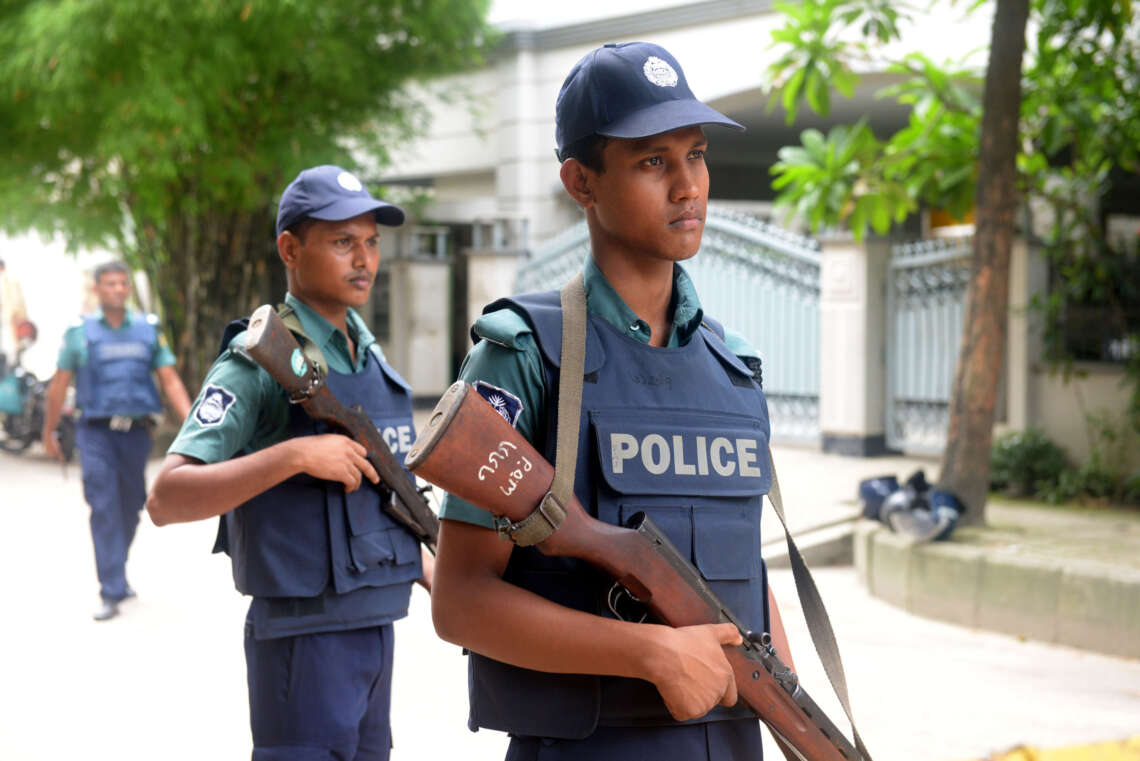
The political instability in Bangladesh is further exacerbated by the interim government’s failure to maintain law and order. Instead of fostering a sense of safety and tranquility, the nation has been plagued by a series of violent incidents that highlight the government’s fragile grip on security and communal peace. On December 12, the day following the announcement of the schedule for the thirteenth national parliamentary election, Sharif Osman bin Hadi was shot in the head by assailants in Purana Paltan, Dhaka. Hadi, who served as the convener of the Inqilab Manch, was a potential independent candidate for the Dhaka-8 constituency.4
After being shot, Hadi succumbed to his injuries while receiving treatment abroad, igniting nationwide protests and violent confrontations that have escalated from mere political dissent into chaos and targeted violence. Radical groups vandalized and set ablaze the offices of Bangladesh’s largest newspapers, Prothom Alo and The Daily Star, trapping journalists inside and forcing them to seek refuge on rooftops as smoke engulfed the buildings, marking a disturbing rise in violence and intimidation. The extent of the destruction and the evident failure of security forces to act promptly reveal a state apparatus incapable of safeguarding fundamental public order and press freedom. The interim government’s reaction- issuing condemnations and urging calm has thus far been more reactive than proactive.5
In the midst of this turmoil, the government’s commitment to safeguarding minority rights has been shockingly unmet. A recent incident has once again raised global alarm, a Hindu garment factory worker named Dipu Chandra Das was brutally assaulted, left for dead, and subsequently tied his nude body to a tree and set ablaze without any credible evidenceon accusations of making offensive comments about Prophet Muhammad. This horrific act of mob justice highlights a troubling increase in communal violence and the state’s failure to protect fundamental civil rights.6 Amnesty International has demanded comprehensive and unbiased investigations into such acts of violence, insisting that those responsible must be held accountable. This situation emphasizes the interim government’s inability not only to prevent communal strife but also to deliver justice for the victims.
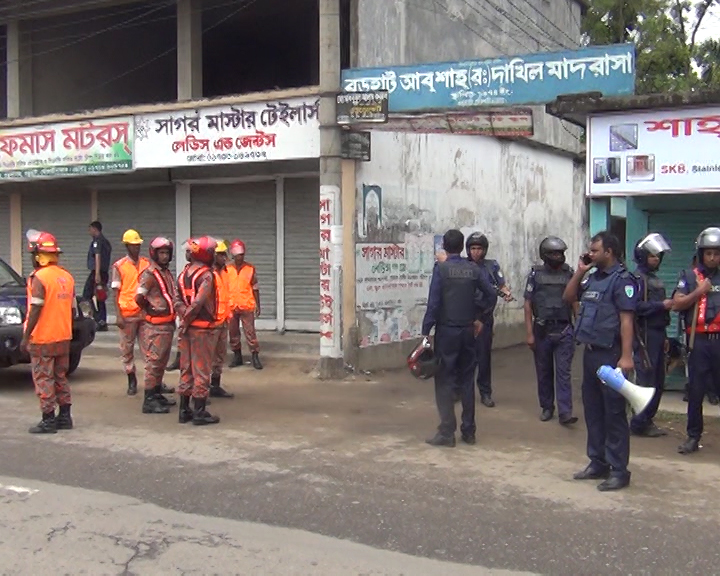
The instances of mob violence, including the arson of cultural organization like the Chhayanaut, a vital institution for Bengali heritage7, and assaults on symbols linked to the former government, illustrate a collapse of public order that the interim administration seems either incapable of addressing or unwilling to confront. The fact that these violent outbreaks coincided with political demonstrations is indicative of a governance crisis.A government should primarily ensure public safety, yet Bangladesh’s interim leadership has resorted to merely calling for calm as violence continues to rise.
In the current atmosphere of uncertainty, the interim leadership has adopted a diversionary tactic- attributing Bangladesh’s internal chaos to external forces, particularly India. This blame game lacks analytical support and poses strategic risks. Despite India’s significant geopolitical role in South Asia, it plays no part in the internal political failures of Bangladesh. Nevertheless, certain factions within the political landscape of Bangladesh, including fringe groups and protest slogans, have increasingly resorted to anti-India rhetoric, alleging Indian interference or complicity in local unrest. These narratives have been selectively amplified, often devoid of credible evidence, to divert attention from the interim government’s own shortcomings.
Reports of violence against newspapers included chants labeling these media outlets as proIndia and proSheikh Hasina, despite the absence of any substantiated connection between their editorial stances and Indian state policy. This merging of independent journalism with foreign influence endangers press freedom and highlights how political figures manipulate anti-India sentiment to mask failures in domestic governance.
The interim government’s embrace of this narrative, whether overtly or subtly, is evident in its careful diplomatic stance. Although the leadership in Bangladesh has made typical diplomatic appeals for peace and stability, there is no substantial evidence to suggest that India is manipulating Bangladesh’s internal political affairs or that New Delhi has any significant influence over the dynamics of protests or security issues. Nevertheless, by either signalling or permitting anti-India rhetoric, the interim government seeks to shift blame for its failure to deliver on essential commitments: securing elections, restoring law and order, safeguarding minorities, and implementing necessary reforms. This rhetorical strategy not only skews public perception but also poses a threat to the bilateral relationship with a neighbour that is vital to Bangladesh’s economic and security interests.
International human rights organizations, including Amnesty International, have stressed the critical need for independent and impartial inquiries into recent incidents of violence, such as Hadi’s death and the ensuing mob assaults, to ensure accountability and avert impunity8. These actions are exactly what the interim government vowed to uphold upon assuming power. However, the lack of credible and transparent investigative processes reinforces the belief that the government is either incapable or unwilling to effectively uphold the rule of law.
The gap between promises made and actions taken is further exacerbated by the prevailing economic and social turmoil. The garment sector, which is the backbone of Bangladesh’s export economy, has encountered disruptions due to unrest, strikes, and declining investor confidence.9 This economic pressure heightens public dissatisfaction and undermines the interim government’s legitimacy as a guardian of stability and progress.
Amid a confluence of political, social, and economic crises, the interim government’s tendency to blame external entities, particularly India, reveals a strategy aimed at distraction rather than genuine solutions. This approach highlights a leadership that is struggling to establish its authority and legitimacy while neglecting fundamental governance issues. India has consistently reiterated its commitment to Bangladesh’s sovereignty and democratic processes, distancing itself from claims of interference. New Delhi’s stance aligns with established diplomatic practices- promoting dialogue, exercising restraint, and upholding human rights. There is no evidence to suggest that India has played a role in mediating or influencing Bangladesh’s internal political dynamics.
The repercussions of this blame game are profound. It undermines regional collaboration, diverts attention from pressing policy requirements, and risks perpetuating a cycle of resentment that could be exploited by extremist factions. Domestically, it hinders any self-reflection on the reasons behind the interim government’s failure to stabilize the nation or fulfil its obligations. Rather than addressing governance shortcomings-ranging from poor law enforcement to postponed elections-political leaders are opting to target external entities for blame, a strategy that ultimately harms the Bangladeshi populace.
The future of Bangladesh is contingent upon the interim government’s readiness to address its shortcomings with honesty and transparency. This necessitates a renewed dedication to conducting free and fair elections, implementing genuine institutional reforms, carrying out independent investigations into acts of violence, safeguarding minority rights, and restoring public trust in state institutions. Blaming India does not resolve these critical issues, rather it merely obscures the deep governance crisis that Bangladesh is currently experiencing. As the country approaches its next electoral cycle, the upcoming months will be pivotal in determining whether Bangladesh can reclaim its democratic aspirations or fall into a self-perpetuating cycle of instability and blame. The citizens of Bangladesh deserve a government that is rooted in accountability, not avoidance; in reform, not mere words; and in security, not scapegoating.