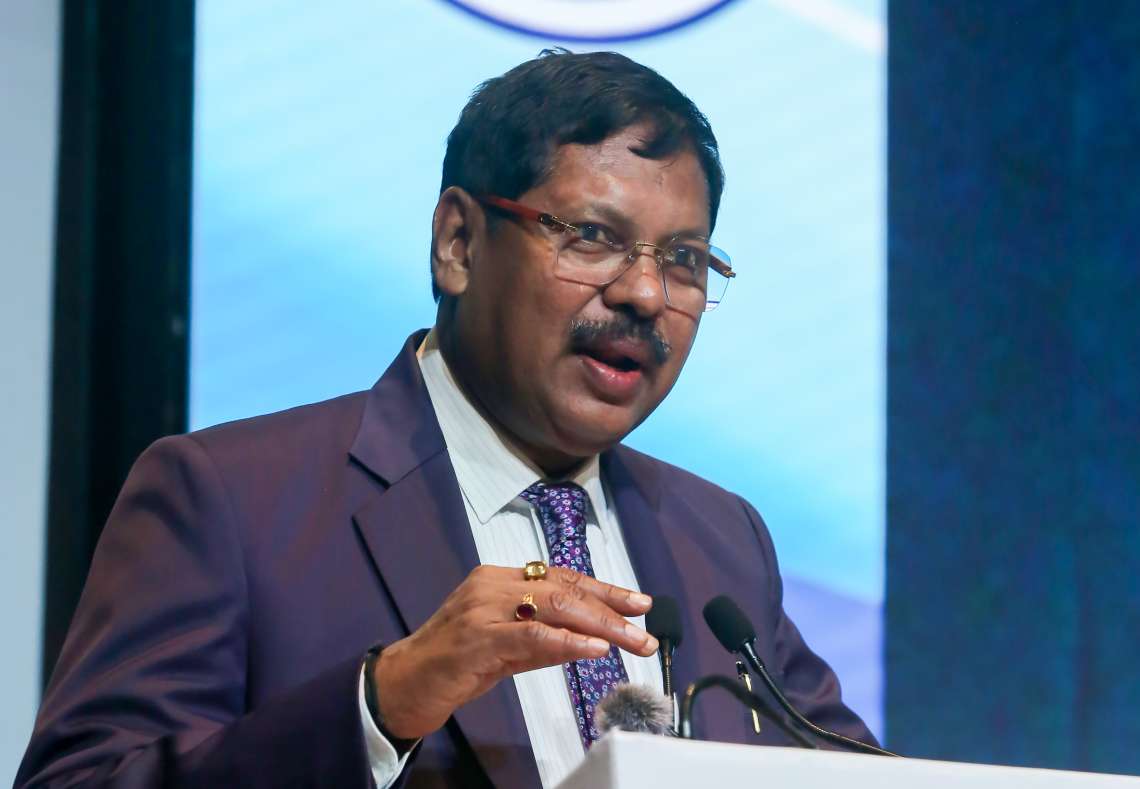
Justice BR Gavai defends judicial independence, slams political attacks, warns against bulldozer overreach and unchecked activism, and says the courts must stay strong, fair and firmly within constitutional limits….reports Asian Lite News
Former Chief Justice of India BR Gavai has mounted one of the strongest recent defences of the judiciary’s independence, pushing back against what he called “wrong” and unfair attacks on judges, constitutional bodies and the broader justice system. In an extensive interview with ANI, delivered just days after he demitted office on 23 November, Justice Gavai dismissed suggestions of political pressure, refuted claims that high-profile matters get special treatment, and warned sharply against both executive excesses and judicial overreach.
‘Criticism of judgments is fine — but not of judges’
With the judiciary facing pointed commentary from Opposition leaders and sections of civil society, the former CJI said that judges decide cases strictly on “law, understanding and facts”, not on politics or public noise.
“Fair criticism of judgments is always welcome,” he said, “but criticising judges for their judgments is not in good taste.” He was categorical that he never faced pressure from the executive or political establishment. “No, genuinely no,” he said.
Justice Gavai stressed that the Indian Constitution is founded on an uncompromising separation of powers between the legislature, executive and judiciary. Any suggestion that judges bend to political interests, he suggested, is not only inaccurate but harmful to democratic discourse.
Judicial shortage and high-profile cases
A significant portion of the interview focused on the enormous strain on the justice system. India’s population-to-judge ratio remains among the lowest in the world, he said, placing a gigantic burden on courts. Amid that pressure, claims that high-profile cases are fast-tracked or handled with special preference, he argued, are misplaced. Matters of national importance may be prioritised at times, he noted, but “it doesn’t mean we give priority to high-profile cases.”
“Permitting a person to approach the court on their behalf fulfils our promise of economic and social justice,” Gavai said. “But judicial activism cannot cross its limits.” His warning, familiar from past judgments, was delivered again: “Judicial activism should not turn into judicial terrorism.”
Addressing the controversy involving Delhi High Court judge Justice Yashwant Varma, currently facing impeachment proceedings in Parliament, Gavai called it an “unfortunate incident” that had impacted the judiciary’s image. He said an inquiry headed by a sitting Supreme Court judge is under way. “As a matter of propriety, it will not be proper for me to comment further,” he added.
He also rejected claims that the Collegium system lacks transparency, arguing that the processes in place are robust, institutional and far from opaque.
‘Judicial activism has limits’
Justice Gavai has long cautioned against unrestrained judicial activism, and he reiterated the point forcefully. While courts must remain accessible — particularly to citizens who cannot approach the bench due to social or economic barriers — the judiciary cannot become a substitute executive or legislature.
“Permitting a person to approach the court on their behalf fulfils our promise of economic and social justice,” he said. “But judicial activism cannot cross its limits.” His warning, familiar from past judgments, was delivered again: “Judicial activism should not turn into judicial terrorism.”
He noted that while activism is sometimes essential — especially when institutions fail or when vulnerable groups have no other option — the judiciary must remain within the constitutional framework that defines its authority.
‘Bulldozer justice’ an abuse of power
The former CJI devoted considerable time to one of the most contentious administrative practices in India today: the demolition of homes belonging to individuals accused of crimes, often without notice or legal sanction.
Calling such “bulldozer justice” a “stark case of executive overreach”, Justice Gavai said it violated fundamental rights and amounted to collective punishment. “What is the crime committed by his family? Why bulldoze their roof?” he asked. He pointed out that demolitions punish not just the accused but parents, siblings, children and other innocent residents.
He recounted that the Supreme Court had intervened after observing widespread demolitions carried out without legality, notice or accountability. The Court made it clear that citizens were free to approach High Courts directly in such cases and issued strict directions to ensure due process. Where demolitions are found illegal, he said, governments are obligated to rebuild the houses and recover the costs from officials responsible for the unlawful action.
“Citizens’ voices cannot be throttled by a threat of destroying their properties,” he said, reinforcing the judiciary’s stand that the rule of law cannot be replaced by administrative force.
A short tenure
Justice Gavai’s tenure lasted just six months and 10 days — a period that included the summer, Dussehra and Diwali vacations. But he insisted that a short term does not reduce a CJI’s capacity to deliver. “I could perform whatever I had anticipated and planned out,” he said, adding that fixed tenures for CJIs or Supreme Court judges were unnecessary.