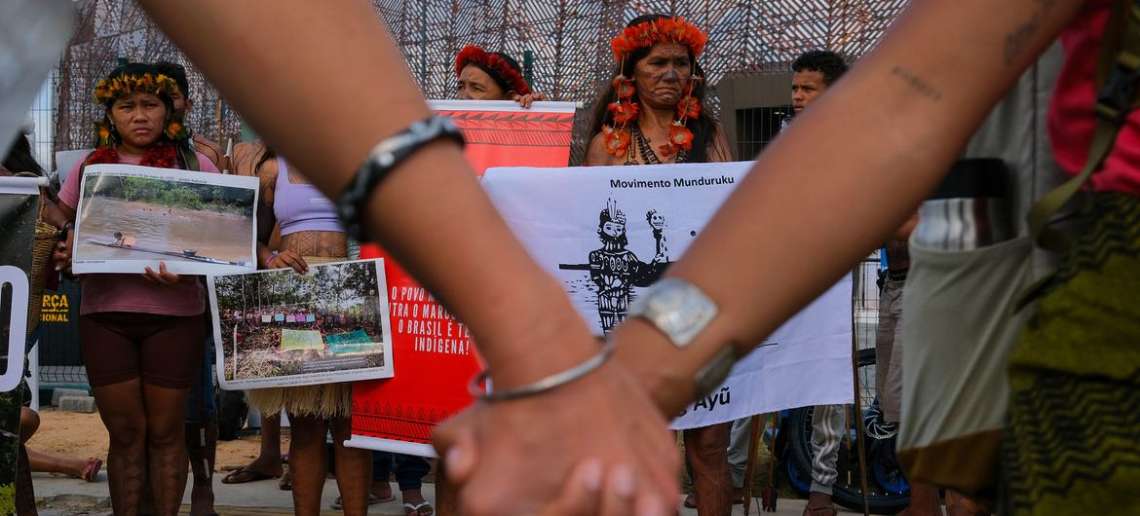
Protesters chanted and sang “free the Amazon” as they carried three giant coffins labelled Oil, Coal and Gas, flanked by people dressed as grim reapers.
Thousands of climate protesters marched through the Brazilian city of Belém on Saturday, bringing noise, colour and urgency to the gates of the COP30 climate summit. According to BBC reporting, demonstrators moved in large columns to the rhythm of booming sound systems, calling for an end to fossil fuels and greater action to protect the Amazon.
Protesters chanted and sang “free the Amazon” as they carried three giant coffins labelled Oil, Coal and Gas, flanked by people dressed as grim reapers. Indigenous groups held banners declaring “the answer is us”, while giant inflatable figures — including an elephant and an anaconda — snaked above the crowds under the intense midday sun.
This year marks the first time since 2021 that campaigners have been allowed to gather outside the UN’s climate talks. The previous three summits were hosted in countries where public protest is restricted.
One participant, Tuga Cíntia of the Hydra Dance theatre group at the Federal University of Pará, told BBC News that the march symbolised “a funeral for fossil fuels”. She reportedly said she was marching because “enough is enough with COP meetings and theory” and argued it was time for concrete action from world leaders.

Indigenous communities, Brazilian youth movements and activists from across the globe took part in the demonstration, with many briefly seeking shade under the forecourt of a petrol station as temperatures soared. Climate advocate Brianna Fruean from Samoa — a low-lying island nation highly vulnerable to global warming — told the BBC that fossil fuels “are still being burned” and said communities like hers were “living on the frontline of climate change”.
Another activist, Ilan from the climate organisation 350 and based in Brazil, was cited by the BBC saying that protesters had gathered “for justice” and to demand “the end of fossil fuels”.
Many marchers also carried signs reading “demarcation now”, calling for Indigenous land rights to be legally recognised. Hundreds of Indigenous groups live in the Amazon rainforest and are widely regarded by environmental experts as among the most effective guardians of biodiversity.
Sister demonstrations were staged across several countries, including the UK. Security remained tight in Belém, with police carrying riot shields guarding the COP30 venue. Tensions rose earlier in the week when protesters breached security lines, causing minor injuries to two staff members and slight damage to the site.
Indigenous representation has been a contentious issue at the summit. Though COP30 has been described by some as an “Indigenous peoples’ COP”, many community leaders say their concerns about deforestation, land protection and resource extraction are not being adequately addressed. Some groups have set up stalls outside the fenced-off venue to sell goods to passing delegates.
Talks continued on Saturday as nearly 200 nations sought progress on climate commitments. Delegates acknowledge that little headway was made during the first week, though some countries remain hopeful of agreeing a roadmap to phase out fossil fuels.
Brazil’s President Luiz Inácio Lula da Silva chose Belém to highlight the Amazon’s global importance. However, just days before the summit opened, his government approved new oil exploration by the state-owned energy company at the mouth of the Amazon River.
Adding to the controversy, an analysis released on Friday by the coalition Kick Big Polluters Out (KBPO) suggested that a record number of fossil fuel industry delegates are attending this year’s summit.