Ghana’s President has been urged by an international delegation to press fellow African leaders to unite behind demands for reparations for transatlantic slavery and colonialism …reports Asian Lite News
Ghana’s President John Dramani Mahama has held talks with a global delegation advocating reparations for transatlantic slavery and colonialism, with the group urging him to rally other African leaders to “choose courage over comfort” and support the expanding movement. The delegation said it encouraged Mahama to use Ghana’s diplomatic standing to help build unity across the continent at a time when debate over reparations is intensifying internationally.
The delegation, comprising experts from Africa, the Caribbean, Europe, Latin America and the United States, presented Mahama with priority actions aligned with the reparations agenda of the African Union. In a statement issued on Friday, the group said its proposals were intended to advance the AU’s efforts to create a shared continental approach, while strengthening coordination between African governments and civil society organisations in the diaspora.
In February, the African Union launched a drive to establish a unified vision of what reparations could involve. The initiative aims to clarify the range of possible measures, including financial compensation, formal acknowledgements of historical wrongs and policy reforms to address the long-term social and economic consequences of slavery and colonial rule. Supporters argue that a clearer, collective stance would strengthen Africa’s position in international forums where the issue remains deeply contested.
Between the 15th and 19th centuries, at least 12.5 million Africans were kidnapped and forcibly transported across the Atlantic by European ships, according to historical estimates. Those who survived the journey were sold into slavery in the Americas, forming a system that underpinned the accumulation of wealth in parts of Europe and the New World. Advocates of reparations argue that the legacies of this history remain visible today, pointing to persistent racial inequality and structural disadvantage affecting people of African descent across the globe.
Calls for reparations have gathered momentum in recent years, driven by activism in Africa and the diaspora and by renewed scrutiny of colonial histories. At the same time, the movement has faced a growing backlash. Many European leaders have resisted even opening formal discussions, arguing that present-day states and institutions should not be held responsible for actions committed centuries ago. Opponents also warn of the legal and financial implications of reparations claims.
Ghana has positioned itself at the forefront of reparations advocacy on the continent, hosting initiatives focused on remembrance and engagement with the African diaspora. Despite this role, the delegation stressed that progress would depend on strategic coherence and unity among African political leaders more broadly. Without a common front, they warned, efforts could remain fragmented and easier to resist internationally.
During their visit, members of the delegation urged Mahama to encourage other heads of state to stand with civil society groups and communities affected by the legacies of slavery and colonialism, both in Africa and abroad. They argued that political leadership would be critical in sustaining pressure and keeping reparations on the global agenda rather than allowing the issue to be reduced to symbolic acknowledgements.
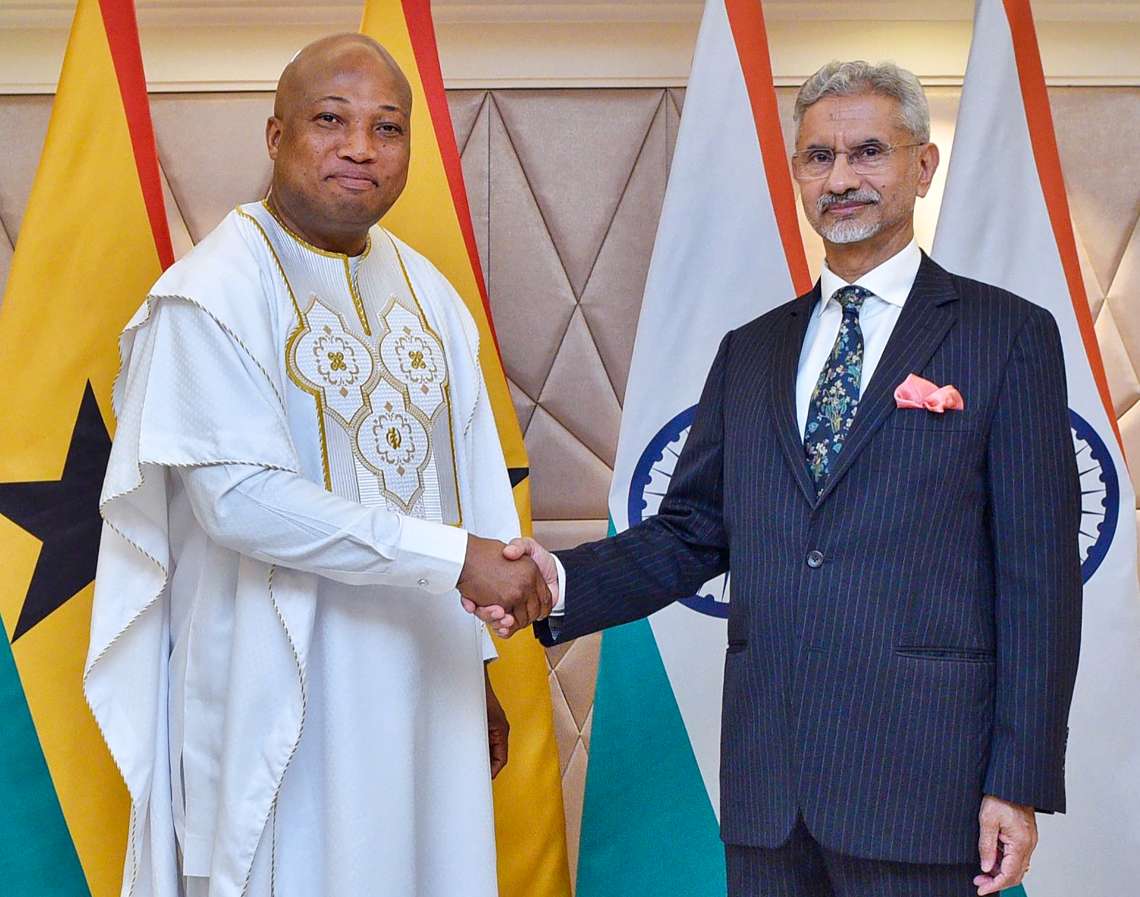
The delegation also met with Ghana’s Foreign Minister Samuel Okudzeto Ablakwa and with Mahama’s envoy on reparations, Ekwow Spio-Garbrah, as part of efforts to align Ghana’s diplomacy with the AU’s evolving framework.
At a recent European Union–African Union summit in Luanda, leaders from both regions acknowledged the “untold suffering” caused by slavery and colonialism but stopped short of committing to reparations. During the meeting, Ghana’s Vice President Jane Opoku-Agyemang urged EU member states to support a United Nations resolution Ghana is preparing that would recognise slavery as one of the gravest crimes against humanity, highlighting ongoing efforts to shift the international debate even as divisions persist.