November 15, 2025
2 mins read

India slams Pakistan leading key UN terror panels

India challenges Pakistan’s leadership of key UN sanctions and counter-terror panels, warning that vested interests and opaque decision-making are undermining credibility, accountability and global counter-terror efforts.

India has sharply criticised Pakistan’s leadership role in two key UN Security Council (UNSC) bodies overseeing sanctions against the Taliban and global counter-terrorism efforts, warning that such assignments create inherent conflicts of interest and undermine the credibility of the system.

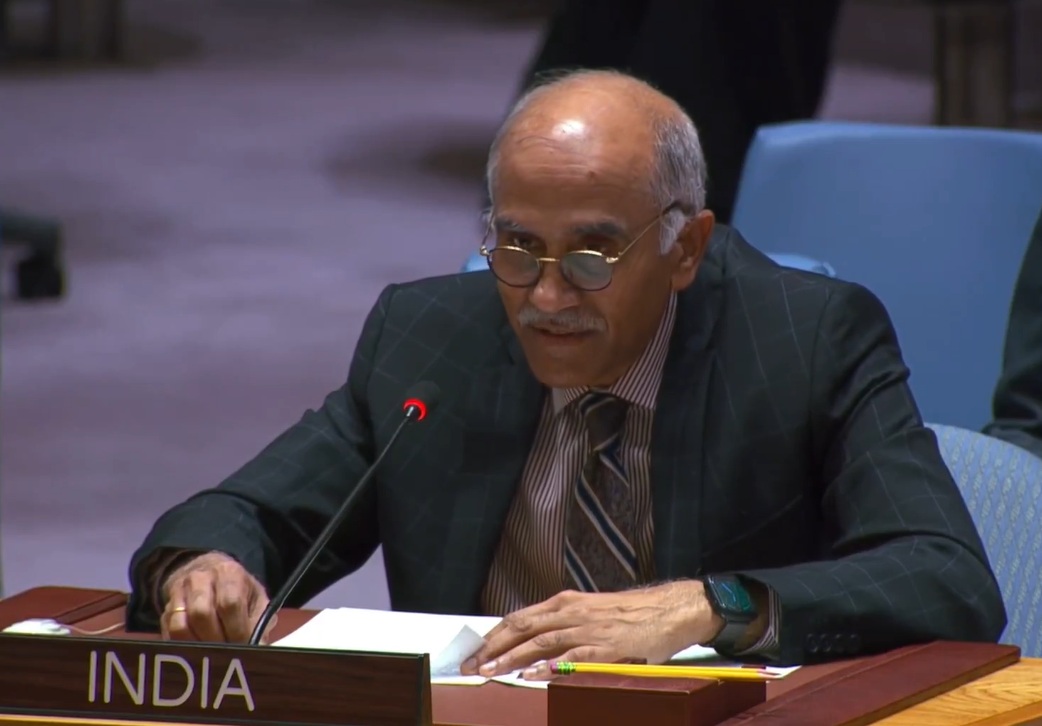
Speaking at a Council debate on working methods on Friday, India’s Permanent Representative P Harish said the UN must ensure that member states with “vested interests” are not placed in positions where impartiality is essential.

“Obvious and outright conflicts of interest can have no place in the Council,” he told members, without directly naming Pakistan. But his remarks were clearly aimed at Islamabad, which currently chairs the UNSC’s Taliban sanctions committee — known as the 1988 Committee — and serves as co-chair of the counter-terrorism committee.

The 1988 Committee oversees travel bans, asset freezes and arms embargoes against Taliban members. India has previously faced delays in securing a travel waiver for Afghanistan’s acting Foreign Minister Amir Khan Muttaqi, whose visit to New Delhi was held up by procedural obstacles within the panel.

Despite its seat on these bodies, Pakistan remains entangled in a simmering conflict with Taliban-led Afghanistan, with regular skirmishes along their shared border. India argues that such dynamics make Pakistan an unsuitable steward of sanctions and counter-terrorism mechanisms.

Harish also pointed to Islamabad’s record of hosting or tolerating UN-sanctioned militant groups and leaders, including those responsible for attacks in India. This, he suggested, should automatically disqualify Pakistan from co-chairing the counter-terrorism committee.

Calling for sweeping reforms, the envoy urged the Council to overhaul how chairs of subsidiary bodies and “pen-holders” — the members who draft resolutions or lead negotiations — are chosen. These decisions, he said, must be “transparent, objective and time-bound” to prevent political manipulation.

Harish criticised the opaque manner in which certain committees, particularly the 1267 sanctions panel for ISIS and al-Qaeda, reject listing proposals for terrorist leaders. China has repeatedly blocked joint India–US efforts to sanction Lashkar-e-Tayyiba and Jaish-e-Mohammad figures, with decisions taken behind closed doors and without explanation to non-Council states.

He also renewed India’s long-standing objections to the UN Military Observer Group in India and Pakistan (UNMOGIP), which monitors the ceasefire in Kashmir. New Delhi maintains the mission has outlived its mandate, while Pakistan insists on its continuation.

“Continuation of mandates that have outlived their utility for narrow political interests of certain states must not be allowed,” Harish said, urging the Council to consider “sunset clauses” for peacekeeping missions to avoid unnecessary drain on UN resources.

The remarks underline India’s growing impatience with what it sees as structural flaws within the Security Council, particularly procedural opacity and political obstruction that prevent effective global counter-terrorism action.

Newsdesk

Newsdesk

Aravind Rajeev is Deputy News Editor at Asian Lite, mostly covering the Middle East and GCC. He has over eight years of experience as a journalist, with a background in ground-level reporting, crime reporting, as well as international and regional news.

Previous Story

Trump vows to sue BBC over Panorama edit

Next Story

Left alliance accuses Yunus of driving Bangladesh towards crisis

Previous Story

Trump vows to sue BBC over Panorama edit

Next Story

Left alliance accuses Yunus of driving Bangladesh towards crisis

Latest from -Top News

Pakistan Risks Overstretching Itself in Yemen War

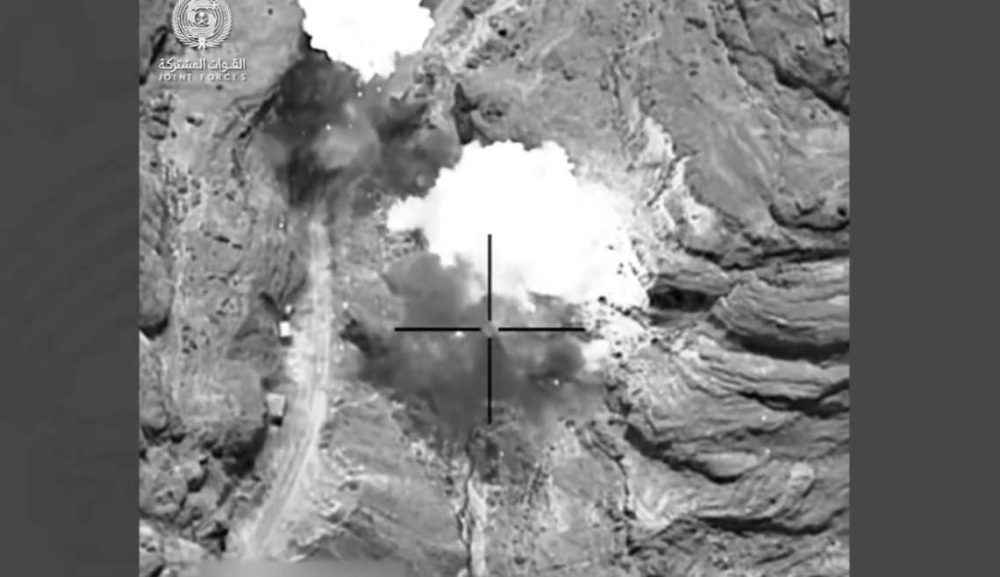
Pakistan’s expanding military role in Saudi Arabia amid the Yemen conflict could strain its defence resources and fragile finances…reports Asian Lite News Desk Pakistan’s military involvement in the war in Yemen may prove unsustainable because of mounting financial pressures and competing security demands, according to a new report. Islamabad’s growing military presence in Saudi Arabia risks stretching its defence resources while exposing the country to greater strategic and economic challenges. An article by Andrew Wilson in One World Outlook describes Pakistan’s involvement as a case of “fiscal and strategic overreach”, arguing that the country lacks the financial flexibility to sustain an expanded military commitment. Pakistan’s external finances depend heavily on an International Monetary Fund (IMF) programme, financial support from Gulf countries and remittances from Pakistani workers in the region. The report argues that deeper military involvement in the conflict could place additional pressure on these sources of financial stability. It also warns that deploying troops and military equipment abroad could weaken Pakistan’s capacity to address security challenges along its eastern border and deal with two domestic insurgencies. The move could also draw Islamabad into a conflict it has sought to approach cautiously. A Reuters report in May, citing Pakistani security and government sources, said Islamabad had deployed around 8,000 troops, a squadron of approximately 16 aircraft, mostly JF-17 fighter jets, two drone squadrons and a Chinese HQ-9 air-defence battery to Saudi Arabia. According to those sources, Riyadh was financing the deployment, with Pakistani personnel operating the equipment. The sources also said a confidential agreement contemplated the possibility of deploying up to 80,000 troops. Islamabad has not confirmed those figures, although it has acknowledged its military presence in Saudi Arabia, including the deployment of fighter jets at King Abdulaziz Air Base from April. The One World Outlook article argues that Saudi financial support can cover allowances and operating expenses but cannot easily replace military equipment needed elsewhere or resolve the political and strategic challenges of participating in the Yemen conflict. Pakistan’s defence budget is another concern. For the 2026-27 financial year, the federal government allocated PKR 3 trillion, or approximately $10.8 billion, to defence services. The allocation represents an 18 per cent increase from the original PKR 2.55 trillion provision and amounts to around 2.1 per cent of projected gross domestic product (GDP). Defence spending accounts for approximately 16 per cent of the federal government’s PKR 18.8 trillion expenditure. Military pensions are budgeted separately at PKR 822 billion, while debt servicing costs stand at approximately PKR 8 trillion, more than two-and-a-half times the defence allocation. The report argues that these competing financial obligations leave little room for additional military expenditure without placing further pressure on public finances. Pakistan’s reliance on IMF assistance also limits its fiscal flexibility. The country must meet the conditions attached to the programme, including a primary budget surplus target of 2 per cent of GDP and continued restraint on development spending. According to the article, these requirements make it difficult for Islamabad to finance an additional military commitment without compromising other budgetary priorities. Pakistan’s economic indicators offer limited reassurance. Economic growth for the 2025-26 financial year is estimated at between 3.6 and 3.7 per cent, while inflation reached approximately 10.3 per cent in September following an energy price shock. Foreign exchange reserves stood at around $21.5 billion at the end of September. Although this marks an improvement from the low levels recorded in 2023, the report notes that the reserves cover only a few months of imports. Financial assistance from Gulf partners remains central to Pakistan’s external stability. The article says Islamabad holds approximately $8 billion in Saudi deposits at its central bank. In July, the State Bank of Pakistan said Riyadh had extended the maturity of $5 billion in deposits to December 2028, easing the country’s immediate external financing requirements. A further $3 billion deposit was also extended in the spring. However, the article argues that these arrangements provide temporary relief rather than long-term financial independence, particularly as regional conflict threatens the stability of the Gulf economies on which Pakistan relies. The report concludes that Pakistan faces a difficult balance between supporting Saudi Arabia militarily and preserving the financial and military resources needed to address its domestic and regional challenges.
Go toTop