January 26, 2025
4 mins read

Indians in Dubai Celebrates 76th Republic Day

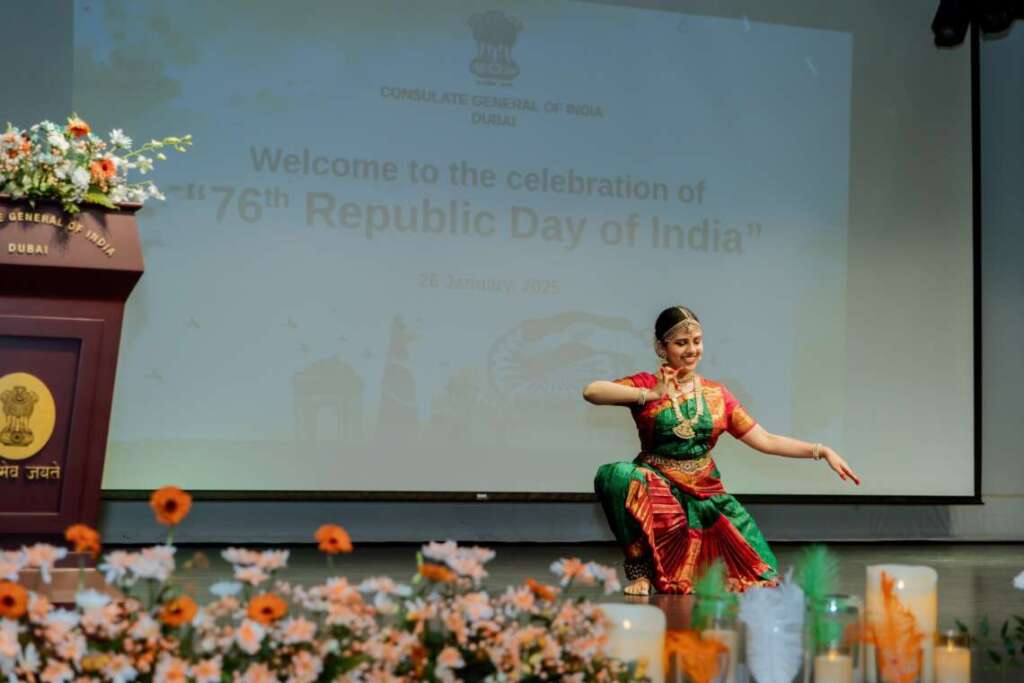
On the momentous occasion of India’s 76th Republic Day, Indian citizens gathered in the UAE to honour the nation’s journey as a resilient democracy and a thriving economy. In a heartfelt address, the Consul General of India in Dubai, Satish Kumar Sivan, delivered a powerful message celebrating the country’s heritage, achievements, and aspirations.

Sivan opened with a tribute to India’s founding visionaries and freedom fighters, whose foresight laid the foundation for the Republic on January 26, 1950. The core principles of the Constitution—justice, liberty, equality, and fraternity—continue to unite a diverse population of 1.4 billion people, embodying the strength of India’s democracy.
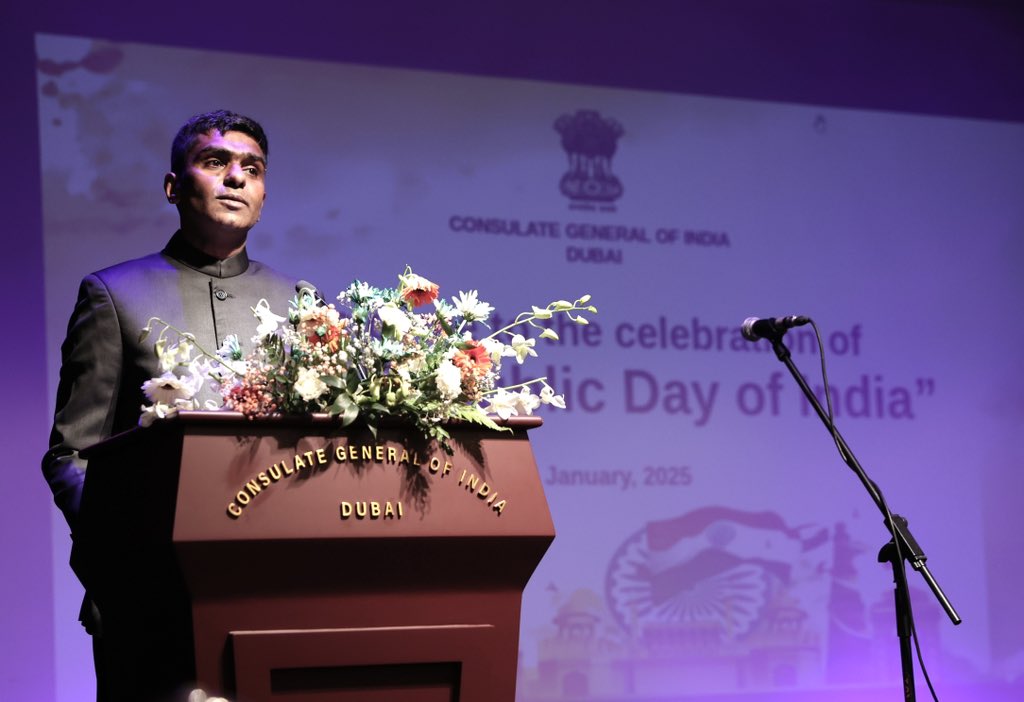
Reflecting on India’s rise, the Sivan highlighted the nation’s transformation into the world’s fifth-largest economy, soon to claim the third spot globally. Despite challenges, India’s growth has remained inclusive, ensuring progress across all sections of society. Special mention was made of the Indian diaspora’s pivotal role in this journey, particularly the nearly 4 million Indian nationals in the UAE.

“From being a favourite for doomsayers who constantly predicated a collapse of our democracy, we are today the fifth largest economy and soon to be the third largest, achieving such rapid progress against the global economic trends. Our growth has been inclusive and broad based carrying all sections of the society along. While I have enough data points on the phenomenal growth of India which make us happy and proud, I believe that the one factor that has been critical in India’s rise on the global stage is the strength and contributions of the Indian diaspora,” Sivan said.

A Community of Strength and Compassion

Acknowledging the Indian community in the UAE as a cornerstone of the India-UAE bilateral relationship, the Consul General commended their hard work and dedication, which has earned admiration from Emirati citizens and contributed significantly to India’s foreign exchange remittances, which reached a record $125 billion last year.
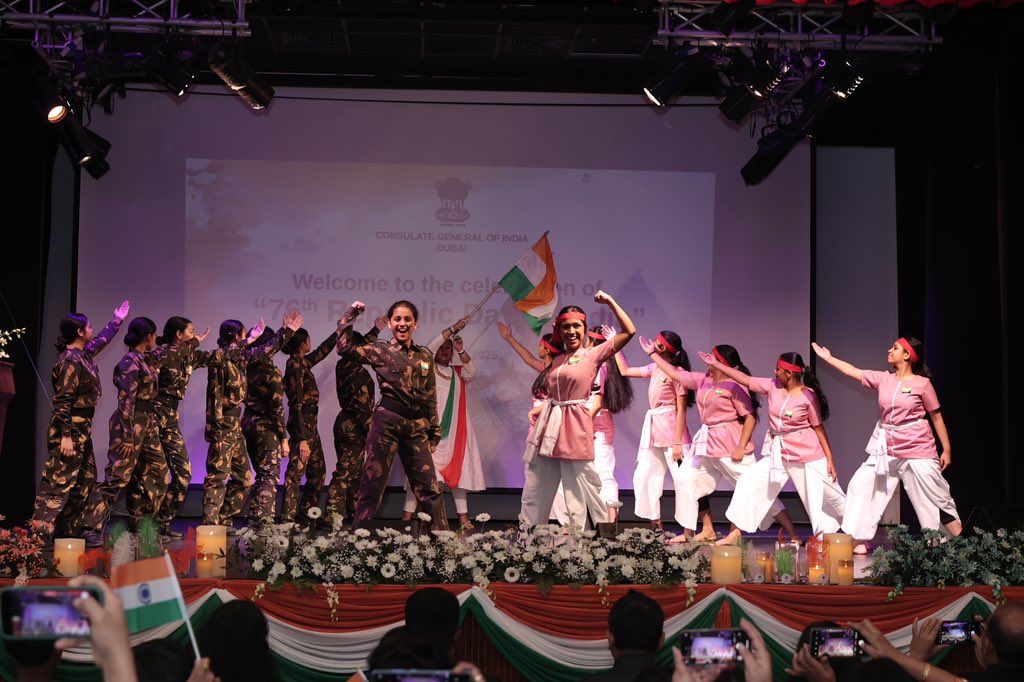
The speech also lauded the community’s spirit of service during the UAE’s Amnesty period last year. Over 15,000 Indian nationals benefited from the initiative, thanks to the unwavering efforts of volunteers and organizations such as AIM India Forum, Indian People’s Forum, KMCC, Friends of India, and others. The support extended by cultural and religious institutions like the Hindu Mandir, Jebel Ali, Guru Nanak Darbar Gurudwara, and IMAN Culture Centre was particularly appreciated.
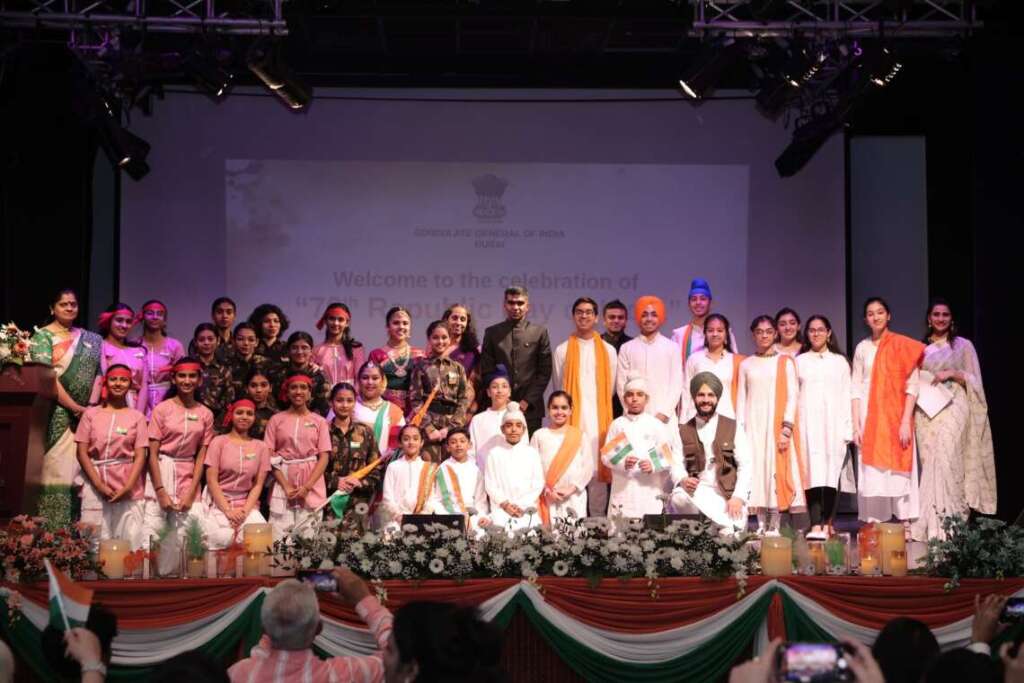
“It is also incumbent upon us to acknowledge and thank the UAE government for such a wonderful initiative and to the Immigration authorities of all Emirates, especially Dubai for their unwavering support to the Indian community,” Sivan said.
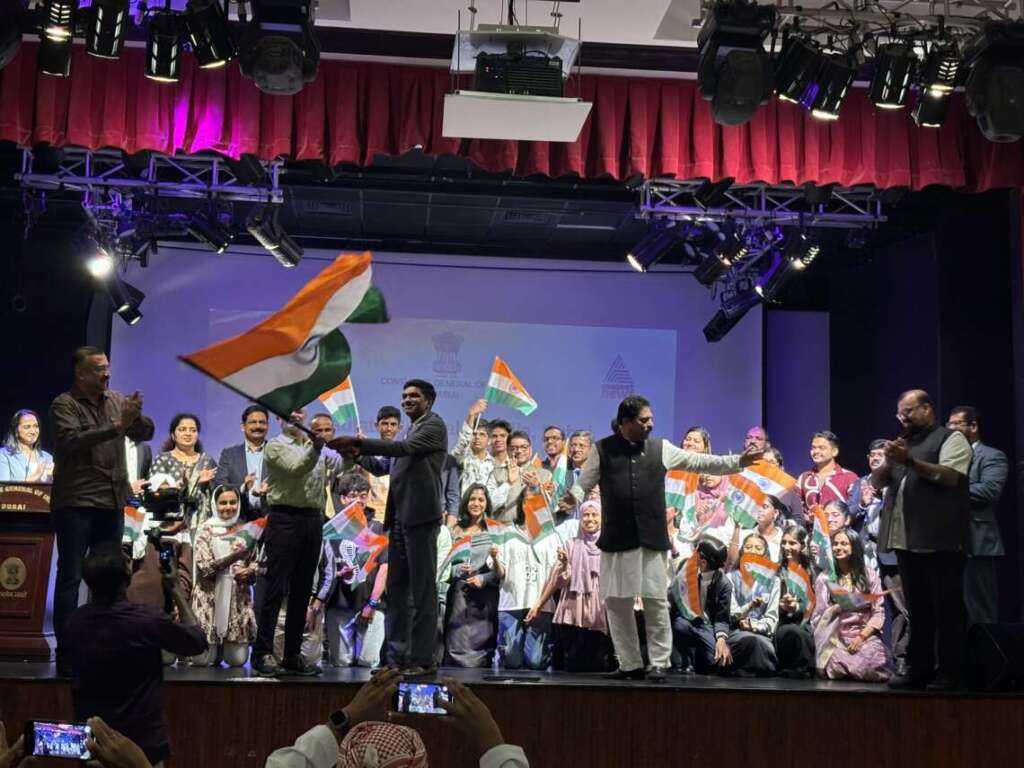
Plans for future welfare initiatives, including Cyber Awareness and digital literacy sessions for Indian workers in collaboration with KMCC, were announced as steps to enhance skills and protect against cyber fraud.
Recognition and Bilateral Growth

The Republic Day address also celebrated the achievements of Mr. Ramesh Ramakrishnan, Chairman of Transworld Group, who was recently honored with the Pravasi Bharatiya Samman Award. His contributions to the Indian diaspora and UAE-India relations were hailed as exemplary.

Highlighting the robust India-UAE partnership, the Consul General emphasized collaboration in areas such as healthcare, renewable energy, digital technology, space exploration, and advanced technologies like AI, IoT, and Blockchain. A revolutionary Hindi Large Language Model is one of the many projects under development, showcasing the forward-looking agenda of the bilateral relationship.
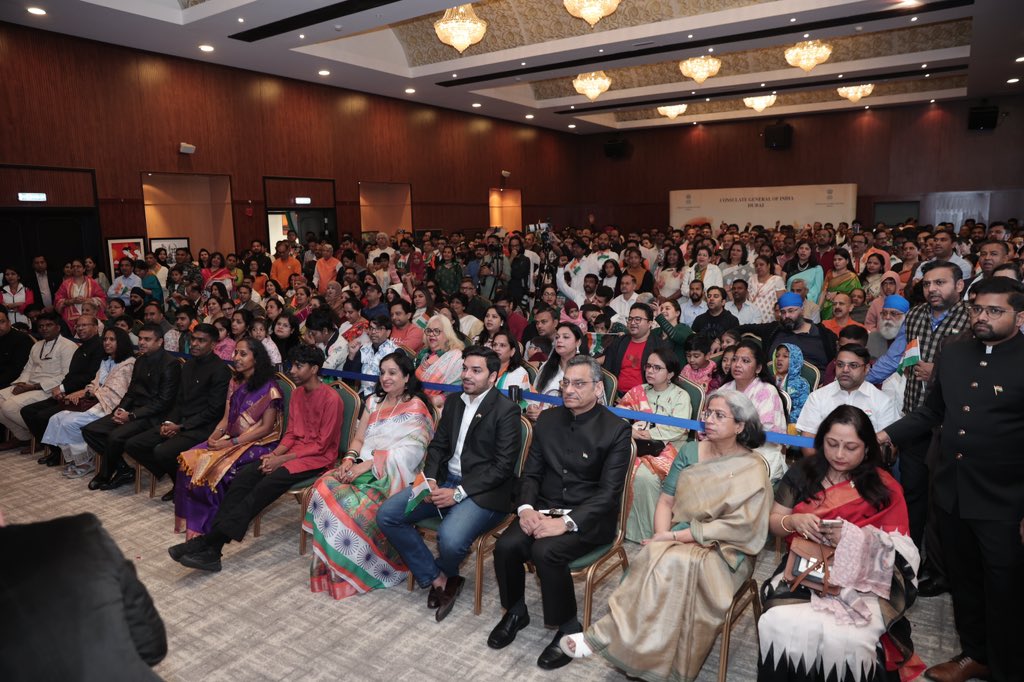
“Talking of our bilateral relationship with UAE, India and the UAE are linked by friendship, trust, and a common future. Strong historical and cultural ties between our two countries have developed into a strong collaboration in a variety of domains. As we look into the future, there are countless opportunities for cooperation in fields like digital technology, healthcare, space exploration, renewable energy and cutting edge 5th Industrial Revolution technologies such as AI, IoT, big data, cloud computing, Blockchain, and 6G. We are collaborating on a Hindi Large Language Model that will be truly revolutionary. In short, the bilateral agenda is positive and forward looking. By working together, we can chart a model partnership for the world to emulate,” Sivan said.

A Model Partnership for the Future

Concluding with an optimistic vision, the Consul General reaffirmed the shared trust and friendship between India and the UAE. With countless opportunities on the horizon, the partnership is poised to serve as a global model for cooperation and innovation.

As celebrations continue, India’s 76th Republic Day stands as a testament to the nation’s resilience, achievements, and unwavering commitment to progress and unity.

Previous Story

Tableaux highlights India’s progress

Next Story

NCC contingent marches down Kartavya Path

Previous Story

Tableaux highlights India’s progress

Next Story

NCC contingent marches down Kartavya Path

Latest from -Top News

Pakistan Risks Overstretching Itself in Yemen War

Pakistan’s expanding military role in Saudi Arabia amid the Yemen conflict could strain its defence resources and fragile finances…reports Asian Lite News Desk Pakistan’s military involvement in the war in Yemen may prove unsustainable because of mounting financial pressures and competing security demands, according to a new report. Islamabad’s growing military presence in Saudi Arabia risks stretching its defence resources while exposing the country to greater strategic and economic challenges. An article by Andrew Wilson in One World Outlook describes Pakistan’s involvement as a case of “fiscal and strategic overreach”, arguing that the country lacks the financial flexibility to sustain an expanded military commitment. Pakistan’s external finances depend heavily on an International Monetary Fund (IMF) programme, financial support from Gulf countries and remittances from Pakistani workers in the region. The report argues that deeper military involvement in the conflict could place additional pressure on these sources of financial stability. It also warns that deploying troops and military equipment abroad could weaken Pakistan’s capacity to address security challenges along its eastern border and deal with two domestic insurgencies. The move could also draw Islamabad into a conflict it has sought to approach cautiously. A Reuters report in May, citing Pakistani security and government sources, said Islamabad had deployed around 8,000 troops, a squadron of approximately 16 aircraft, mostly JF-17 fighter jets, two drone squadrons and a Chinese HQ-9 air-defence battery to Saudi Arabia. According to those sources, Riyadh was financing the deployment, with Pakistani personnel operating the equipment. The sources also said a confidential agreement contemplated the possibility of deploying up to 80,000 troops. Islamabad has not confirmed those figures, although it has acknowledged its military presence in Saudi Arabia, including the deployment of fighter jets at King Abdulaziz Air Base from April. The One World Outlook article argues that Saudi financial support can cover allowances and operating expenses but cannot easily replace military equipment needed elsewhere or resolve the political and strategic challenges of participating in the Yemen conflict. Pakistan’s defence budget is another concern. For the 2026-27 financial year, the federal government allocated PKR 3 trillion, or approximately $10.8 billion, to defence services. The allocation represents an 18 per cent increase from the original PKR 2.55 trillion provision and amounts to around 2.1 per cent of projected gross domestic product (GDP). Defence spending accounts for approximately 16 per cent of the federal government’s PKR 18.8 trillion expenditure. Military pensions are budgeted separately at PKR 822 billion, while debt servicing costs stand at approximately PKR 8 trillion, more than two-and-a-half times the defence allocation. The report argues that these competing financial obligations leave little room for additional military expenditure without placing further pressure on public finances. Pakistan’s reliance on IMF assistance also limits its fiscal flexibility. The country must meet the conditions attached to the programme, including a primary budget surplus target of 2 per cent of GDP and continued restraint on development spending. According to the article, these requirements make it difficult for Islamabad to finance an additional military commitment without compromising other budgetary priorities. Pakistan’s economic indicators offer limited reassurance. Economic growth for the 2025-26 financial year is estimated at between 3.6 and 3.7 per cent, while inflation reached approximately 10.3 per cent in September following an energy price shock. Foreign exchange reserves stood at around $21.5 billion at the end of September. Although this marks an improvement from the low levels recorded in 2023, the report notes that the reserves cover only a few months of imports. Financial assistance from Gulf partners remains central to Pakistan’s external stability. The article says Islamabad holds approximately $8 billion in Saudi deposits at its central bank. In July, the State Bank of Pakistan said Riyadh had extended the maturity of $5 billion in deposits to December 2028, easing the country’s immediate external financing requirements. A further $3 billion deposit was also extended in the spring. However, the article argues that these arrangements provide temporary relief rather than long-term financial independence, particularly as regional conflict threatens the stability of the Gulf economies on which Pakistan relies. The report concludes that Pakistan faces a difficult balance between supporting Saudi Arabia militarily and preserving the financial and military resources needed to address its domestic and regional challenges.

UK and Germany Ratify Kensington Treaty

Britain and Germany ratify the Kensington Treaty, agreeing new cooperation on AI, quantum research, defence and security while targeting investment, jobs and Russian hybrid threats…reports Asian Lite News Desk Britain and Germany

Economic tide is turning in Bangladesh

If there is one thing that can bring some comfort to the struggling Bangladeshi economy, it is good relations with India. Bangladesh should remember that Delhi’s backing, through easy supplies of essentials
Go toTop

Don't Miss

7th week of Expo focused on promoting tolerance

The seventh week of Expo 2020 Dubai witnessed several events

Sheikh Mohammed Tours Expo Venue on Day 1

Sheikh Mohammed visited the pavilions of the UAE, USA, China