India secured 177 of the 188 valid votes cast. The country will represent the Asia-Pacific group, which has 17 regional seats, four of which were up for election this year….reports Asian Lite News
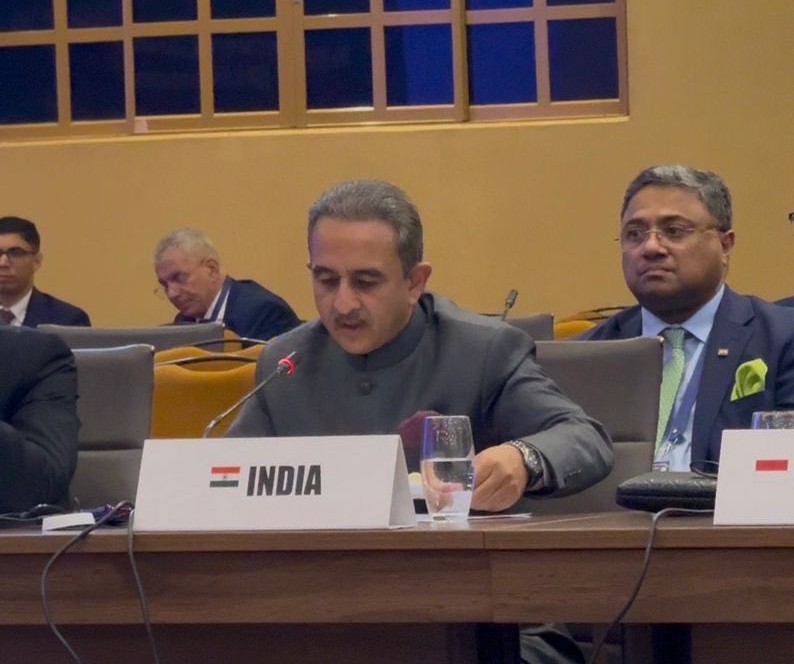
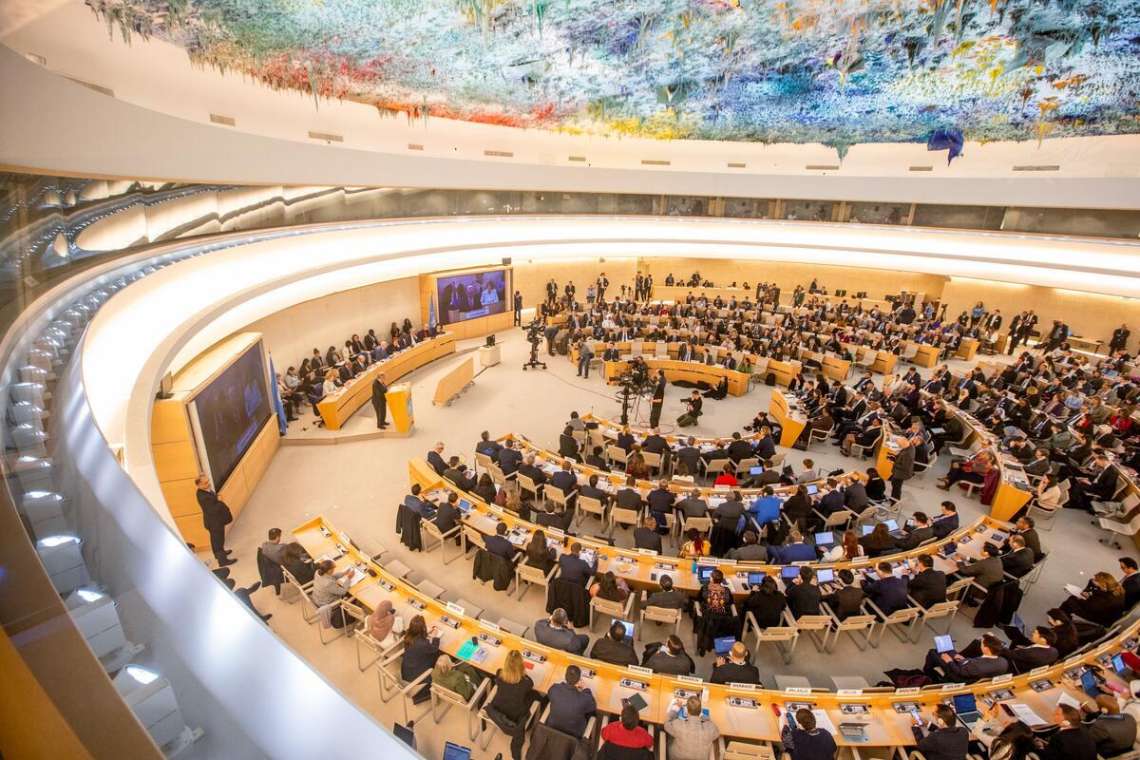
India has been elected unopposed to the United Nations Human Rights Council (UNHRC) for a three-year term beginning in 2026, pledging to act as a “bridge-builder” in an increasingly polarised global landscape. The election, announced by the UN General Assembly in New York, marks India’s seventh term on the 47-member Geneva-based body that promotes and protects human rights worldwide.
India secured 177 of the 188 valid votes cast — an emphatic endorsement of its diplomatic credibility and continued commitment to human rights. The country will represent the Asia-Pacific group, which has 17 regional seats, four of which were up for election this year.
Reacting to the result, India’s Permanent Representative to the UN, P. Harish, said in a post on X, “This election reflects India’s unwavering commitment to human rights and fundamental freedoms. We look forward to serve this objective during our tenure.”
In its formal candidature statement, India described its election as a reflection of its “dedication to advancing the principles of human rights globally, fostering dialogue and bridging divides to achieve collective progress.” The note underscored India’s centuries-old ethos of Vasudhaiva Kutumbakam — “The world is one family” — as a guiding principle of openness, unity, and mutual respect.
India’s bid was also anchored in its constitutional framework, which guarantees fundamental rights to all citizens and upholds justice, liberty, and equality. The nomination statement emphasised that India’s domestic human rights record and its democratic institutions serve as a foundation for its international engagement.
The HRC, established in 2006, serves as the UN’s central forum for human rights dialogue, examining abuses, promoting accountability, and facilitating cooperation among member states. India has previously served multiple terms on the Council, most recently completing two consecutive tenures ending in 2024. Under UN rules, countries must take a break after two consecutive terms before contesting again.
Alongside India, 13 other nations — including Britain, Italy, Egypt, Chile, South Africa, and Pakistan — were elected to the Council. The outcome offers a snapshot of the world’s geopolitical divides, with democracies and authoritarian states often sharing seats, shaping human rights debates through competing narratives.
While India steps back into the Council as a consensus candidate, its neighbour Pakistan has come under growing scrutiny for widespread and systemic human rights violations. A recent report from the US-based Gatestone Institute, authored by Turkish journalist Uzay Bulut, accused the Pakistani state of complicity in the persecution of Hindus, Christians, Ahmadis, Shia Muslims, Sikhs, and journalists.
The report, published on Tuesday, highlighted a deepening crisis of intolerance and impunity. “Pakistan has for years been seriously repressing its minorities, political dissidents, human rights advocates and journalists – even transnationally,” Bulut wrote. The piece noted that despite this record, Pakistan continues to benefit from the European Union’s special incentive arrangement under the Generalised System of Preferences (GSP+), which grants favourable trade access to countries adhering to international human rights and labour standards.
The contradiction was brought to light at a side event during the ongoing 60th session of the Human Rights Council, where the international NGO CAP Freedom of Conscience and news outlet EU Today urged the EU to reconsider Pakistan’s trade privileges.
Baloch human rights defender Joshua George Bowes, speaking at the same event, accused Pakistan of “failing to uphold its international human rights obligations” while benefitting from the EU’s economic incentives. He cited the International Federation of Journalists’ South Asia Press Freedom Report 2024–25, which recorded 34 serious press freedom violations, including seven killings and eight attacks, ranking Pakistan 158th globally for press freedom.
The Gatestone report described Pakistan as “engulfed in a deepening crisis of religious intolerance and systemic persecution.” It documented a surge in attacks on minorities — including the September assault on the Hindu Rama Pir Temple in Sindh — and widespread forced conversions of Hindu and Christian girls, often underage. The report estimated that more than 1,000 such cases occur annually, with local police routinely refusing to act against perpetrators.
The UN and various governments have repeatedly expressed concern over Pakistan’s failure to protect minorities and uphold press freedoms, but international pressure has so far yielded little change. “The Pakistani state’s complicity in the sustained persecution of Hindus, Christians, Ahmadis, Shia Muslims, and Sikhs, as well as critical journalists, needs to be seriously confronted,” Bulut concluded.
As India returns to the Human Rights Council, it faces the dual challenge of advancing a constructive global human rights agenda while navigating tensions within the body — where nations like Pakistan, often accused of grave abuses, continue to occupy influential positions. New Delhi’s pledge to “bridge divides” will likely be tested by such contradictions.
In a world where human rights are increasingly weaponised for political ends, India’s election carries both moral weight and diplomatic responsibility. Its constitutional heritage and record of pluralism may lend credibility to its role as a mediator between the Global North and South — and between idealism and realpolitik.