Legal experts in London warn Bangladesh faces a deep constitutional rupture, accusing the interim government of weaponising war crimes courts to silence critics and criminalise opposition.
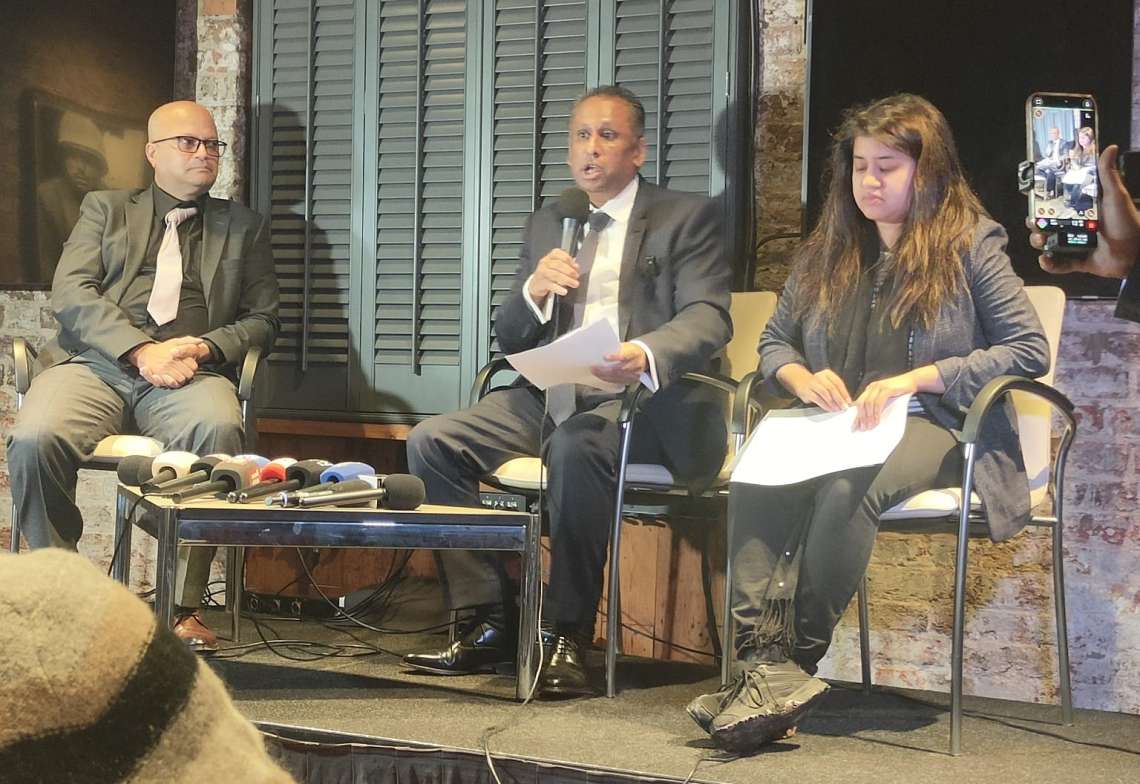
A press conference at London’s Frontline Club has ignited renewed debate over Bangladesh’s judicial integrity, with senior legal figures warning of an escalating constitutional and human rights emergency under the interim administration led by Nobel laureate Dr Muhammad Yunus.
The session, hosted by Sayed Zaynal Abedin, Solicitor of the Senior Courts of England and Wales, alleged that the International Crimes Tribunal of Bangladesh (ICT-BD) is now functioning as a political instrument rather than a judicial body. Abedin said the tribunal, originally created to prosecute 1971 war crimes, has been “repurposed to crush dissent, intimidate journalists, and eliminate political opposition”.
Attended by journalists, human rights monitors and legal academics, the briefing presented legal assessments and documentary evidence challenging the legitimacy of the current government framework in Dhaka. Citing Article 57 of the Bangladeshi Constitution, speakers argued that former Prime Minister Sheikh Hasina remains the lawful head of government until a constitutionally valid election is conducted. Since no such election has taken place, they said, the current administration “lacks constitutional authority”.

Particular criticism centred on a 2024 Presidential Ordinance extending the ICT Act 1973 retrospectively — a move experts described as incompatible with both Bangladesh’s constitutional protections and international human rights standards. Concerns were also raised over the reported denial of defendants’ right to choose legal representation. Legal analysts stressed that such restrictions violate the International Covenant on Civil and Political Rights.
The gathering heard chilling claims of mass arrests, with reports that more than 400,000 people, including journalists, religious minority leaders and political activists, have been detained since August 2024. Accounts of torture, custodial deaths and extrajudicial killings were cited as meeting the legal definition of crimes against humanity under the Rome Statute.
“The International Crimes Tribunal, as it currently operates, is not a court of justice — it is a political tool of persecution under an unlawful regime,” Abedin told attendees. He argued that only a return to constitutional order and transparent elections could restore public trust and adherence to the rule of law. “Bangladesh deserves a judiciary founded on legitimacy, fairness, and the rule of law — not a theatre of repression disguised as justice.”

The briefing concluded with confirmation that evidence bundles and legal submissions are being prepared for international human rights institutions, including the International Criminal Court and UN Special Rapporteurs. Attending media received detailed annexes citing more than 250 reports documenting alleged abuses since the disputed transition of power last year.
While Dhaka has previously dismissed similar accusations as politically motivated, the mounting scrutiny abroad suggests Bangladesh’s judicial controversies will continue to face global attention. International observers say the handling of these proceedings will shape not only Bangladesh’s legal credibility but also its democratic trajectory in the months ahead.