Floodwaters from five major rivers inundate villages across Pakistan’s Punjab, damaging crops, displacing families, and triggering emergency evacuations as authorities brace for more monsoon rain….reports Asian Lite News
Low-to-medium intensity flooding across several key rivers in Punjab has inundated hundreds of villages, destroyed standing crops, and displaced scores of families in southern and central districts of Pakistan, Dawn reported. The surging waters—fuelled by ongoing monsoon rains and glacial melt—have forced mass evacuations and brought daily life to a standstill in rural communities already struggling with limited infrastructure.
According to the report, floodwaters from the Ravi, Sutlej, Indus, Chenab, and Jhelum rivers have entered vast swathes of agricultural land and residential areas. The most affected districts include Muzaffargarh, Dera Ghazi Khan, Rahim Yar Khan, and Jhang, where damage to crops, homes, and roads has been widespread.
In Jhang alone, over 20 villages have reported flooding due to rising levels in the River Jhelum. Crops over hundreds of acres now lie submerged, and access to vital services has been disrupted. Residents have been seen moving to safer ground with their livestock in tow, braving inundated roads and inadequate emergency transport. “The inundation of roads has made it further difficult for the people to move around and access essential services,” Dawn noted.
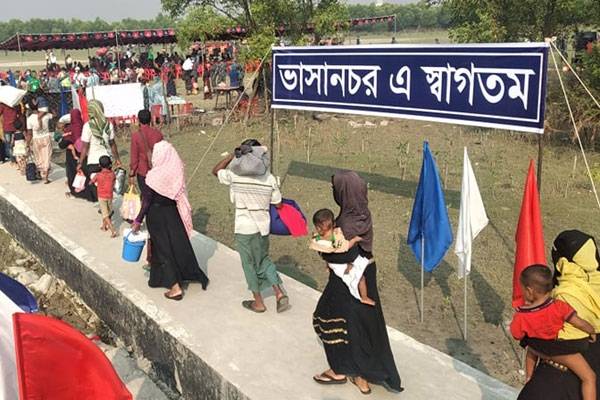
Evacuation operations are underway, particularly in the low-lying “katcha” areas—unprotected riverbank settlements—along the Indus and Chenab rivers. Emergency shelters and food distribution centres have been hastily established by local authorities and relief agencies to accommodate displaced families.

The Pakistan Meteorological Department (PMD) confirmed that the Indus River is currently experiencing a low flood at multiple points—Tarbela, Kalabagh, Chashma, Taunsa, and Guddu—while the Chenab is similarly affected at Khanki. Although the Ravi, Sutlej, and Jhelum rivers remain within normal flow ranges, authorities remain on high alert due to expected further rainfall.
Detailed flow data showed Khanki registering 120,000 cusecs inflow and 116,000 cusecs outflow, Kalabagh at 332,000 cusecs inflow and 324,000 outflow, and Taunsa reporting 363,000 cusecs in and 357,000 out. Tarbela and Chashma followed with 350,000 and 340,000 cusecs respectively.
Responding to the situation, the Provincial Disaster Management Authority (PDMA) issued a low-to-medium flood alert for the Jhelum and Chenab rivers. PDMA Director General Irfan Ali Kathia assured the public that pre-emptive arrangements had been made in all vulnerable districts.
“In view of the possible flood threat, arrangements are complete in vulnerable districts,” said Kathia. “The water level in Mangla Dam is 50 percent and in Tarbela it is 79 percent.” He also referenced Indian-held upstream dams on the Sutlej, Beas, and Ravi, which currently hold up to 36 percent capacity—posing a potential cross-border water management concern.
Kathia added that PDMA’s central control room and district-level emergency operation centres are monitoring the situation around the clock. Alerts have been issued to key administrative divisions including Rawalpindi, Gujranwala, Sargodha, Faisalabad, Multan, and Dera Ghazi Khan, as well as to district commissioners in high-risk areas such as Chakwal, Sialkot, Gujrat, Mandi Bahauddin, and Narowal.
Urban flood warnings have also been circulated in Rawalpindi and Gujranwala, where dense populations and poor drainage systems pose additional risks.
To ensure coordinated response, the PDMA has directed all relevant departments—including local government, irrigation, health, forest, livestock, agriculture, transport, Rescue 1122, and Civil Defence—to finalise their emergency preparedness and ensure that field teams are on standby for relief operations.
As monsoon conditions persist and river levels fluctuate, thousands of affected residents remain vulnerable. The true extent of damage to farmland, infrastructure, and livelihoods may only become fully clear in the weeks ahead. For now, Punjab continues to brace for further rain—and the possibility of worsening floods.