Trump has moved to seize control of America’s AI rulebook with a sweeping executive order aimed at overriding a patchwork of state regulations…reports Asian Lite News
President Donald Trump has signed a far-reaching executive order on artificial intelligence that seeks to establish a single national standard for governing the fast-moving technology, pre-empting a growing array of state laws that have emerged in recent years. The White House framed the directive as an attempt to bring coherence to a fragmented regulatory landscape, even as state leaders from both major political parties have argued that Washington has failed to act decisively.
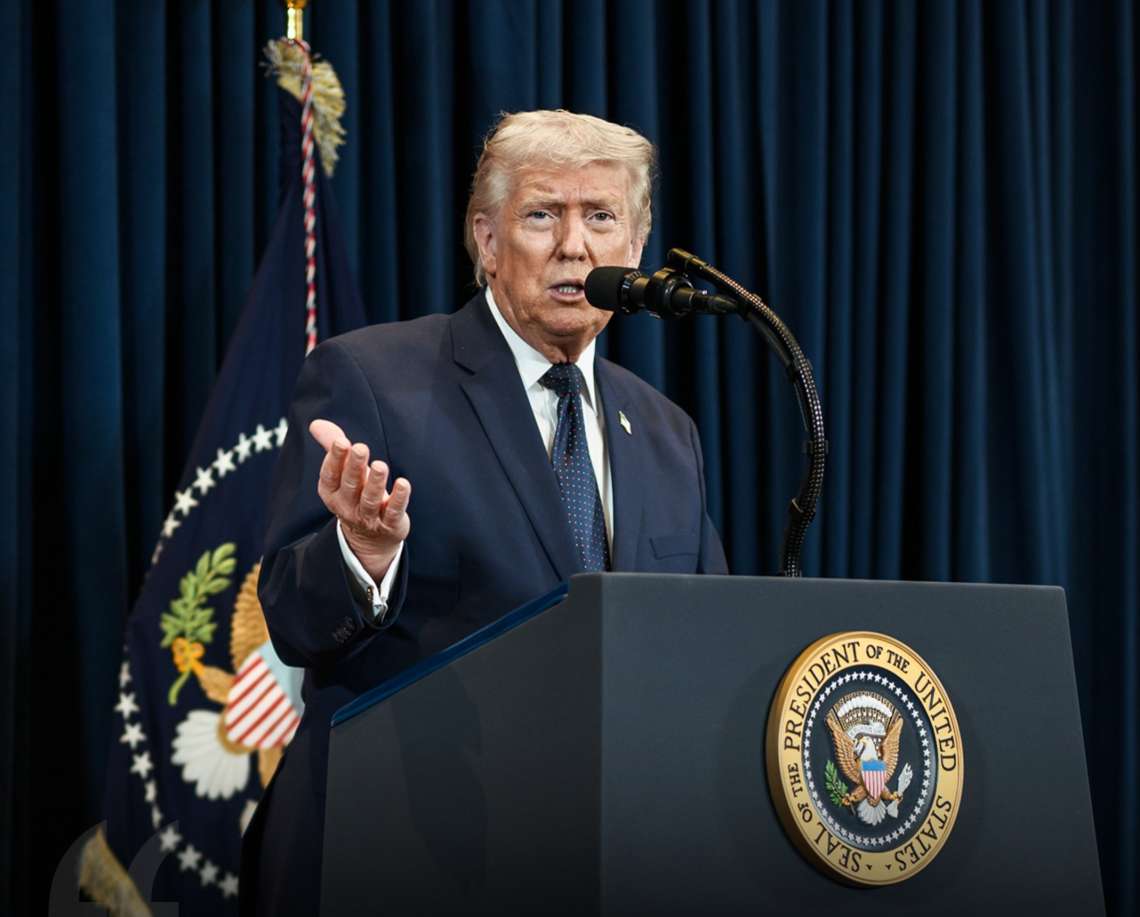
“We want to have one central source of approval,” Trump told reporters as he signed the order, flanked by senior officials including Treasury Secretary Scott Bessent. The directive equips the administration with tools to challenge what it considers inconsistent or excessively burdensome state rules. White House AI adviser David Sacks said the order would allow the administration to push back on the most “onerous” state regulations while stressing that it will not oppose measures related to children’s safety online.
The move arrives amid escalating tensions between the federal government, the technology sector and statehouses over who should set the rules for artificial intelligence. Major industry players, including OpenAI, Google, Meta and venture capital firm Andreessen Horowitz, have repeatedly said they want Washington, not individual states, to regulate the sector. They argue that inconsistent state-level requirements could hamper innovation and hinder the development of national-scale AI systems.
However, state officials from across the political spectrum insist that federal inaction has compelled them to step in. While Congress has held numerous hearings on AI, it has repeatedly failed to pass meaningful legislation. The result has been a surge of state-level initiatives aimed at addressing risks ranging from data privacy to deepfakes and children’s online safety.
Florida’s Republican Governor Ron DeSantis has proposed an AI bill of rights covering data privacy, parental controls and consumer protections. In California, Governor Gavin Newsom approved legislation requiring major AI developers to outline how they intend to mitigate catastrophic risks posed by advanced systems. Newsom’s state is home to many of the world’s most influential AI firms, and his administration has argued that the rapid pace of AI development demands proactive oversight.
Other states have taken aim at some of the darker uses of machine-generated content. A series of laws have been enacted to ban AI-generated non-consensual sexual imagery, which has surged with the proliferation of generative tools capable of creating realistic deepfake visuals. Several states have also passed rules targeting unauthorised political deepfakes, amid concerns that synthetic media could distort elections and undermine trust in democratic processes.
Trump’s order is expected to trigger a significant legal and political confrontation over the limits of federal authority. Supporters argue that a national framework is essential for creating consistent rules that both protect citizens and allow companies to innovate. Critics counter that state governments have long acted as laboratories for policy experimentation and that federal pre-emption could weaken important consumer protections.
The timing of the order underscores the administration’s determination to place AI regulation at the centre of its technology agenda. With global competition in artificial intelligence intensifying and the societal impact of advanced systems growing more pronounced, the question of who gets to write the rulebook has taken on new urgency.
For now, the executive order gives Washington a louder voice in shaping the future of AI governance. But it also sets the stage for a prolonged struggle between the federal government and the states, each claiming to be the rightful guardian of public safety, innovation and technological progress.