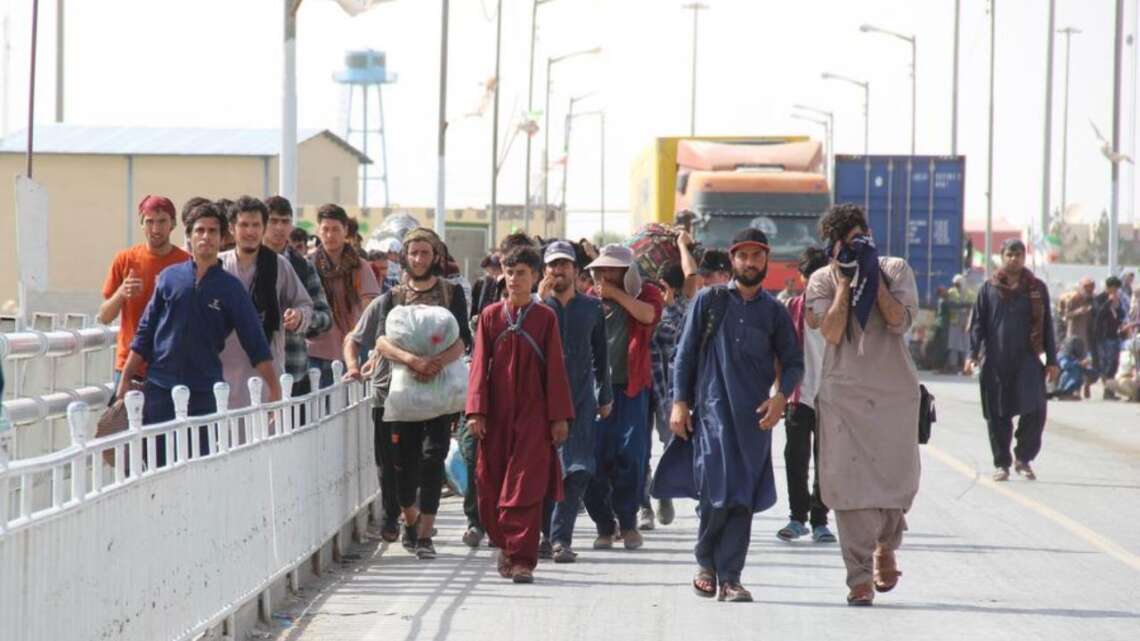
Since September 15, 2023, a total of 824,568 individuals have returned to Afghanistan, with 18,577 returning in January 2025 alone.
More than 18,000 Afghan nationals returned to Afghanistan from Pakistan’s Rawalpindi and Islamabad in January, with repatriation numbers steadily increasing in the latter half of the month, according to a report by Dawn.
The International Organisation for Migration (IOM) noted a rise in deportations of Afghan citizens from the Islamabad Capital Territory (ICT) and Rawalpindi. Between January 16 and 31, 291 heads of households were interviewed using a flow monitoring registry (FMR) form, and 9,846 Afghan returnees were identified at border crossings including Torkham, Chaman, Ghulam Khan, Badini, and Bahramcha.
Since September 15, 2023, a total of 824,568 individuals have returned to Afghanistan, with 18,577 returning in January 2025 alone. The majority of returnees were aged between 18-59 years, followed by individuals aged 5-17 years. Among children aged below 10 years who crossed the border, 502 received polio vaccinations during the process.
The majority of returnees were aged between 18-59 years, followed by individuals aged 5-17 years.
The IOM’s bi-weekly report revealed that 10 per cent of the returning households were headed by women, although no child-headed households were recorded. More men than women returned during this period. The primary reasons cited by heads of households for returning included fear of arrest (78 per cent) and inability to pay house rent (32 per cent). Other factors included challenges in paying household utilities (30 per cent), lack of employment opportunities (26 per cent), and communal pressure to return (9 per cent).
Interestingly, fear of arrest and communal pressure have both increased in the last two weeks. Family ties played a significant role in the return process, with 89 per cent of Afghan nationals citing family reasons for choosing their destination. Meanwhile, 67 per cent highlighted the availability of assistance in Afghanistan as a driving factor, and 17 per cent expressed a desire to obtain Afghan nationality.
Upon returning, many respondents expressed concerns about potential challenges they might face in Afghanistan. Key issues included finding income opportunities (98 per cent), arranging livelihoods (89 per cent), resettlement in new cities (87 per cent), and securing shelter (71 per cent). Additionally, some respondents identified access to medicine and health facilities (36 per cent), education (35 per cent), and clean drinking water (32 per cent) as primary obstacles. Only 8 per cent identified security as a major concern.
The cost of returning to Afghanistan also emerged as a significant factor. On average, returnees spent $513 to travel from their origin in Pakistan to their final destination in Afghanistan. Notably, the cost of travelling from the border to their final destination ($86) was higher than the cost of reaching the border from their origin in Pakistan ($67).
The report revealed that all returnees carried personal belongings, with 97 per cent reporting they brought cash, 95 per cent household items, and 53 per cent productive assets.
Most of the returnees travelled from Balochistan (43 per cent), followed by Khyber Pakhtunkhwa (28 per cent), Sindh (20 per cent), Punjab (7 per cent), and Islamabad Capital Territory (2 per cent). The primary districts of origin were those located near the border, such as Quetta (24 per cent) and Killa Abdullah (10 per cent). However, a significant number also returned from cities farther from the border, including Karachi (20 per cent) and Peshawar (19 per cent).
Upon reaching Afghanistan, many returnees settled in provinces close to the border, including Kandahar (32 per cent), Nangarhar (23 per cent), and Kabul (13 per cent), highlighting a preference for regions within accessible distance.
The ongoing repatriation process reflects the complex socio-economic and political dynamics influencing Afghan nationals in Pakistan, with many facing economic hardships and legal pressures prompting their return to a challenging environment in Afghanistan.