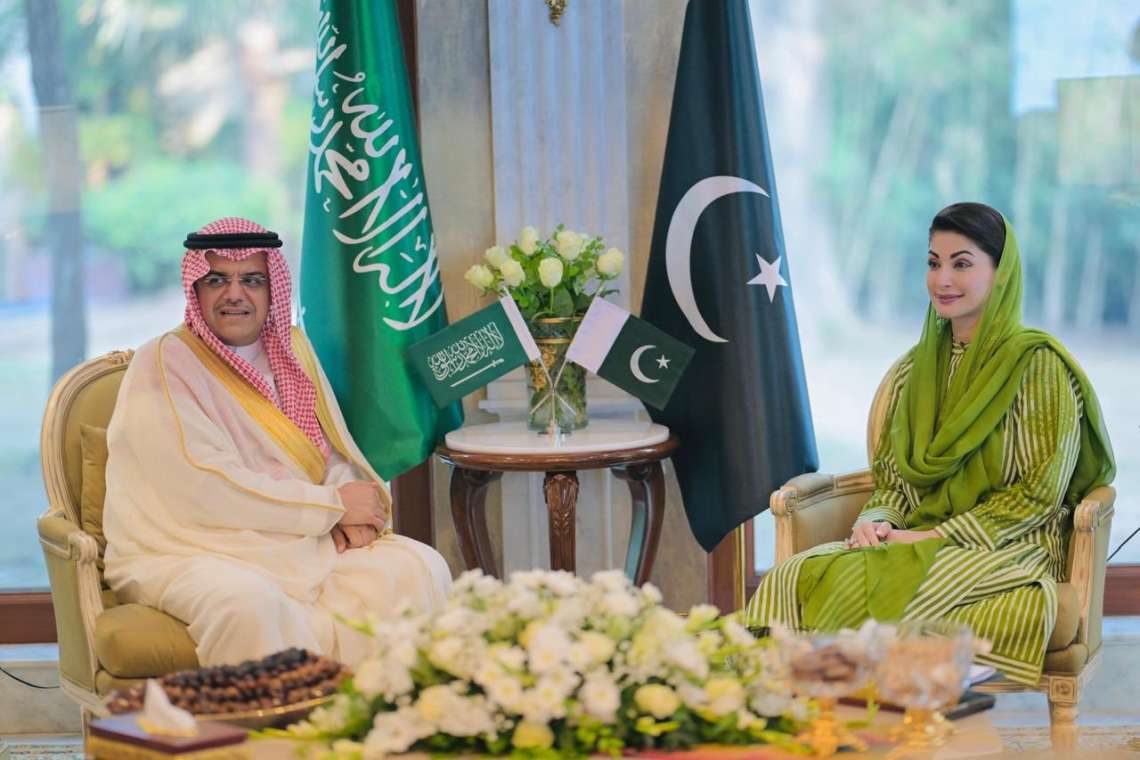
The Saudi-Pakistan MoU is less an achievement than a test of Pakistan’s ability to deliver on its own policies rather than announce new ones. It’s a test of whether the country can overcome its chronic infrastructure deficits, energy instability, policy inconsistency, and foreign exchange constraints. It’s a test of whether Pakistan can learn from the failures of CPEC and craft a coherent, sector-specific industrial strategy … writes Dr Sakariya Kareem
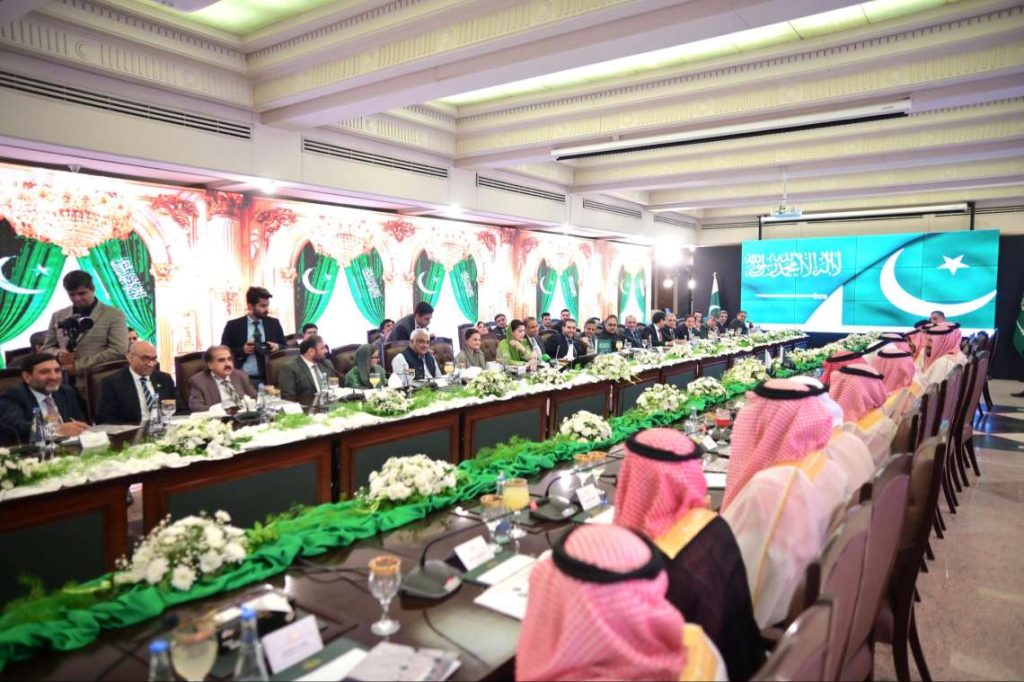
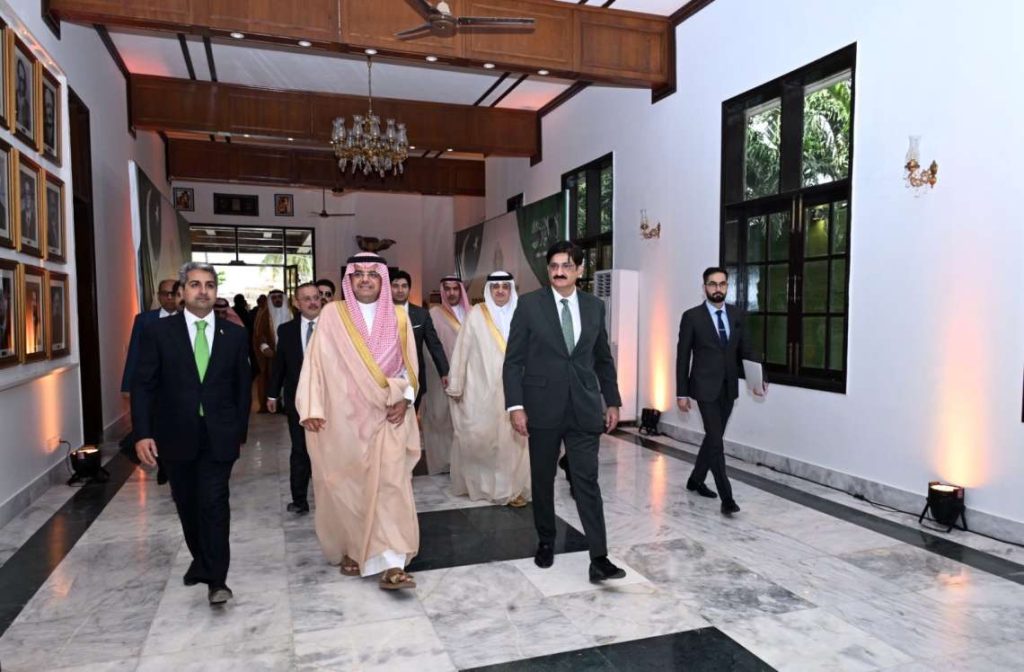
On October 12, 2025, the Punjab government of Pakistan signed a Memorandum of Understanding (MoU) with the Saudi-Pakistan Joint Business Council, promising to usher in a new era of industrial development. The agreement, announced with fanfare in Lahore, envisions a Saudi-funded industrial city in Punjab, channeling investments into special economic zones (SEZs), logistics hubs, real estate, and industrial estates. It comes bundled with a suite of incentives: a ten-year income tax holiday, one-time customs duty exemptions on capital goods, and a fast-track “Zero Time to Start” initiative aimed at eliminating bureaucratic delays for foreign investors.
The Saudi-Pakistan MoU arrives at a moment of renewed political synergy. Following a recent defense pact, the two nations appear more strategically aligned than they have been in decades. On the surface, the proposition is enticing. A Saudi-backed industrial city could channel billions into infrastructure, breathe life into Pakistan’s manufacturing sector, and offer a much-needed injection of liquidity into its fragile economy. Saudi Arabia’s Vision 2030 seeks to pivot away from oil dependency, and Pakistan, offering inexpensive labour and existing energy infrastructure, positions itself as a natural partner in that transformation. Punjab’s pitch is simple: Saudi capital meets Pakistani capacity.
But beneath the celebratory headlines lies a more sobering truth: this is still just a memorandum of understanding, a gesture of intent, not a binding commitment. And if history is any guide, Pakistan’s track record with such agreements is riddled with unfulfilled promises, stalled projects, and squandered opportunities.
To understand the scepticism surrounding the Saudi MoU, one need only revisit the China-Pakistan Economic Corridor (CPEC), launched with similar fanfare a decade ago. Touted as a game-changer, CPEC promised to transform Pakistan into a regional trade and industrial hub. Yet, ten years later, the initiative is mired in controversy and underperformance. According to the CPEC Authority, only three projects in Gwadar, CPEC’s focal point, have been completed, while a dozen others worth nearly $2 billion remain unfinished, including critical infrastructure like water supply and electricity.
Chinese confidence in Pakistan’s ability to protect its citizens and projects has eroded. More than 30 Chinese companies operating under CPEC face non-payment of dues, and most projects have stalled over the past five years. Restarting them would require capital, time, and political will, none of which Islamabad has shown interest in. The failure of CPEC has prompted Pakistan to pivot toward strategic ambiguity, courting the United States and Middle Eastern allies for economic lifelines, while sidestepping its obligations to China.
Despite the promise of industrial development, the hurdles remain tangible. The Saudi MoU, like CPEC before it, hinges on Pakistan’s ability to deliver reliable infrastructure. A genuine industrial city requires serviced land with clear titles, trunk infrastructure, roads, power, water, and waste systems, ready before investors arrive. Punjab may have land banks and SEZ sites, but their readiness varies wildly. Without upfront capital for off-site utilities, even the most generous incentives can’t turn soil into steel.
Energy reliability remains another chronic issue. Pakistan’s industrial base has long suffered from systemic power outages and load shedding. Unless the Saudi project guarantees electricity through dedicated feeders or hybrid on-site generation, investors will factor outages into their cost models, and the math will collapse.
Pakistan’s business environment is haunted by policy inconsistency and security concerns. Multinational corporations like BP, Chevron, Siemens, and several pharmaceutical firms have disinvested from Pakistan in recent years. Their exit was driven by tax complexities, ineffective export policies, poor enforcement of quality standards, and terrorism-related security risks.
Compared to other investment destinations, Pakistan remains uncompetitive in access to government services and infrastructure. The country has a low density of paved roads, poor-quality railroads and airports, and only an acceptable level of seaports. Institutional shortcomings in the power sector prevent electricity generation from reaching its capacity, exacerbating the energy crisis.
Perhaps the most critical hurdle is foreign exchange convertibility. Pakistan’s recurring balance-of-payments (BOP) crises have made capital repatriation risky. When foreign currency reserves dwindle, the government imposes restrictions to preserve its limited forex. In 2023, foreign airlines faced long delays in moving profits out of Pakistan, with some funds stuck since 2022. This was a direct result of the foreign exchange crunch caused by the BOP crisis.
Unless the government crafts airtight guarantees, such as escrowed mechanisms or staged remittance schedules, boardrooms in Riyadh will hesitate. Investors need assurance that they can repatriate profits easily and at favorable exchange rates. Without it, the risk outweighs the reward.
The “Zero Time to Start” initiative is a promising slogan, but, the policy must be codified into law, measured in days, and backed by penalties for bureaucratic delays. Pakistan’s history of reinterpreting incentives or delaying implementation renders even the most attractive policies meaningless.
The federal SEZ Act does offer a legal framework for incentives, but execution remains the Achilles’ heel. Institutional fragmentation hampers the government’s ability to deliver public goods and services efficiently. The lack of clarity on targeted industry sectors leaves investors, developers, and chambers of commerce guessing.
Even if structural problems are fixed, success hinges on industrial logic, the choice of sectors. Many SEZs fail because they try to be everything: textiles, food, auto, tech, and logistics. Real clusters succeed by narrowing focus and building linkages. If Punjab positions this city around sectors aligned with Saudi Arabia’s economic needs that include construction materials for Vision 2030, halal food processing for GCC demand, and medical devices for export diversification, the zone could become economically self-reinforcing.
But without that coherence, it’s just another patch of subsidized real estate. Pakistan’s Preferential Trade Agreement with China offers a cautionary tale. Despite the agreement, exports to China remain low and limited in value addition. Underlying causes include electricity and gas shortages, limited access to skilled labor, law and order issues, and a low level of technology and R&D.
The Saudi-Pakistan MoU is less an achievement than a test of Pakistan’s ability to deliver on its own policies rather than announce new ones. It’s a test of whether the country can overcome its chronic infrastructure deficits, energy instability, policy inconsistency, and foreign exchange constraints. It’s a test of whether Pakistan can learn from the failures of CPEC and craft a coherent, sector-specific industrial strategy.
But if history is any guide, the likely answer is no. The MoU may be celebrated in press conferences and photo ops, but without execution, it will join the long list of hyped announcements that never materialized.