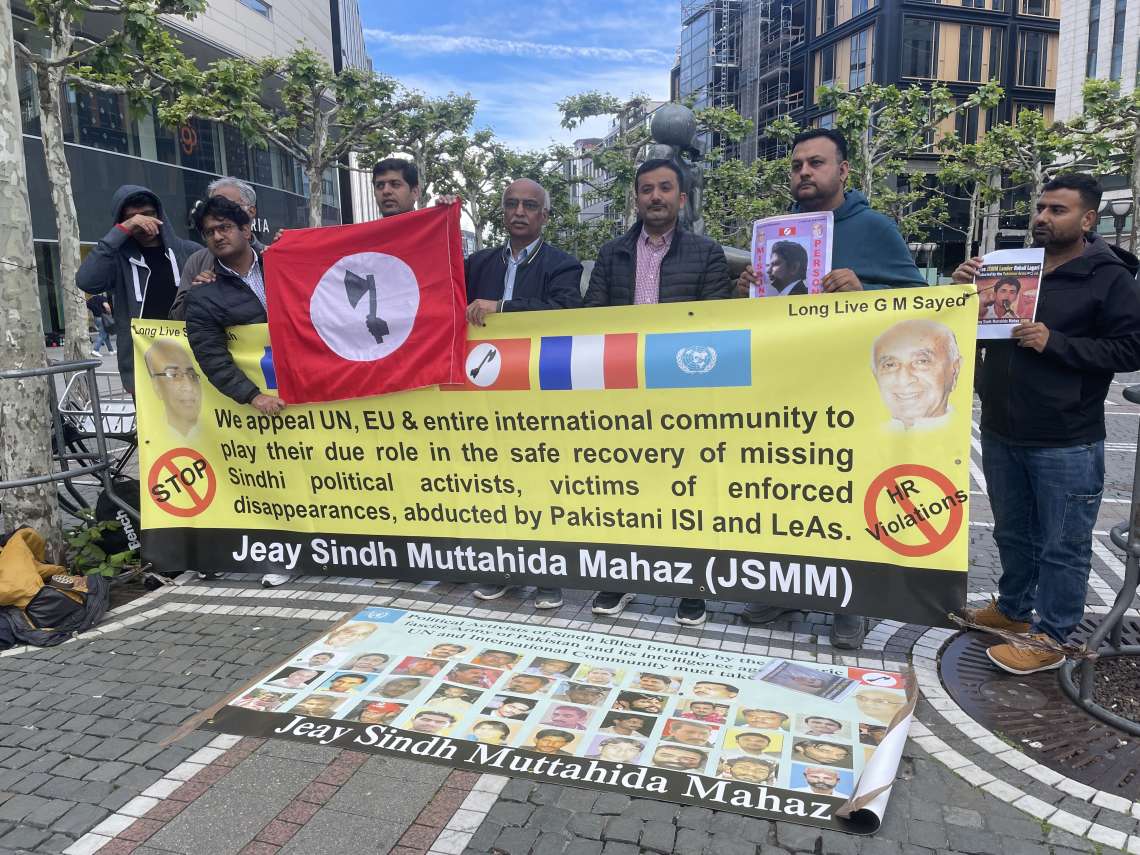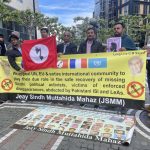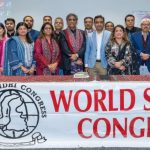
Sindhi activists and diaspora representatives have urged the international community to recognise what they describe as the Sindhi people’s right to self-determination…reports Asian Lite News Desk
Shafi Burfat, chairman of the Jeay Sindh Muttahida Mahaz (JSMM), along with representatives of the Sindhudesh National Movement and members of the global Sindhi diaspora, has issued an open diplomatic appeal calling on the United Nations and the international community to support what they describe as the Sindhi people’s right to self-determination.
The appeal, addressed to the UN Secretary-General, UN Security Council, UN High Commissioner for Human Rights, International Monetary Fund (IMF), World Bank, foreign governments and international think tanks, calls for the protection of Sindh’s territorial integrity and a UN-supervised referendum on the region’s political future.
The representatives describe what they term an “existential crisis” in Sindh, citing concerns over territorial integrity, economic sovereignty, demographic changes, environmental degradation and political rights.
The document portrays Sindh as an ancient homeland with a distinct historical and cultural identity shaped by humanism, secularism, pluralism and peaceful coexistence. It alleges that centralised state policies, demographic changes and economic and environmental pressures have weakened Sindh’s control over its territory and resources.
The appeal traces the region’s modern political history to the British military conquest of Sindh in 1843 under Charles Napier, arguing that the territory subsequently lost its political independence and became part of British India.
It further argues that the creation of Pakistan in 1947 did not result in what the signatories describe as an equal partnership between historically distinct nations. The document alleges that political, economic and military power subsequently became concentrated at the federal level, which it claims has contributed to the political and economic marginalisation of Sindh.
The representatives describe the situation as an “internal colonial framework”, alleging political disenfranchisement, economic extraction and cultural marginalisation, as well as declining control over land, natural resources and the Indus River.
A major concern raised in the appeal is the possible division of Sindh through administrative reorganisation or the creation of new provinces. The signatories argue that Sindh’s territory, including Karachi, its coastline and offshore islands, forms part of an interconnected historical homeland and should not be separated without the consent of the Sindhi population.
The appeal also raises concerns over demographic changes in urban centres including Karachi and Hyderabad. It alleges that migration policies over several decades have altered the demographic balance and affected the political representation of the historic Sindhi population.
On economic issues, the document questions Pakistan’s use of loans from international financial institutions, alleging that funds have been diverted towards corruption, defence expenditure, debt servicing and military-linked projects. It calls for stronger human-rights and anti-corruption conditions to be attached to future financial assistance.
The representatives also claim that Sindh contributes significantly to federal revenues through taxation, maritime customs, ports and natural resources, including Thar coal, oil and natural gas. They allege that agricultural land, forests, deltaic areas and offshore islands have been transferred through government measures and development projects to military-backed corporate enterprises and foreign entities.
Water security is another central issue in the appeal. The signatories allege that upstream canals, dams and other diversions have reduced water availability in Sindh despite existing water-sharing arrangements, including the 1945 agreement and the 1991 Water Accord. They link reduced freshwater flows below the Kotri Barrage to seawater intrusion, agricultural losses, damage to mangrove ecosystems and disruption of farming and fishing livelihoods.
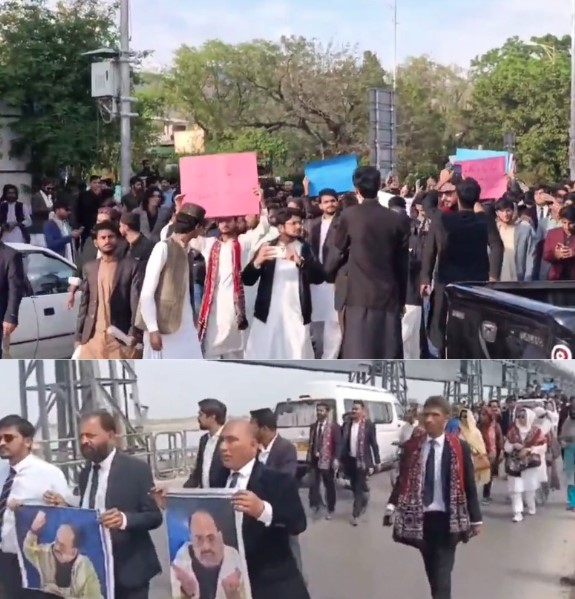
The appeal also alleges that political activists, students, journalists, intellectuals and human rights defenders in Sindh have faced enforced disappearances, arbitrary detention and extrajudicial killings. It further accuses state institutions of enabling extremist networks that, it claims, threaten Sindh’s secular and Sufi-influenced cultural traditions.

The signatories have called for an independent UN fact-finding mission into the allegations concerning human rights, demographic changes, land acquisition, water distribution, resource exploitation, political repression and environmental degradation.
Their central demand is for the UN Security Council and General Assembly to facilitate and supervise a free and fair referendum in Sindh on its political future, including the option of an independent and sovereign Republic of Sindhudesh.
The appeal also urges international financial institutions to link future assistance to Pakistan with safeguards concerning human rights, indigenous rights and resource sovereignty.
The Sindhudesh National Movement and members of the global Sindhi diaspora conclude that the preservation of Sindh’s territory, resources and cultural heritage is inseparable from what they describe as the survival of the Sindhi nation.