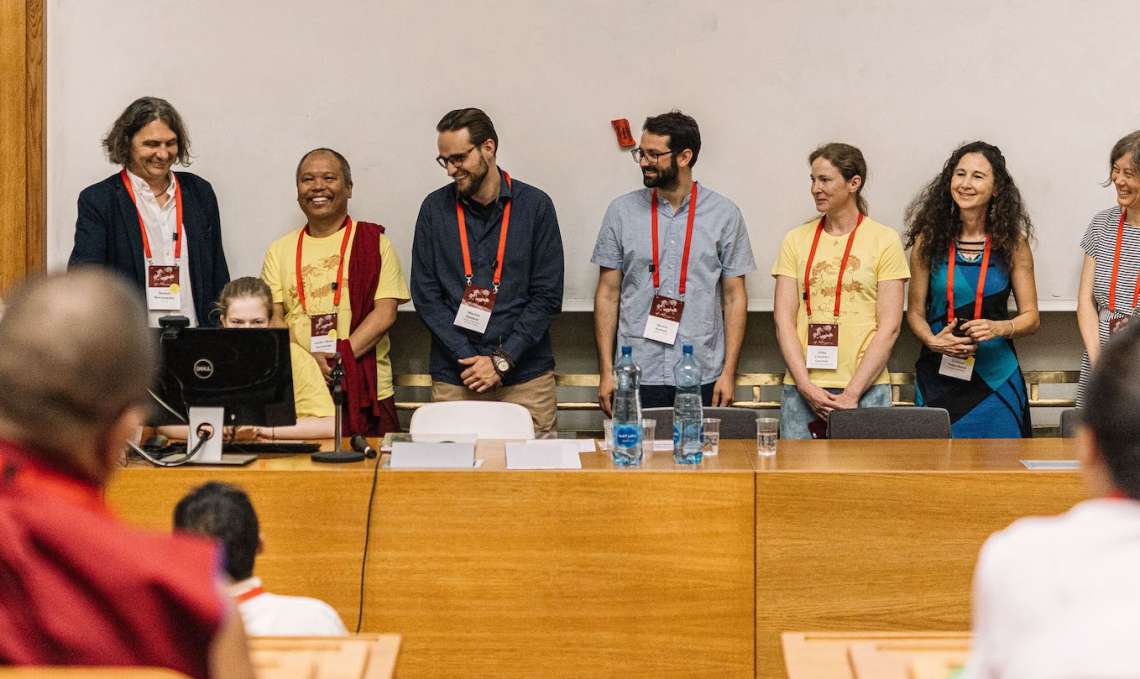
Nepal’s government has instructed Kathmandu University not to host a major international seminar on Tibetan studies, prompting organisers to move the event online…reports Asian Lite News Desk
Nepal government intervention has forced an international conference on Tibetan studies scheduled in Kathmandu to move online, according to the International Association for Tibetan Studies (IATS).
The 17th Seminar of the IATS, described by the association as a major global gathering for Tibetan scholarship, was due to take place from August 23 to 29 at Kathmandu University. The event was being organised by the university’s Himalaya Centre for Asian Studies and its Centre for Buddhist Studies at the Rangjung Yeshe Institute, in collaboration with the IATS.
The IATS said Kathmandu University was instructed on August 3 not to proceed with hosting the seminar. The instruction was reportedly delivered in person by Nepal’s Chief Secretary Govinda Bahadur Karkee and Foreign Secretary Amrit Bahadur Rai to Kathmandu University Vice-Chancellor Rishikesh Wagle, Registrar Rajeev Shrestha and Himalaya Centre representative Sagar Sharma.
The association said neither the conference organisers nor the IATS had received formal written communication from the government explaining the decision. However, it said subsequent oral communications with government representatives confirmed that the university was not permitted to host the event.
Local media reports have linked the government’s intervention to concerns allegedly raised by China, although Kathmandu University has said it is unaware of any such pressure.
Following the government’s instruction, representatives of the Kathmandu University centres handed responsibility for further decisions concerning the seminar to the IATS Advisory Board.
The IATS Board held an emergency online meeting on August 7 and decided to take over as the conference convenor and move the seminar entirely online.
“The programme will remain the same, and participants will be able to attend and present online from wherever they are at the time. Unfortunately, adjustments to different time zones will not be possible,” the association said in an announcement issued on August 8.
The association expressed concern over what it described as “unexpected and unwarranted interference” in an academic event. It said Kathmandu University had been selected to host the seminar in 2023, with all relevant parties agreeing to the arrangement, and that no concerns had been raised during three years of preparations.
The organisers had invested significant time and resources in preparing the conference, while more than 700 participants had already purchased air tickets and booked accommodation in Kathmandu, according to the IATS.
The association warned that the effective cancellation of the in-person conference could affect Nepal’s reputation as a destination for international academic events.
“The effective cancellation of this conference by the authorities will raise questions about holding future academic events in the country, and is likely to result in economic and reputational damage,” the IATS Board said.
The seminar is intended to bring together scholars working on Tibetan and Himalayan studies from around the world. Despite the change in format, the IATS said it would seek to ensure that the academic programme proceeds as planned and continues to provide an international platform for scholarly exchange.
The controversy comes as Nepal maintains close relations with China while also hosting communities and organisations linked to Tibetan affairs. The reported government intervention has therefore drawn attention to the sensitivities surrounding academic and cultural activities involving Tibet in Nepal.
The IATS said participants would still be able to attend and present their research remotely, allowing the academic programme to continue despite the cancellation of the planned Kathmandu gathering.