This year’s event will be the fifth SCO summit hosted by China, and officials in Beijing are billing it as the largest and most consequential since the organisation’s creation in 2001,…reports Asian Lite news
World leaders are preparing to gather in the Chinese port city of Tianjin on Sunday for what Beijing is presenting as the most ambitious Shanghai Cooperation Organisation (SCO) summit in the bloc’s 24-year history.
The two-day meeting, which will run through Monday, is expected to focus on enhancing security coordination, strengthening financial mechanisms and building greater unity among member states. According to China Daily, more than 20 foreign leaders and 10 heads of international organisations have confirmed their participation. The gathering will be chaired by Chinese President Xi Jinping, who is set to preside over both the 25th Meeting of the Council of Heads of State of the SCO and the expanded “SCO Plus” session.
This year’s event will be the fifth SCO summit hosted by China, and officials in Beijing are billing it as the largest and most consequential since the organisation’s creation in 2001. The summit comes as the SCO – which groups 10 full members including India, Russia, China, Iran, Pakistan and several Central Asian states – seeks to position itself as the leading political and economic platform for the Global South.
Writing in the People’s Daily on Saturday, Chinese Foreign Minister Wang Yi said that since Beijing assumed the rotating presidency of the SCO in July last year, the organisation had already convened 110 major events. He argued that the bloc is entering “a new stage of high-quality development characterised by greater solidarity, coordination, dynamism and productivity.”
China, he added, is determined to strengthen the “Shanghai Spirit” – the organisation’s founding ethos of mutual trust, mutual benefit and respect for cultural diversity – while reinforcing security cooperation and catalysing growth. “We are confident the Tianjin summit will be a great event of friendship, solidarity and fruitful outcomes,” Wang declared.
Officials have confirmed that the leaders’ summit will produce a number of key outcomes. Among them will be a declaration jointly signed by member states, a ten-year development strategy for the SCO, and statements commemorating the 80th anniversaries of both the Allied victory in the Second World War and the founding of the United Nations.
Other documents are expected to focus on strengthening cooperation in security, economic development, and cultural and people-to-people exchanges. A major item under discussion will be the establishment of new financial institutions, with Beijing proposing an SCO Development Bank and related funding mechanisms to support infrastructure and technology projects across member countries.
In a written interview with Russia Today earlier this month, China’s Ambassador to Moscow, Zhang Hanhui, highlighted the significance of the financial agenda. He said the bank would provide fresh capital for development projects and further reduce reliance on Western-dominated institutions such as the World Bank and IMF.
Observers say that by championing such mechanisms, Beijing is seeking to give the SCO a stronger institutional foundation while consolidating its role as the principal economic engine of the bloc.
Sun Zhuangzhi, director of the Institute of Russian, Eastern European and Central Asian Studies at the Chinese Academy of Social Sciences, told China Daily that the SCO has become a platform with expanding reach and growing participation. “The organisation successfully created a framework that engages more participants and market entities, enhances their interaction and taps into the strengths of the member states,” he said.
“The SCO embodies the future trajectory of economic growth and technological innovation,” Sun added, arguing that its focus on digital transformation, energy transition and infrastructure investment would yield tangible benefits for its members.
The SCO’s full members now number 10: China, Russia, India, Pakistan, Iran, Belarus, Kazakhstan, Kyrgyzstan, Tajikistan and Uzbekistan. In addition, it has several dialogue partners and observer states, including Turkey, Sri Lanka, Saudi Arabia and Egypt. With its broad geographical footprint and a population base representing more than 40 per cent of the world’s total, the bloc aspires to act as a counterweight to Western-led institutions.
Crucially, two of its leading members – China and Russia – are permanent members of the UN Security Council with veto powers, giving the organisation a direct link to the highest level of global governance. Analysts argue that this grants the SCO not only symbolic clout but also a measure of diplomatic leverage that can be exercised in international negotiations.
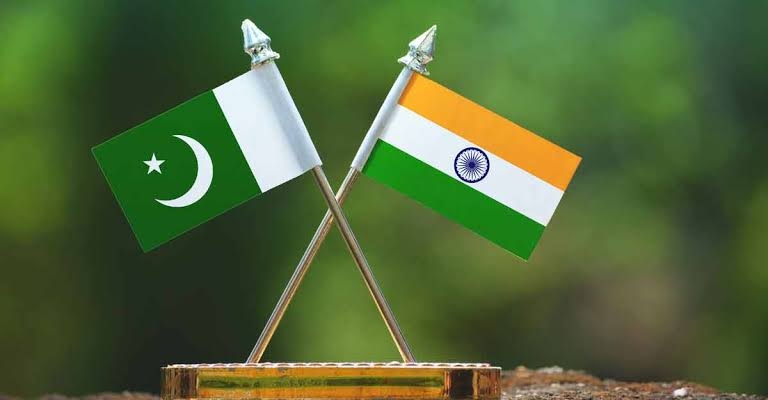
Despite its growing prominence, the SCO faces challenges. Relations between India and China remain tense, and long-standing rivalries between India and Pakistan also complicate decision-making. Moreover, many of its members face internal economic and political strains that limit their ability to contribute equally to joint projects.
Nevertheless, Beijing is intent on presenting the Tianjin summit as a turning point. Wang Yi stressed that the SCO’s strength lies in its diversity and its commitment to non-alignment. He said the organisation is determined to “make a greater contribution to building a community with a shared future for humanity.”
As geopolitical competition intensifies, the summit is being watched closely in Western capitals. The emphasis on financial self-reliance, collective security and solidarity with the Global South underscores the SCO’s ambition to provide an alternative to US-led alliances.
For Beijing, Tianjin offers an opportunity not only to showcase its leadership within the SCO but also to project itself as the champion of a multipolar order. Whether the summit delivers substantive outcomes beyond declarations will depend on the willingness of its diverse members to overcome differences and invest in long-term cooperation.