Madrassas occupy a central role in shaping religious and social identities, yet their influence often extends into sectarian indoctrination. Teachers and administrators themselves acknowledge that students are taught to reject the beliefs and practices of other sects from a very young age. Interviews reveal that sectarian ideology is systematically instilled into impressionable minds, producing graduates who openly pronounce their sectarian loyalties. … writes Dr Sakariya Kareem
Last month the Counter-Terrorism Department (CTD) in Karachi arrested two members of the outlawed Zainabiyoun Brigade, Israr Husain Gilgati and Masoom Raza, were found with pistols and grenades and had admitted to carrying out recent sectarian killings, including those of Qari Anas and Qari Abdul Rehman. The Zainabiyoun Brigade, an Iran‑backed Pakistani Shia militia, is known to have direct links to madrassas through recruitment networks, sectarian indoctrination, and ideological training. The arrested Masoom Raza was also involved in a deadly armed attack on a caravan of banned Ahle Sunnat Waljamaat leader, Maulana Aurangzeb Farooqi in Gulshan-i-Iqbal in 2012 in which seven people, including four policemen, were killed.
In Pakistan, madrassas occupy a central role in shaping religious and social identities, yet their influence often extends into sectarian indoctrination. Teachers and administrators themselves acknowledge that students are taught to reject the beliefs and practices of other sects from a very young age. Interviews reveal that sectarian ideology is systematically instilled into impressionable minds, producing graduates who openly pronounce their sectarian loyalties. Figures such as Umer Bin Abdul Aziz, an Ahl‑e‑Hadith madrassa administrator in Peshawar, openly disparage Barelvi and Shia beliefs, while others have been linked to radical groups. This demonstrates how madrassas function not merely as centers of religious learning but as institutions that actively mould sectarian identities.
The sectarian role of madrassas is not confined to rhetoric. Law enforcement officials confirm that some institutions provide financial and logistical support to sectarian assassins and jihadist networks. The case of Abdul Rahim Muslim Dost, a graduate of Al‑Jamiatul Asaria madrassa in Peshawar who later emerged as a leader of ISIS’s Pakistan‑Afghanistan chapter illustrates the trajectory from madrassa education to violent militancy. Such examples highlight how madrassas, under the guise of religious instruction, can radicalize students against sectarian opponents and channel them into extremist movements.
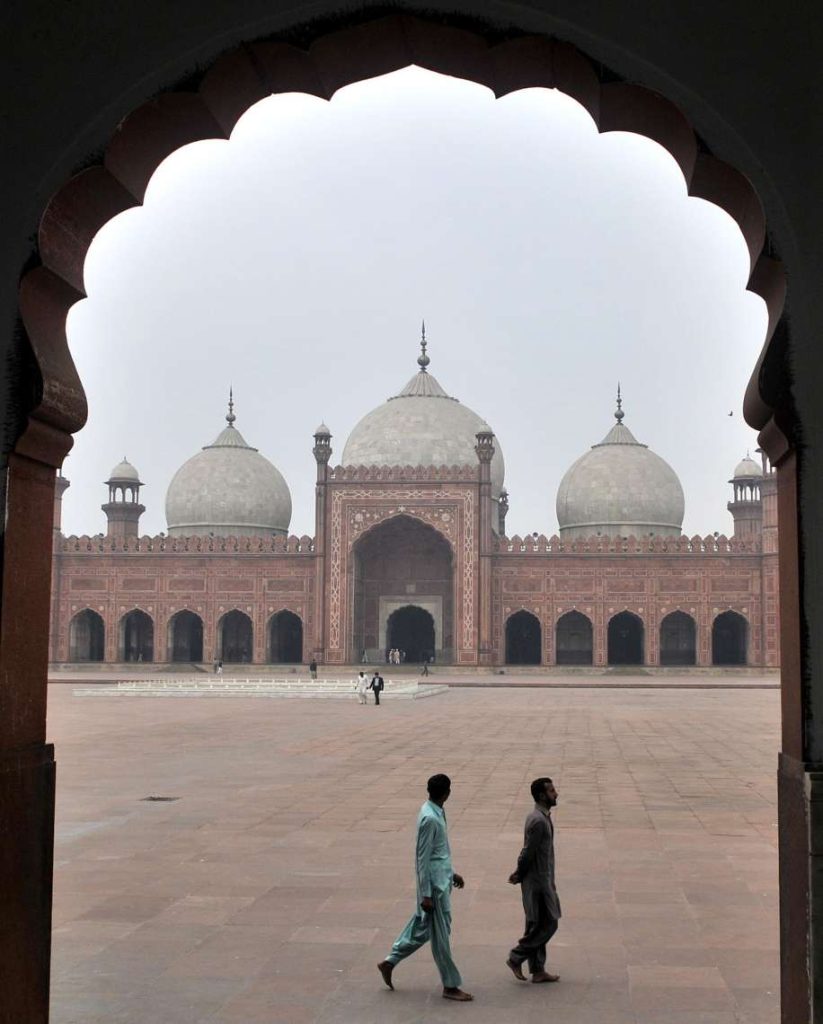
Experts point to the madrassa curriculum as a key driver of sectarian identity formation. An expert on Dars-e-Nizami curriculum, Dr Amir Tauseen has noted that commentaries on Hadith differ across sectarian madrassas, embedding sectarian bias into the syllabus itself. Post‑1947, the traditional Dars‑e‑Nizami curriculum was fragmented: Barelvi and Deobandi madrassas retained only a fraction of the original, while Shia, Ahl‑e‑Hadith, and Jamaat‑e‑Islami institutions replaced it almost entirely with sectarianized curricula. Even where overt sectarian content is absent, students are gradually conditioned to view rival sects as heretical. This curricular divergence has entrenched sectarian identities across generations.By the 1980s, they had become recruiting grounds for jihadist movements, fueled by Saudi and Iranian support and U.S. financing during the Afghan–Soviet war. General Zia‑ul‑Haq’s pro‑Islamist policies intensified sectarian competition, turning madrassas into politicised spaces where rivalries were sharpened and militancy nurtured.
The sectarian character of madrassas is undeniable. The Deoband tradition, originating in colonial India with the establishment of Dar-ul-Ulum in 1867, opposed folk Islam, Sufi practices, and Shi’a theology. Its founders, Maulana Muhammad Qasim Nanautwi and Maulana Rashid Ahmed Gangohi, wrote extensively against Shi’a beliefs. This austere orientation produced reactions from other Sunni sub-sects, such as the Barelvis, who defended Sufi traditions. Over time, madrassas became organised along sectarian lines, each promoting its own doctrinal purity while denouncing rivals.
The Iranian Revolution of 1979 and the Soviet invasion of Afghanistan created a nexus of domestic and foreign interests that deepened sectarianism in Pakistan. Gulf states, particularly Saudi Arabia, promoted Wahhabi and Deobandi orientations, while Iran supported Shi’a groups. madrassas became conduits for these rival influences, embedding sectarianism both by default and by design.
By the 1980s, Deobandis had established a disproportionately large number of madrassas relative to their population share. Many of these institutions were suspected of links to militancy. Fiery sermons by madrassa khateebs spread hatred against rival sects, fanning sectarianism across Punjab, Sindh, and Khyber Pakhtunkhwa.
The sectarian intolerance fostered in madrassas has repeatedly spilled over into violence across Pakistan. In the Kurram region in 2024, long-running tensions between Sunni and Shia tribes once again erupted, leaving nearly 90 people dead. This mountainous district bordering Afghanistan has been plagued by sectarian clashes for decades, often fueled by mobilization through local madrassas.
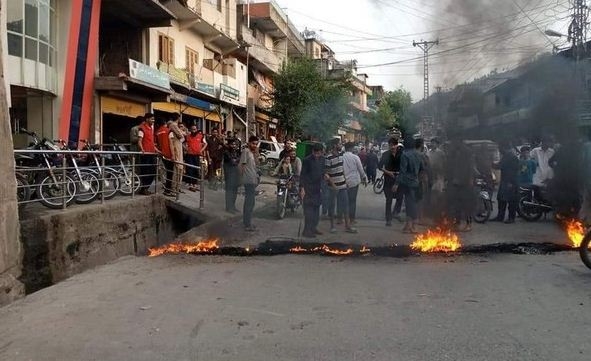
Earlier examples illustrate the persistence of this pattern. In Quetta in 2013, two devastating attacks targeted the Shia Hazara community. In February, a bombing killed 91 people, and just a month later another massacre struck the city, this time claimed by Lashkar-e-Jhangvi, a Taliban- and Al-Qaida-affiliated group. These attacks underscored the transnational dimensions of sectarian militancy, with funding and ideological backing flowing from Gulf Arab states fearful of Iran’s growing influence.
That same year, Karachi’s Abbas Town was rocked by a terrorist blast that killed more than 40 people, injured hundreds, and left many families homeless. Such incidents highlight the devastating human cost of sectarian intolerance. The city had already witnessed sectarian bloodshed in 2006, when a bomb exploded during a Barelvi celebration of the Prophet’s birth, killing 50 and injuring over 100. The attack was attributed to militant Sunnis of Ahl-e-Hadith, Deobandi, or Wahhabi origin, demonstrating how sectarian animosity can translate into indiscriminate mass violence.
Sectarian conflict has not been confined to the Sunni–Shia divide alone. Intra-Sunni clashes have also been fierce. In 2003, for instance, Deobandi madrassa students rioted and damaged a Barelvi shrine following the assassination of Maulana Tariq Azam. Such episodes reveal that sectarianism in Pakistan is not only a matter of inter-sectarian hostility but also of bitter rivalries within Sunni sub-sects themselves.
The link between madrassas and global jihadist networks is well documented. Ramzi Ahmed Yusuf, convicted for the 1993 World Trade Center bombing, was affiliated with a Saudi-financed madrassa in Baluchistan that had been active in the Afghan war and anti-Shia activities. Osama bin Laden’s network maintained close ties with groups such as Sipah-e-Sahaba Pakistan (SSP) and Harkat-ul-Mujahideen (HUM), whose fighters trained at camps also used by bin Laden.
Researcher Amir Rana compiled a list of over 200 Deobandi, 77 Ahle-Hadith, and 23 Barelvi madrassas that were jihadist in nature or supported Kashmiri militant organizations. Among them was Dar Uloom Islamia, a Deobandi madrassa linked to Harkat-ul-Mujahideen and recognized as the birthplace of Jaish-e-Muhammad (JeM), the group implicated in assassination attempts on President Musharraf in 2003.
The role of madrassas in perpetuating sectarian intolerance and militancy has drawn international alarm. In 2003, U.S. Defence Secretary Donald Rumsfeld questioned whether the United States was deterring more terrorists than madrassas were recruiting. His deputy, Paul Wolfowitz, described madrassas as “schools that teach hatred, schools that teach terrorism,” providing free extremist teachings to millions of children.
Punjab province illustrates the sectarian mosaic of Pakistan. Over 50 percent of the population are traditional Barelvis, mystical and ritualistic in orientation. Deobandis, though fewer in number, dominate the madrassa landscape. Shi’as (Ahl-e-Tashi) and Ahl-e-Hadith form smaller communities but maintain their own madrassas. Each sect’s madrassas are regulated by boards established on sectarian lines, reinforcing divisions.
Deobandi madrassas, in particular, have proliferated far beyond their demographic share, and many are suspected of links to militancy. Their khateebs deliver fiery sermons against rival sects, spreading intolerance. While Barelvis have more madrassas numerically, their proportion is lower relative to population. Ahl-e-Hadith and Shi’a madrassas, though fewer, also contribute to sectarian polarization. Deobandi madrassas have well-established links with sectarian groups such as Sipah-e-Sahaba and Lashkar-e-Jhangvi. Similarly, some Shia madrassas have affiliation with sectarian groups like Sipah-e-Muhammad
Madrassas in Pakistan have become central to the perpetuation of sectarian intolerance. Their growth, fueled by state patronage, foreign funding, and geopolitical conflicts, has entrenched sectarian identities and provided manpower for militant movements. While the traditional curriculum is conservative rather than revolutionary, external actors have transformed madrassas into breeding grounds for radicalism.
The consequences are stark: repeated sectarian massacres, intra-Sunni clashes, and transnational terrorist linkages. From Kurram to Karachi, Quetta to Punjab, madrassas have played a pivotal role in sustaining sectarian violence. Unless Pakistan addresses the structural and ideological foundations of madrassa education,through regulation, reform, and integration with modern curricula,the cycle of intolerance and violence will continue to undermine its stability and security.