With congressional elections looming in November, Republicans risk losing control of Congress, a development that could severely undermine Trump’s domestic agenda….reports Asian Lite News
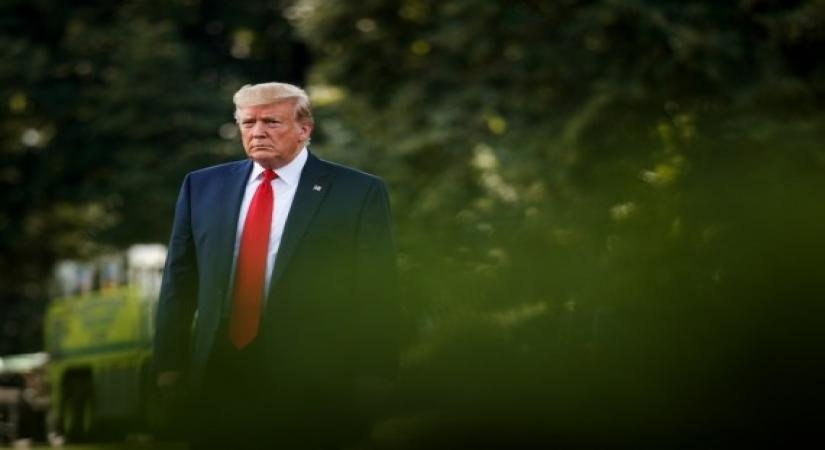
President Donald Trump returned to the White House with a shock-and-awe policy blitz that rapidly expanded presidential authority and reshaped America’s relations with the world. But as he enters the New Year with midterm elections on the horizon, the political cost of that approach is becoming increasingly clear, with signs that his once firm grip on the Republican Party is beginning to loosen, according to Arab News.
Trump swept back into office in January for a second term pledging to overhaul the US economy, immigration system, federal bureaucracy and large swathes of American cultural life. Much of that agenda was swiftly enacted, making him one of the most powerful presidents in modern history. Yet as with all second-term presidents who cannot seek re-election, Trump now faces the gradual erosion of political capital — a process that appears to be accelerating.
Some Republican lawmakers have begun to rebel, while public opinion surveys point to growing dissatisfaction over the high cost of living, an aggressive immigration crackdown and concerns that Trump has pushed presidential power beyond accepted limits. His approval rating has fallen to about 39 percent, close to the lowest level of his current term, with voters increasingly critical of his handling of the economy.
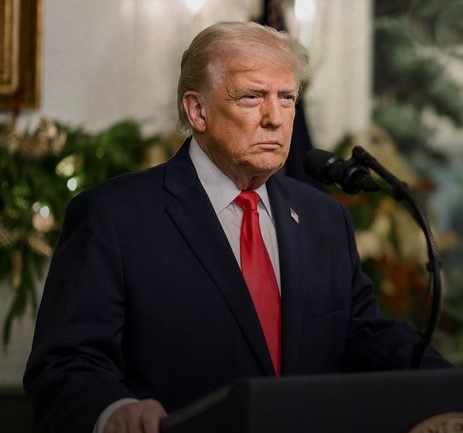
With congressional elections looming in November, Republicans risk losing control of Congress, a development that could severely undermine Trump’s domestic agenda. A Democratic takeover of the House of Representatives would also raise the prospect of renewed impeachment efforts against the president.
The White House has pushed back against criticism, insisting that tackling inflation remains a top priority. Officials have blamed price pressures on policies inherited from former president Joe Biden, while acknowledging that economic challenges persist.
In his first year back in office, Trump has dramatically reduced the federal civilian workforce, dismantled and closed government agencies, slashed foreign humanitarian assistance, ordered sweeping immigration raids and deportations, and deployed National Guard troops to Democratic-run cities. He has also reignited trade wars by imposing tariffs on imports from numerous countries, pushed through a major tax and spending-cut package, targeted political opponents, restricted access to certain vaccines and launched attacks on universities, law firms and media organisations.
Despite promising to end the Ukraine war on his first day in office, Trump has made little tangible progress toward a peace deal. He has nevertheless claimed to have ended several global conflicts, assertions that analysts widely dispute given ongoing violence in multiple regions.
Historians say that while modern presidents often seek to expand executive power, Trump’s pace and scale have been exceptional. He has relied heavily on executive orders and emergency declarations to concentrate decision-making in the White House, often bypassing Congress. A conservative-majority Supreme Court of the United States has largely sided with him, while a Republican-controlled Congress has offered limited resistance.
“Donald Trump has exercised power with fewer constraints than any president since Franklin Roosevelt,” said presidential historian Timothy Naftali.
Analysts warn that unless Trump convinces voters he understands the pressures of rising living costs, more Republican lawmakers may distance themselves to protect their seats — a shift that could shape the political battle ahead.