March 14, 2025
4 mins read

Trump confident of annexing Greenland

Speaking to reporters during a meeting with Rutte at the White House, Trump said the US needs Greenland for “international security” and hinted at future discussions on the matter

President Donald Trump has expressed confidence that the United States would annex Greenland, emphasizing that North Atlantic Treaty Alliance (NATO) Secretary General Mark Rutte could play a key role in facilitating the acquisition.

Speaking to reporters during a meeting with Rutte at the White House, Trump said the US needs Greenland for “international security” and hinted at future discussions on the matter.
“Well, I think it’ll happen. And I’m just thinking, I didn’t give it much thought before, but I’m sitting with a man that could be very instrumental. You know, Mark, we need that for international security, not just security, international. We have a lot of our favourite players, you know, cruising around the coast, and we have to be careful. And we’ll be talking to you,” Trump said, turning to Rutte. “It’s a very appropriate, really a very appropriate question.”

While acknowledging China and Russia’s growing presence in the Arctic, Rutte distanced NATO from any discussion regarding Trump’s attempts to acquire Greenland. “When it comes to Greenland, yes or no joining the US, I would leave that outside, for me, this discussion because I don’t want to drag NATO in that,” Rutte said.

He added, “When it comes to the high north and the Arctic, you are totally right. The Chinese are now using these routes. We know that the Russians are rearming. We know we have a lack of icebreakers. So, the fact that seven outside Russia, there are seven Arctic countries working together on this under US leadership. It’s very important to make sure that that region, that part of the world, stays safe, and we know things are changing there, and we have to be there.”

On March 10, Trump threatened to take over Greenland. In a post shared on his social media platform Truth Social, Trump said that the US supported Greenland’s right to determine their own future, but it could also join the US if they wanted.
In a post on Truth Social, Trump stated, “As I made clear during my Joint Address to Congress, the United States strongly supports the people of Greenland’s right to determine their own future. We will continue to KEEP YOU SAFE, as we have since World War II. We are ready to INVEST BILLIONS OF DOLLARS to create new jobs and MAKE YOU RICH — And, if you so choose, we welcome you to be a part of the Greatest Nation anywhere in the World, the United States of America!”

For months, Trump has pushed the idea of the US acquiring Greenland. Prior to assuming office on January 20, he refused to rule out potential military action to annex Greenland.
When Trump was asked whether he could assure the world that as the US tries to get control of Greenland and the Panama Canal, it was not going to use military or economic coercion? He replied, “No, I can’t assure you on either of those two. But I can say this — we need them for economic security,” CBS News reported.

Meanwhile, Greenland’s probable new prime minister has rejected Donald Trump’s effort to take control of the island, saying Greenlanders must be allowed to decide their own future as it moves toward independence from Denmark. Jens-Frederik Nielsen, whose centre-right Democrats won a surprise victory in this week’s legislative elections and now must form a coalition government, pushed back on Thursday against Trump’s repeated claims that the US will annex the island. “We don’t want to be Americans. No, we don’t want to be Danes. We want to be Greenlanders, and we want our own independence in the future,” Nielsen, 33, told Sky News. “And we want to build our own country by ourselves.”

Greenland’s outgoing prime minister, Múte Egede, said he would convene a meeting of party leaders to jointly reject Trump’s threats, warning: “Enough is enough.” “This time we need to toughen our rejection of Trump. People cannot continue to disrespect us,” Egede wrote on Facebook. Egede continues to lead Greenland while a new government is formed. “The American president has once again evoked the idea of annexing us. I absolutely cannot accept that,” he wrote. “I respect the result of the election, but I consider that I have an obligation as interim head of government: I have therefore asked the administration to summon the party heads as soon as possible.”

The comments came after Trump repeated his vow to take over the island on Thursday. During an Oval Office meeting with the Nato secretary general Mark Rutte, Trump claimed that Greenland’s election had been “very good for us,” adding: “The person who did the best is a very good person, as far as we’re concerned.”
Asked whether he thought the US would annex Greenland, Trump said: “I think it’ll happen.”

Previous Story

Trump threatens 200% tariff on alcohol from EU

Next Story

Saudi Film Festival Unveils 11th Edition Plans

Previous Story

Trump threatens 200% tariff on alcohol from EU

Next Story

Saudi Film Festival Unveils 11th Edition Plans

Latest from -Top News

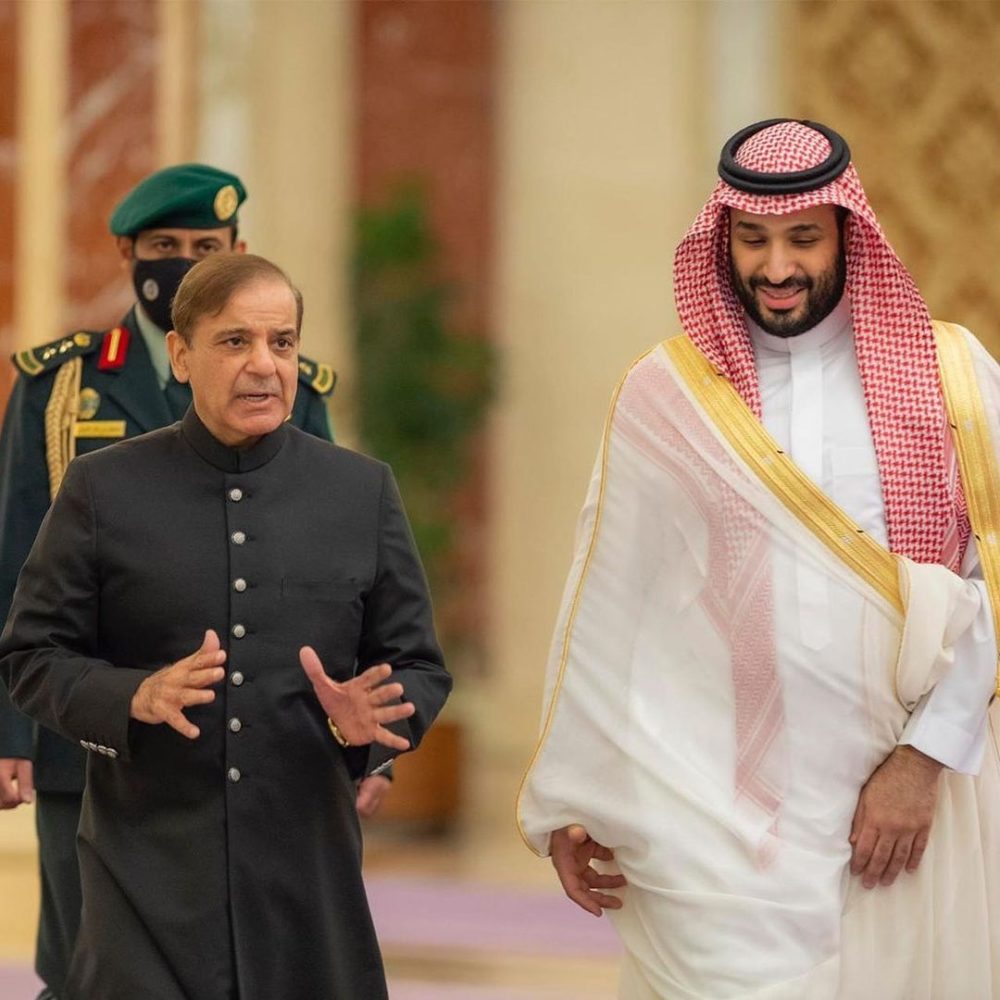
Pakistan Risks Overstretching Itself in Yemen War

Pakistan’s expanding military role in Saudi Arabia amid the Yemen conflict could strain its defence resources and fragile finances…reports Asian Lite News Desk Pakistan’s military involvement in the war in Yemen may prove unsustainable because of mounting financial pressures and competing security demands, according to a new report. Islamabad’s growing military presence in Saudi Arabia risks stretching its defence resources while exposing the country to greater strategic and economic challenges. An article by Andrew Wilson in One World Outlook describes Pakistan’s involvement as a case of “fiscal and strategic overreach”, arguing that the country lacks the financial flexibility to sustain an expanded military commitment. Pakistan’s external finances depend heavily on an International Monetary Fund (IMF) programme, financial support from Gulf countries and remittances from Pakistani workers in the region. The report argues that deeper military involvement in the conflict could place additional pressure on these sources of financial stability. It also warns that deploying troops and military equipment abroad could weaken Pakistan’s capacity to address security challenges along its eastern border and deal with two domestic insurgencies. The move could also draw Islamabad into a conflict it has sought to approach cautiously. A Reuters report in May, citing Pakistani security and government sources, said Islamabad had deployed around 8,000 troops, a squadron of approximately 16 aircraft, mostly JF-17 fighter jets, two drone squadrons and a Chinese HQ-9 air-defence battery to Saudi Arabia. According to those sources, Riyadh was financing the deployment, with Pakistani personnel operating the equipment. The sources also said a confidential agreement contemplated the possibility of deploying up to 80,000 troops. Islamabad has not confirmed those figures, although it has acknowledged its military presence in Saudi Arabia, including the deployment of fighter jets at King Abdulaziz Air Base from April. The One World Outlook article argues that Saudi financial support can cover allowances and operating expenses but cannot easily replace military equipment needed elsewhere or resolve the political and strategic challenges of participating in the Yemen conflict. Pakistan’s defence budget is another concern. For the 2026-27 financial year, the federal government allocated PKR 3 trillion, or approximately $10.8 billion, to defence services. The allocation represents an 18 per cent increase from the original PKR 2.55 trillion provision and amounts to around 2.1 per cent of projected gross domestic product (GDP). Defence spending accounts for approximately 16 per cent of the federal government’s PKR 18.8 trillion expenditure. Military pensions are budgeted separately at PKR 822 billion, while debt servicing costs stand at approximately PKR 8 trillion, more than two-and-a-half times the defence allocation. The report argues that these competing financial obligations leave little room for additional military expenditure without placing further pressure on public finances. Pakistan’s reliance on IMF assistance also limits its fiscal flexibility. The country must meet the conditions attached to the programme, including a primary budget surplus target of 2 per cent of GDP and continued restraint on development spending. According to the article, these requirements make it difficult for Islamabad to finance an additional military commitment without compromising other budgetary priorities. Pakistan’s economic indicators offer limited reassurance. Economic growth for the 2025-26 financial year is estimated at between 3.6 and 3.7 per cent, while inflation reached approximately 10.3 per cent in September following an energy price shock. Foreign exchange reserves stood at around $21.5 billion at the end of September. Although this marks an improvement from the low levels recorded in 2023, the report notes that the reserves cover only a few months of imports. Financial assistance from Gulf partners remains central to Pakistan’s external stability. The article says Islamabad holds approximately $8 billion in Saudi deposits at its central bank. In July, the State Bank of Pakistan said Riyadh had extended the maturity of $5 billion in deposits to December 2028, easing the country’s immediate external financing requirements. A further $3 billion deposit was also extended in the spring. However, the article argues that these arrangements provide temporary relief rather than long-term financial independence, particularly as regional conflict threatens the stability of the Gulf economies on which Pakistan relies. The report concludes that Pakistan faces a difficult balance between supporting Saudi Arabia militarily and preserving the financial and military resources needed to address its domestic and regional challenges.

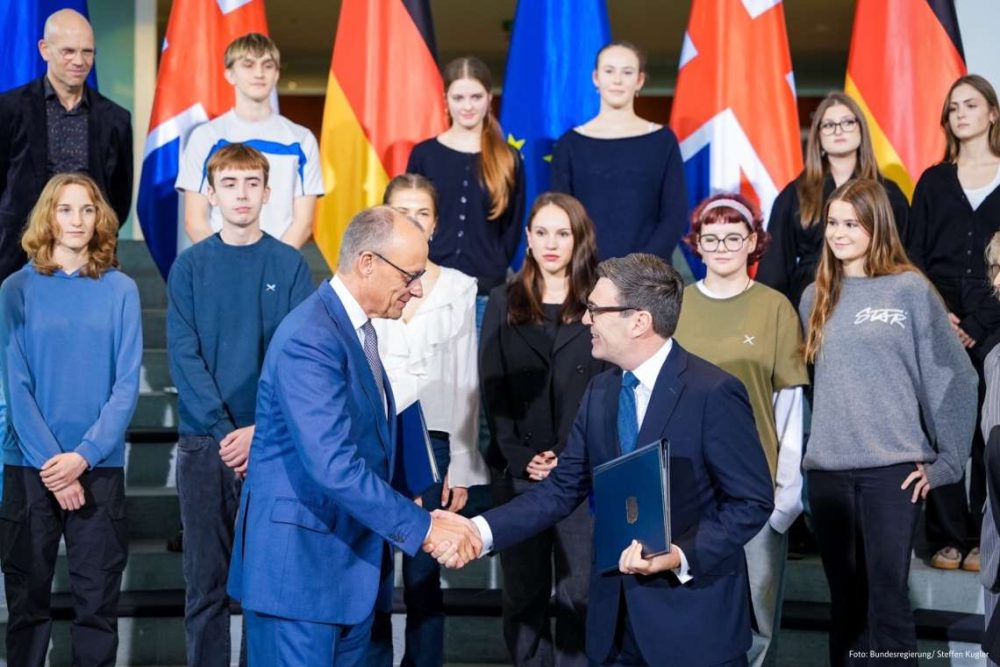
UK and Germany Ratify Kensington Treaty

Britain and Germany ratify the Kensington Treaty, agreeing new cooperation on AI, quantum research, defence and security while targeting investment, jobs and Russian hybrid threats…reports Asian Lite News Desk Britain and Germany

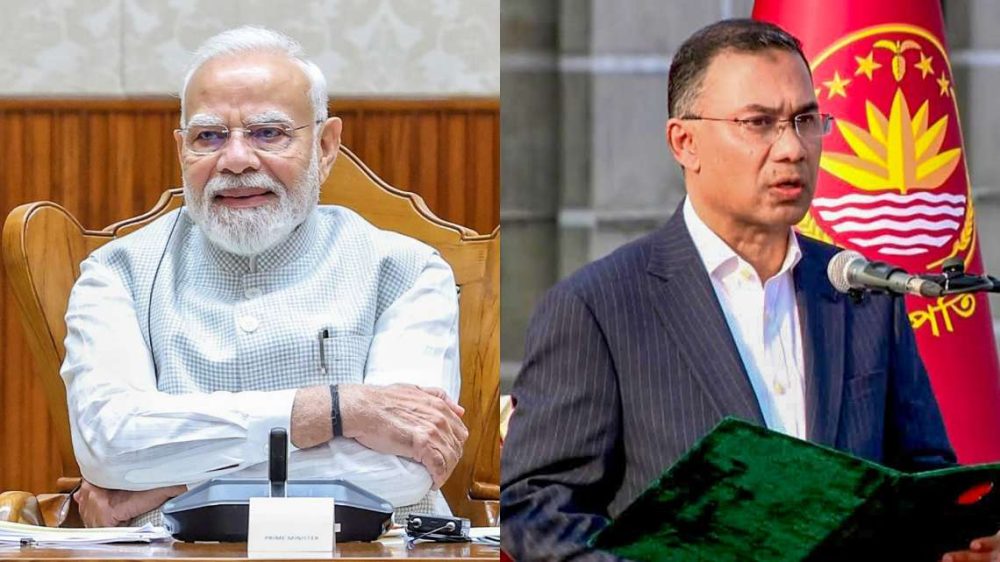
Economic tide is turning in Bangladesh

If there is one thing that can bring some comfort to the struggling Bangladeshi economy, it is good relations with India. Bangladesh should remember that Delhi’s backing, through easy supplies of essentials
Go toTop

Don't Miss

China’s Unreliability in Climate Fight

Would those who kill human beings hesitate to kill plants

China uses AI to misuse civilian data for military purposes

China recently submitted a position paper on regulating the military