August 8, 2025
3 mins read

UN: Gaza wastes away in hunger hell

UN warns Gaza faces catastrophic levels of hunger, with starvation and malnutrition surging as conflict blocks aid, pushing thousands to the brink of death.

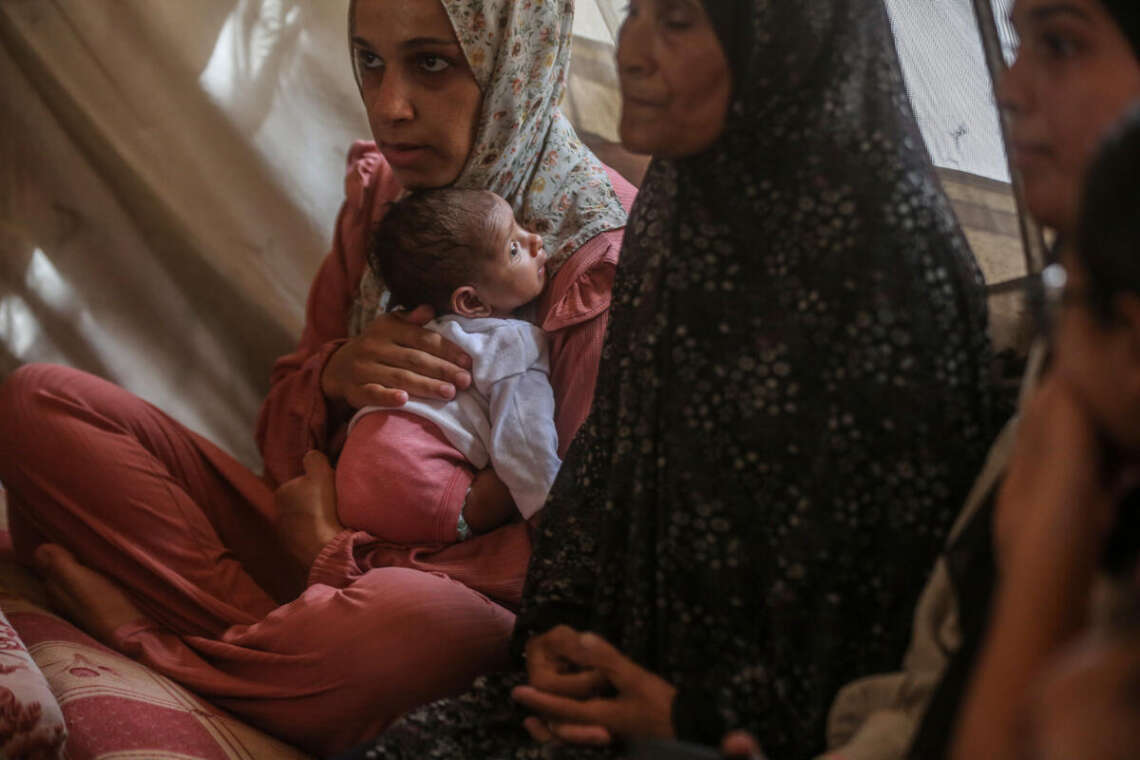
The United Nations has issued an urgent warning about the deepening humanitarian catastrophe in the Gaza Strip, where escalating hunger and malnutrition are pushing the population to the brink of famine. Speaking at a media briefing on Thursday, Farhan Haq, Deputy Spokesperson for the UN Secretary-General, said the spread of severe hunger has had a “devastating impact” on living conditions across the enclave.

Hospitals, already overwhelmed, are now operating far beyond their maximum capacity, with patients lying on floors and, in some cases, in the streets due to a critical shortage of beds, medical supplies, and life-saving equipment. Haq warned that without immediate fuel deliveries into Gaza, essential medical services could collapse entirely.

“The situation has surpassed catastrophic levels,” he said, highlighting that more civilians are being killed and injured — whether along aid convoy routes or in their own homes.

Immediate action needed

In a separate statement, UN human rights experts called on Israel to urgently restore unimpeded access for impartial humanitarian organisations, including the United Nations Relief and Works Agency (UNRWA) and the UN Office for the Coordination of Humanitarian Affairs (OCHA). They stressed that restoring the UN humanitarian system in Gaza is vital to preventing mass starvation and further suffering.

“Over 500,000 people — one quarter of Gaza’s population — are facing famine, and the rest are enduring emergency levels of hunger,” the experts warned. “All 320,000 children under five are at risk of acute malnutrition, with potentially irreversible physical and mental health consequences.”

The experts condemned the disruption of established aid delivery mechanisms, saying Israel’s reliance on militarised, privatised aid operations had failed. They pointed to the deaths of nearly 1,400 people seeking food under such systems as evidence of their inefficiency and danger.

“Starvation has been used as a weapon of war,” they said, calling the practice a crime under international law. “All States must act decisively to end this destruction of life-sustaining conditions in Gaza.”

UAE expands relief ops

Amid the worsening crisis, the United Arab Emirates continues to play a leading role in delivering humanitarian relief to Gaza. Under its “Birds of Goodness” initiative, part of Operation Chivalrous Knight 3, the UAE conducted its 65th airdrop of aid on Thursday. The mission, carried out in coordination with the Hashemite Kingdom of Jordan and with support from Germany and Belgium, delivered essential food items and emergency supplies to hard-to-reach areas.

With this latest mission, the UAE has now airdropped more than 3,862 tonnes of aid to vulnerable communities in the most affected parts of Gaza.

Alongside its air operations, the UAE also expanded ground deliveries. On Thursday, 21 trucks carrying over 500 tonnes of food supplies crossed into Gaza, reflecting the country’s commitment to multi-channel aid delivery — by air, land, and sea.

The UAE government reaffirmed its determination to coordinate closely with regional and international partners to ensure sustained support for civilians trapped in the crisis. Officials stressed that these efforts are grounded in the nation’s long-standing humanitarian principles and its reputation as a global leader in relief operations.

A race against time

The UN has repeatedly stressed that the coming weeks will be critical in averting mass starvation in Gaza. With access routes under threat, fuel reserves dwindling, and hospitals on the verge of collapse, humanitarian agencies warn that decisive international action is urgently needed.

For now, aid convoys, airdrops, and calls for unimpeded humanitarian access remain the only lifeline for hundreds of thousands of civilians enduring what UN officials describe as “one of the gravest humanitarian emergencies in recent history.”

Newsdesk

Newsdesk

Aravind Rajeev is Deputy News Editor at Asian Lite, mostly covering the Middle East and GCC. He has over eight years of experience as a journalist, with a background in ground-level reporting, crime reporting, as well as international and regional news.

Previous Story

ASEAN big guns meet in Abu Dhabi

Next Story

Putin says UAE could host Trump summit

Previous Story

ASEAN big guns meet in Abu Dhabi

Next Story

Putin says UAE could host Trump summit

Latest from -Top News

Pakistan Risks Overstretching Itself in Yemen War

Pakistan’s expanding military role in Saudi Arabia amid the Yemen conflict could strain its defence resources and fragile finances…reports Asian Lite News Desk Pakistan’s military involvement in the war in Yemen may prove unsustainable because of mounting financial pressures and competing security demands, according to a new report. Islamabad’s growing military presence in Saudi Arabia risks stretching its defence resources while exposing the country to greater strategic and economic challenges. An article by Andrew Wilson in One World Outlook describes Pakistan’s involvement as a case of “fiscal and strategic overreach”, arguing that the country lacks the financial flexibility to sustain an expanded military commitment. Pakistan’s external finances depend heavily on an International Monetary Fund (IMF) programme, financial support from Gulf countries and remittances from Pakistani workers in the region. The report argues that deeper military involvement in the conflict could place additional pressure on these sources of financial stability. It also warns that deploying troops and military equipment abroad could weaken Pakistan’s capacity to address security challenges along its eastern border and deal with two domestic insurgencies. The move could also draw Islamabad into a conflict it has sought to approach cautiously. A Reuters report in May, citing Pakistani security and government sources, said Islamabad had deployed around 8,000 troops, a squadron of approximately 16 aircraft, mostly JF-17 fighter jets, two drone squadrons and a Chinese HQ-9 air-defence battery to Saudi Arabia. According to those sources, Riyadh was financing the deployment, with Pakistani personnel operating the equipment. The sources also said a confidential agreement contemplated the possibility of deploying up to 80,000 troops. Islamabad has not confirmed those figures, although it has acknowledged its military presence in Saudi Arabia, including the deployment of fighter jets at King Abdulaziz Air Base from April. The One World Outlook article argues that Saudi financial support can cover allowances and operating expenses but cannot easily replace military equipment needed elsewhere or resolve the political and strategic challenges of participating in the Yemen conflict. Pakistan’s defence budget is another concern. For the 2026-27 financial year, the federal government allocated PKR 3 trillion, or approximately $10.8 billion, to defence services. The allocation represents an 18 per cent increase from the original PKR 2.55 trillion provision and amounts to around 2.1 per cent of projected gross domestic product (GDP). Defence spending accounts for approximately 16 per cent of the federal government’s PKR 18.8 trillion expenditure. Military pensions are budgeted separately at PKR 822 billion, while debt servicing costs stand at approximately PKR 8 trillion, more than two-and-a-half times the defence allocation. The report argues that these competing financial obligations leave little room for additional military expenditure without placing further pressure on public finances. Pakistan’s reliance on IMF assistance also limits its fiscal flexibility. The country must meet the conditions attached to the programme, including a primary budget surplus target of 2 per cent of GDP and continued restraint on development spending. According to the article, these requirements make it difficult for Islamabad to finance an additional military commitment without compromising other budgetary priorities. Pakistan’s economic indicators offer limited reassurance. Economic growth for the 2025-26 financial year is estimated at between 3.6 and 3.7 per cent, while inflation reached approximately 10.3 per cent in September following an energy price shock. Foreign exchange reserves stood at around $21.5 billion at the end of September. Although this marks an improvement from the low levels recorded in 2023, the report notes that the reserves cover only a few months of imports. Financial assistance from Gulf partners remains central to Pakistan’s external stability. The article says Islamabad holds approximately $8 billion in Saudi deposits at its central bank. In July, the State Bank of Pakistan said Riyadh had extended the maturity of $5 billion in deposits to December 2028, easing the country’s immediate external financing requirements. A further $3 billion deposit was also extended in the spring. However, the article argues that these arrangements provide temporary relief rather than long-term financial independence, particularly as regional conflict threatens the stability of the Gulf economies on which Pakistan relies. The report concludes that Pakistan faces a difficult balance between supporting Saudi Arabia militarily and preserving the financial and military resources needed to address its domestic and regional challenges.

UK and Germany Ratify Kensington Treaty

Britain and Germany ratify the Kensington Treaty, agreeing new cooperation on AI, quantum research, defence and security while targeting investment, jobs and Russian hybrid threats…reports Asian Lite News Desk Britain and Germany

Economic tide is turning in Bangladesh

If there is one thing that can bring some comfort to the struggling Bangladeshi economy, it is good relations with India. Bangladesh should remember that Delhi’s backing, through easy supplies of essentials
Go toTop