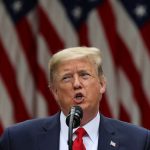
Tensions appeared to ease following a high-level video call on Saturday between Chinese Vice Premier He Lifeng and US Treasury Secretary Scott Bessent…reports Asian Lite News
The United States and China have agreed to hold another round of trade negotiations next week, seeking to de-escalate tensions following Beijing’s recent decision to impose sweeping export controls on rare earth minerals — a move that had prompted US President Donald Trump to threaten retaliatory tariffs.
The rare earths, critical components used in everything from smartphones to advanced military technology, have become a flashpoint in the ongoing trade conflict between the world’s two largest economies. China, which dominates global rare earths production, announced the new restrictions last week, sparking fears of supply chain disruptions worldwide.
In response, Trump had warned of imposing a 100 percent tariff on Chinese imports starting November 1 and threatened to cancel a planned meeting with Chinese President Xi Jinping at the Asia-Pacific Economic Cooperation (APEC) summit in South Korea later this month.
However, tensions appeared to ease following a high-level video call on Saturday between Chinese Vice Premier He Lifeng and US Treasury Secretary Scott Bessent. According to Chinese state media, the two officials engaged in “candid, in-depth and constructive exchanges” and agreed to arrange new trade talks “as soon as possible.”
On social media, Bessent described the discussion as “frank and detailed,” adding that an in-person meeting was scheduled for the coming week to continue negotiations. US Trade Representative Jamieson Greer also participated in the call.
The rare earths issue has drawn attention beyond Washington and Beijing. Ahead of the call, the Group of Seven (G7) finance ministers met to coordinate a response to China’s export restrictions. The EU’s economy commissioner, Valdis Dombrovskis, told reporters the group agreed to diversify suppliers and work together on short-term solutions, emphasizing that the vast majority of rare earth supplies currently come from China.
“We agreed, both bilaterally with the US and at the G7 level, to coordinate our approach,” Dombrovskis said, noting that diversification efforts could take years to materialize. Countries also committed to exchanging information about their contacts with Chinese officials to monitor developments closely.
German Finance Minister Lars Klingbeil echoed the concerns, stating that the G7 stands united in opposing China’s restrictive measures. “We have made it clear within the G7 that we do not agree with China’s approach,” he said.
International Monetary Fund Managing Director Kristalina Georgieva also expressed hope that ongoing talks between Washington and Beijing would ease tensions and bring stability to global trade.
The US-China trade war, which reignited earlier this year, saw tariff rates climb into triple digits at one point, severely impacting global markets and supply chains. While some tariffs have since been reduced, the relationship remains fragile.
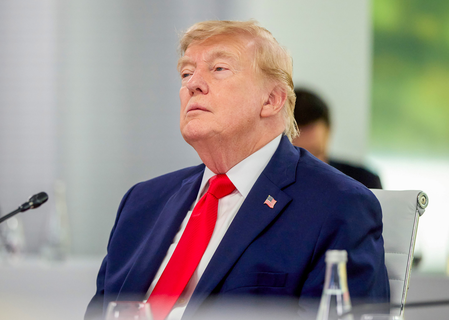
In an interview released hours before the Saturday call, Trump reaffirmed his intention to meet Xi Jinping at the APEC summit in South Korea in late October. Speaking at the White House during a meeting with Ukrainian President Volodymyr Zelenskyy, Trump described his relationship with Xi as “very good” and expressed optimism about reaching a mutually beneficial trade agreement.
“There could be a deal,” Trump said. “They want to talk, and we’re talking. I think we will make a deal that will be good for both.”
Trump also emphasized that the tariffs play a crucial role in protecting US national security, calling them “very important” and necessary to prevent what he called unfair trade practices by China.
While his tone softened slightly regarding the tariff threat, Trump maintained that the US seeks a “fair deal” and accused China of having “ripped off” America over the years.
Diplomatic sources in Seoul indicated that both leaders are expected to visit South Korea for the APEC summit scheduled for October 31 and November 1. Trump’s trip is expected to begin on October 29 and include bilateral meetings with South Korean President Lee Jae Myung.
As both sides prepare for the upcoming negotiations and summit meetings, global markets and policymakers will be watching closely for signs of progress in one of the world’s most consequential trade relationships.