Prime minister of Albania rebukes UK home secretary over remarks on failed asylum seekers as London unveils sweeping reforms…reports Asian Lite News
Albania’s prime minister has accused Home Secretary Shabana Mahmood of “ethnic stereotyping” after she highlighted Albanian families in a Commons statement outlining major reforms to what she described as the UK’s “out of control and unfair” asylum system. The exchange has drawn renewed attention to tensions between London and Tirana over migration, even as both governments continue to promote their returns agreement as a model of cooperation.
The dispute erupted after Mahmood told MPs that “around 700 Albanian families” were living in “taxpayer-funded accommodation having failed their asylum claims”, despite an existing returns deal and Albania’s status as a signatory to the European convention on human rights. She framed the number as evidence of the need for a tougher approach to removals, adding: “We must remove those who have failed asylum claims, regardless of who they are.”
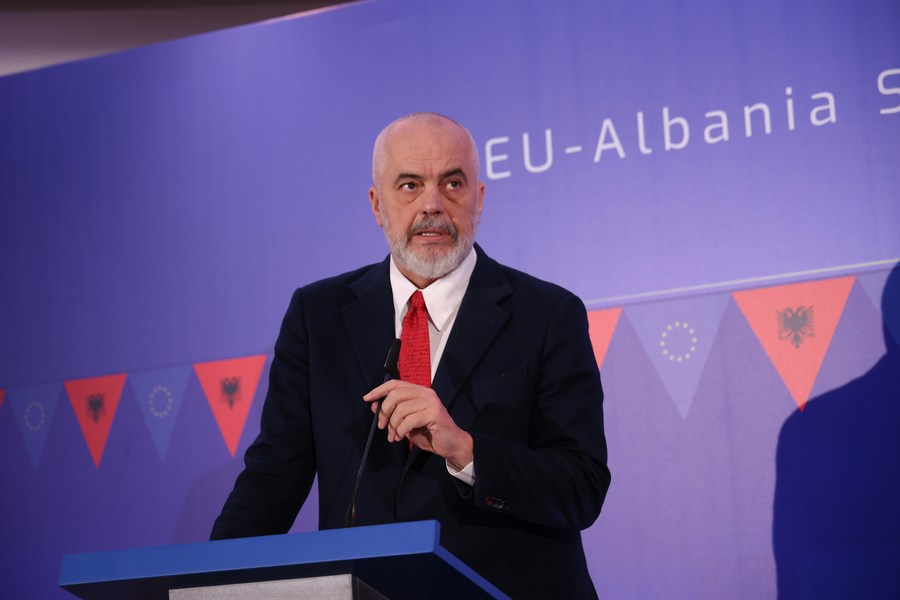
Edi Rama, posting on social media shortly after the statement, accused the home secretary of echoing rhetoric used by “the populist far-right” and of unfairly isolating Albanians in a debate that affects many nationalities. He said the figure she cited was “a statistical drop in the ocean of post-Brexit Britain’s challenges” and stressed that Albanians were “net contributors to the British economy”. He argued that the number of Albanians claiming benefits in the UK was low relative to other groups and said repeated political focus on Albanians amounted to “a troubling and indecent exercise in demagoguery”.
The comments underline Rama’s long-running concerns about the way British politicians have described Albanian nationals. Since 2022, when London and Tirana signed a bilateral agreement aimed at returning Albanian citizens with no right to remain, the issue has periodically flared. Official figures indicate that more than 13,000 people have been deported to Albania under the arrangement, which Rama has previously called one of “Europe’s most successful partnerships on illegal migration”.
Mahmood’s speech to Parliament marked the government’s first major attempt to overhaul the asylum framework since taking office. Setting out measures designed to reduce claims, accelerate removals and reshape the UK’s legal migration pathways, she warned MPs: “If we fail to deal with this crisis, we will draw more people down a path that starts with anger and ends in hatred.”
Under the changes, refugee status would become temporary rather than a route to permanent residence. The qualifying period before an individual is eligible for settlement would be extended significantly, from five years to 20. Families with children who have exhausted all appeal rights could also face removal, reversing previous restrictions on deportations of minors.
In parallel with tightening access to refugee protection, the government plans to introduce new legal routes, capped annually, and intended to offer alternatives to irregular entry. Mahmood argued that reducing small-boat crossings and tackling what she described as systemic abuse required a two-track approach: clearer enforcement combined with controlled, rules-based migration channels.
Her decision to highlight Albanian families was one of the most contentious elements of her speech. Although the home secretary did not suggest that Albanians were uniquely responsible for rising asylum pressures, the explicit reference drew immediate criticism from Tirana and from some MPs who questioned the value of naming specific nationalities in a complex policy debate.
Rama’s response invoked previous disputes with UK politicians. In May, during a visit to Tirana, Prime Minister Keir Starmer was told that Albania would not host “return hubs” for failed asylum seekers from other countries, an idea the previous Conservative government had floated. At the time, Rama warned against “stigmatising” Albanians, adding that “cursing the Albanians was not a good idea, because the curse went back and they are now out of the parliament”, in a pointed reference to the Conservatives’ election defeat.
The Albanian leader has also publicly challenged politicians and commentators who have used sharply critical language about Albanian migration. He has previously rejected claims circulating in parts of the UK media and political sphere, including the assertion by Reform UK leader Nigel Farage that one in 50 Albanians in Britain were in prison. Rama dismissed that claim as “bonkers” and accused Farage of relying on a “post-truth Brexit playbook”.
The row comes at a sensitive moment for the UK government, which is seeking to demonstrate that it can reduce irregular migration while also rebuilding diplomatic relationships strained under previous administrations. Ministers have repeatedly highlighted the returns arrangement with Albania as proof that rapid removals are possible when cooperation is strong.
For its part, the Albanian government continues to emphasise issues of dignity and representation, arguing that political narratives in Britain should avoid framing Albanians as an inherent problem. Rama’s latest intervention suggests that, despite operational collaboration on removals, the diplomatic backdrop remains fragile.
Mahmood has not publicly responded to the prime minister’s remarks, but officials close to her department insist that the reforms are nationality-blind and driven by system-wide pressures rather than any particular migrant group. The Home Office maintains that highlighting examples, including the 700 families referenced in the Commons, illustrates the scale of the challenge rather than attributing responsibility to a specific community.
As both sides move to manage the fallout, the episode illustrates how migration—particularly when framed through national identities—continues to test the balance between domestic politics and international partnership. Whether the reforms will ease that tension, or amplify it, remains an open question as the legislation progresses through Parliament.