The military leadership is grappling with growing unease over whether the government’s plans to rebuild the armed forces can be funded at the pace ministers have promised …reports Asian Lite News
Britain’s most senior military leaders held what defence sources described as a “very difficult” meeting this week as concerns mount over how to fund the government’s plans to rebuild the country’s armed forces. The discussion, involving the heads of the army, navy, air force and senior operational commands, took place against a backdrop of pressure on the Ministry of Defence (MoD) budget and growing anxiety that ambitions set out earlier this year may outstrip available resources.
The tensions emerged after a report in the Spectator claimed that the top brass, led by Air Chief Marshal Sir Rich Knighton, the Chief of the Defence Staff, intended to send an unprecedented joint letter to Defence Secretary John Healey. According to the magazine, the letter was to warn that the defence review published in June could not be delivered without significantly more funding. The MoD, however, moved quickly to play down the suggestion. “There is not a letter,” an MoD source said, adding that no such communication was expected.
Yet officials from across the services acknowledged privately that concerns are rising about the gap between the government’s rhetoric on restoring Britain’s military strength and the pace of growth in the defence budget. Sources told Sky News that commitments made by Sir Keir Starmer’s government to fix what has been described as the UK’s “hollowed-out” armed forces risk running ahead of what the current levels of spending can support. One defence insider summarised the central dilemma starkly: “The facts remain that the SDR shot for the stars, but we only have fuel for the moon.”
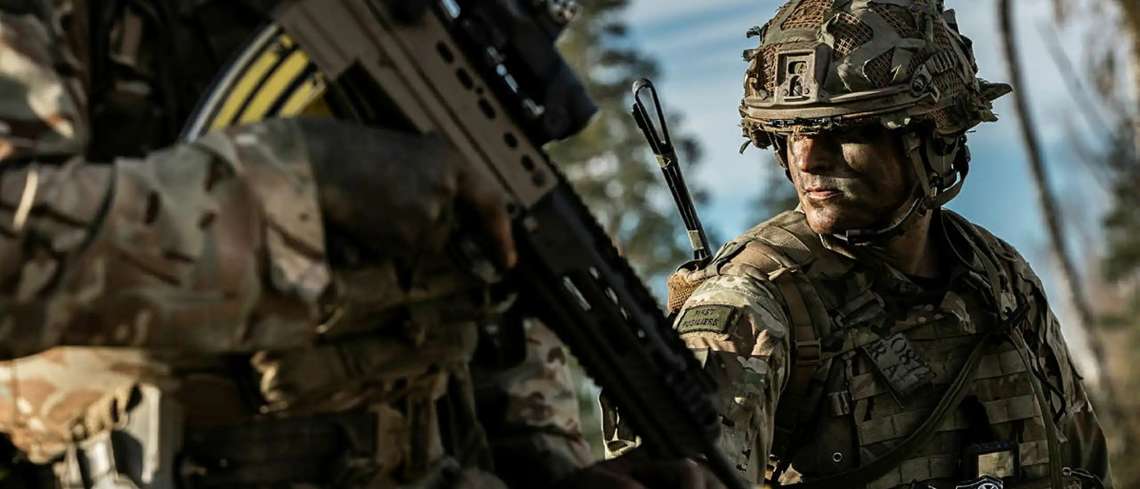
The scale of the challenge is illustrated most clearly in the army. General Sir Roly Walker, the head of the service, is understood to be acutely aware of the financial strain associated with plans to regrow the force to 76,000 troops from 72,500 over the next parliament. The Strategic Defence Review (SDR) set out the requirement for a larger army, but such an expansion requires not only recruitment but also the substantial costs of training, equipment and housing. The intention to expand the reserve forces will add to the financial burden.
Tuesday’s meeting at the MoD brought together Knighton and Walker alongside General Sir Gwyn Jenkins, the First Sea Lord, and Air Chief Marshal Harv Smyth, the Chief of the Air Staff. General Sir Jim Hockenhull, head of Cyber and Special Operations Command, was also likely in attendance. Although the chiefs meet regularly every fortnight, this session was described by one source as particularly tense, with disagreements simmering over how to align military ambitions with the Treasury’s constraints.
At the centre of the discussions was the Defence Investment Plan (DIP), due to be published next month. Its release has already slipped, with insiders attributing the delay to lingering disagreements over how to balance costs, inflation, foreign exchange shifts and “in-year delivery drama” with the broad ambitions of the SDR. “I know there was a very difficult meeting,” a third source said.
Another senior figure highlighted the financial pressures further, noting that the amount required to close the gap between ambition and affordability is “both small compared to other parts of the public sector, but also not available from this government”. They added: “It’s still a matter of choices, not overall affordability.”
Behind the unease is a broader comparison with European allies. Germany and Poland have moved rapidly to increase defence spending and expand their militaries in response to deteriorating global security. By contrast, the UK’s core defence spending will rise more gradually, inching from around 2.3% of GDP to 2.5% by 2027, with the new NATO target of 3.5% not expected to be met until 2035.