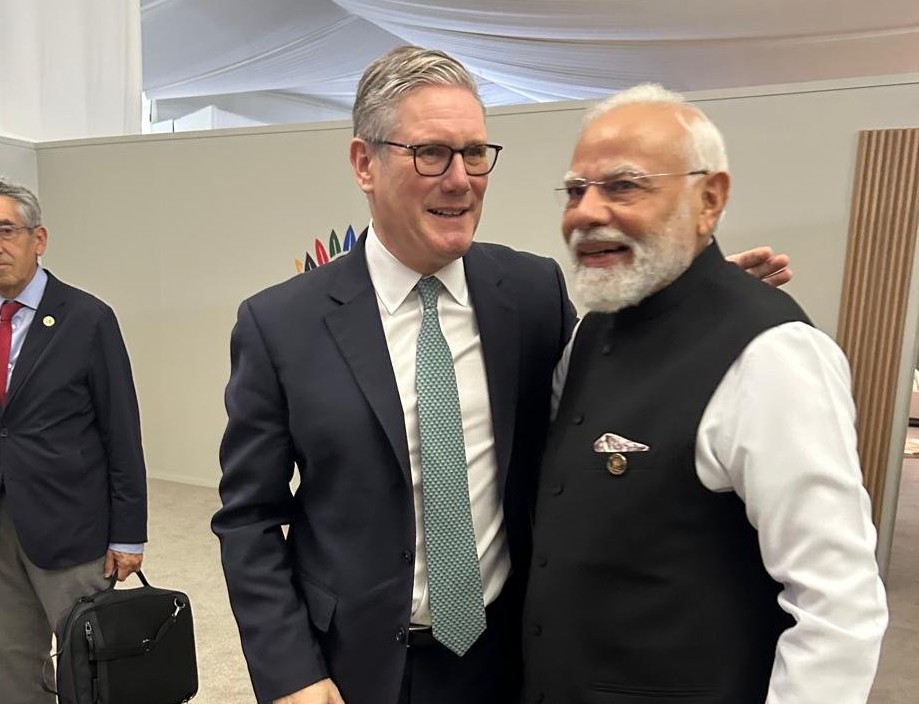
Modi and Starmer stress fresh momentum in India–UK ties at the G20, pledging rapid implementation of trade, tech, defence and education commitments to boost jobs and investment.
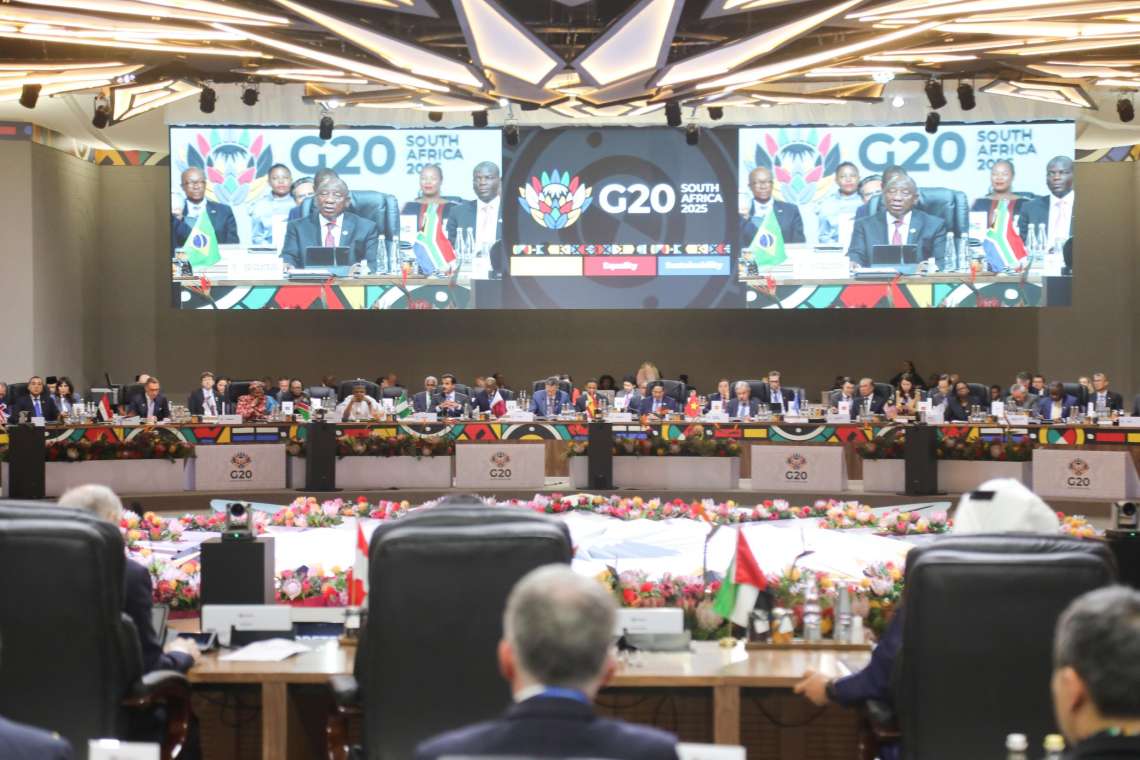
Prime Minister Narendra Modi and his British counterpart Keir Starmer met on the margins of the G20 Leaders’ Summit in Johannesburg, with Modi saying the past year has brought “new energy” to the India–UK partnership and signalling a desire to press that momentum forward across trade, technology and security.
The meeting follows a busy stretch of bilateral engagement. Sir Keir’s recent trade mission to India — the largest-ever UK delegation — aimed to deepen commercial ties and translate high-level agreements into tangible deals for British firms, ministers said. The visit came after Modi’s trip to the UK earlier this year, where the two leaders held talks at Chequers and set out a shared agenda for closer collaboration.
A central plank of the renewed relationship is the Comprehensive Economic and Trade Agreement (CETA) the two countries finalised and published earlier in 2025. The wide-ranging treaty covers goods, services, digital trade and financial services and is intended to turbocharge two-way trade and investment, underpinning the leaders’ ambition to lift economic cooperation to a new level. Officials say implementation work and sectoral roadmaps will now be stepped up to turn commitments on paper into jobs and growth on the ground.
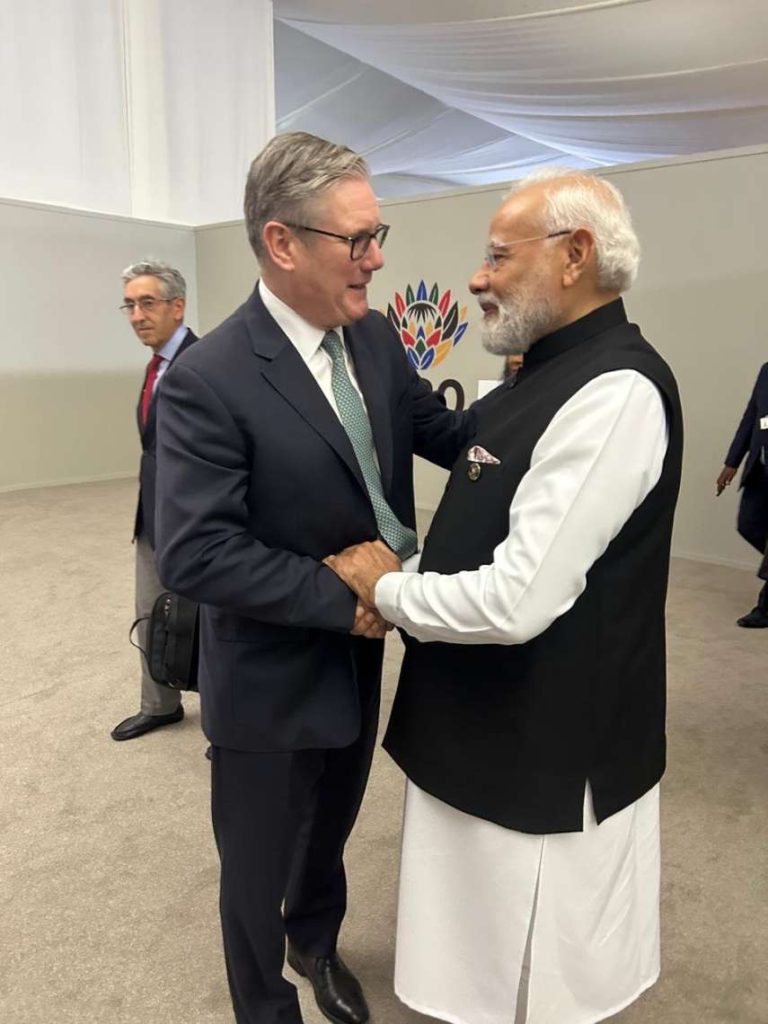
Both capitals have framed the last year as an “exceptional” period for the modern India–UK relationship, driven by strategic convergence across five pillars including growth, technology and innovation, defence and security, climate and clean energy, and education. New institutional links — from trade delegations to defence-industrial roadmaps — aim to build durable pathways for business, research collaboration and skills exchange. Indian ministers have pointed to the transformation from a historically complex relationship to a reciprocal, future-facing partnership.
For businesses and investors, the leaders’ reaffirmation offers clarity. Trade officials on both sides expect accelerated work on regulatory alignment, services liberalisation and people-to-people mobility measures that were part of the CETA package. Analysts note that the challenge now is to translate diplomatic goodwill into practical, time-bound projects that deliver exports, inward investment and skills links across regions of both countries.