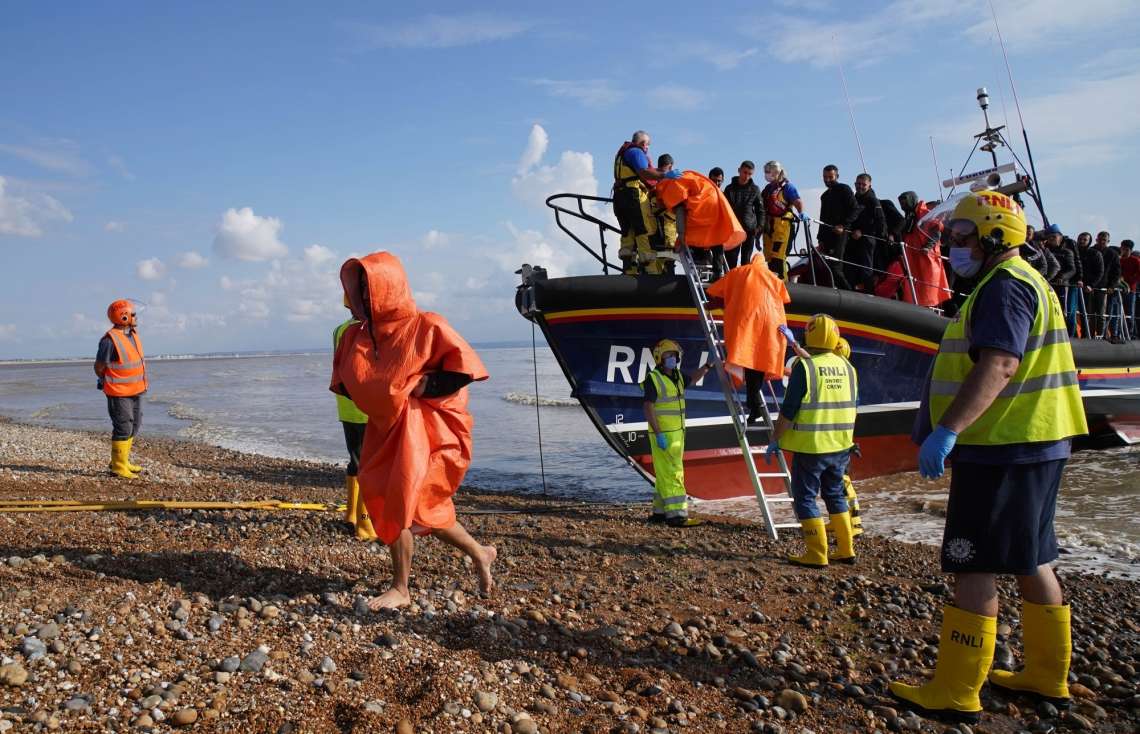
Migrants have resumed attempts to cross the English Channel after a four-week pause, the longest break in arrivals in seven years…reports Asian Lite News
Migrants resumed attempts to cross the English Channel on Saturday, four weeks after the last small boat reached the southern English coast, bringing an end to the longest pause in arrivals recorded in seven years. The break, which officials believe was largely due to poor weather conditions in the Channel, had raised questions about whether seasonal factors or enforcement efforts were temporarily reducing crossings.
According to interior ministry figures, no vessels reached the south coast for 28 days prior to the weekend. Migrants were last recorded arriving from northern France on November 14. On Saturday, however, a number of small boats were seen in the Channel, signalling a renewed effort by migrants and people smugglers to take advantage of calmer conditions after weeks of rough seas.
Figures detailing how many people arrived on Saturday are expected to be released later. The Home Office routinely publishes daily and cumulative data on Channel crossings, but there is often a delay of several days before final numbers are confirmed, particularly when multiple vessels are involved or rescues take place at sea.
The English Channel is one of the world’s busiest shipping lanes, making small boat crossings particularly dangerous. Migrants typically attempt the journey in overcrowded inflatable dinghies launched from beaches in northern France, often at night or in poor conditions. UK and French authorities have repeatedly warned of the risks, citing deaths and serious incidents in previous years.
The recent pause in arrivals has been attributed mainly to adverse weather, with strong winds and high seas making crossings unsafe or impractical. Analysts and officials have cautioned against interpreting the lull as evidence of a sustained decline in attempts to reach the UK, noting that crossings tend to fluctuate with seasonal conditions rather than disappear entirely.
Small boat migration has become a major political issue in Britain, shaping debate on immigration, border control and asylum policy. Successive governments have struggled to reduce the number of people making the crossing, despite increased patrols, cooperation with France and changes to asylum rules. The resumption of attempts is likely to renew pressure on ministers to demonstrate that current policies are having an effect.
The issue has also had a significant impact on the political landscape. The crossings have helped fuel the popularity of Reform, led by Nigel Farage, which has focused heavily on migration and border control. Opinion polls for most of this year have shown Reform leading Prime Minister Keir Starmer’s Labour Party by double-digit margins, highlighting the potency of the issue with voters.
Labour, which came to power promising a more effective and humane approach to managing migration, has faced scrutiny over how quickly it can deliver results. Ministers have argued that tackling small boat crossings requires sustained international cooperation, faster asylum decision-making and action against criminal smuggling networks, rather than short-term fixes.
This year is on track to record the second highest annual number of migrants arriving in small boats since data was first published in 2018. More than 39,000 people have made the journey so far, many of them fleeing conflict, persecution or economic hardship. The figure already exceeds the total for the whole of 2024, although it remains below the record of 45,774 arrivals set in 2022, when the Conservatives were in power.
Supporters of tougher border measures argue that the continued high numbers demonstrate a failure to deter dangerous crossings and place pressure on public services and accommodation systems. They point to the cost of housing asylum seekers in hotels and the strain on local authorities as evidence that stronger action is needed.
Others stress the humanitarian dimension of the issue, emphasising that many of those crossing the Channel are seeking safety and have few legal routes to claim asylum in the UK. Charities and refugee organisations argue that enforcement-focused approaches have not stopped the crossings and instead push people towards more dangerous methods of travel.
French authorities, whose coastline is the main departure point for small boats, continue to work with the UK to disrupt smuggling networks and prevent launches. This includes beach patrols, surveillance and the interception of boats before they leave French waters. However, critics say that as long as demand for passage to the UK remains high, smugglers will adapt their tactics.