The book may also appeal to young people exploring careers outside conventional professional choices. Private investigation can attract individuals who enjoy analysing situations, solving problems and working with information, and the book provides an introductory framework for considering whether such work is worth pursuing
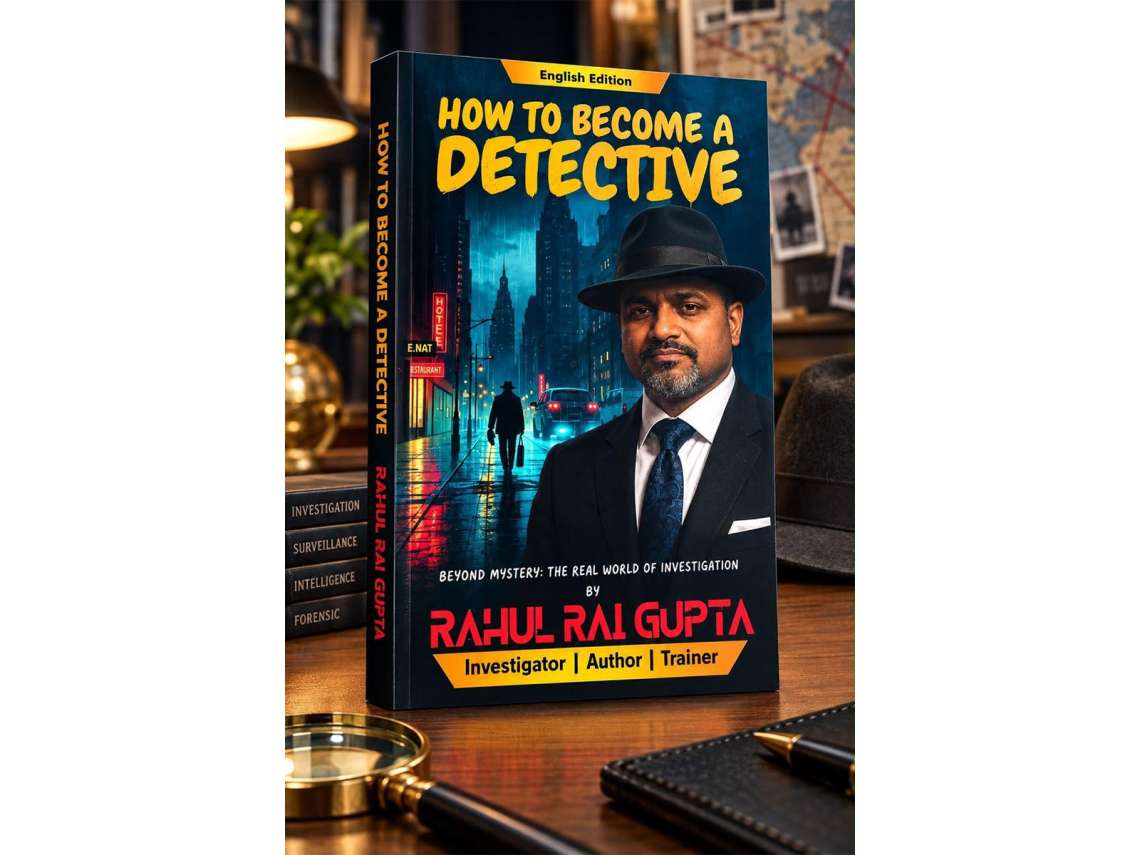
Detective work has long carried a sense of mystery and adventure, largely shaped by films, television and crime fiction. But behind the dramatic investigations portrayed on screen lies a profession that demands patience, observation, logical reasoning and the ability to assess information carefully. Rahul Rai Gupta’s How to Become a Detective attempts to introduce readers to that more practical side of investigative work.
Designed particularly for aspiring detectives and investigators, the book presents detective work as a potential career rather than simply an exciting pursuit of clues and mysteries. It seeks to help readers understand the skills, mindset and responsibilities that can form part of professional investigation.
One of the book’s useful features is its focus on qualities associated with investigative work. Observation, alertness, patience, discretion, logical thinking and objective analysis are presented as important attributes for anyone considering the profession. This provides young readers with an opportunity to think about whether their own interests and abilities are suited to the field.
The book is especially relevant to readers whose interest in detective work has been sparked by popular culture. While fictional detectives often appear to solve complicated cases through dramatic breakthroughs, real investigative work can involve careful assessment, persistence and attention to detail. By attempting to distinguish the profession from its entertainment-based image, Gupta offers readers a more grounded starting point.
Another strength is its career-oriented approach. Rather than assuming that readers already understand the profession, How to Become a Detective aims to answer some of the basic questions an aspiring investigator might have about entering the field and developing the appropriate mindset.
The book may also appeal to young people exploring careers outside conventional professional choices. Private investigation can attract individuals who enjoy analysing situations, solving problems and working with information, and the book provides an introductory framework for considering whether such work is worth pursuing.
Originally written in Hindi, the book is also available in English, making its introductory material accessible to a wider readership. It is offered in both paperback and eBook formats.
Overall, How to Become a Detective works best as an introductory guide for readers curious about investigative careers. It does not attempt to romanticise detective work, but instead directs attention towards the discipline, patience and analytical abilities that the profession can require. For young readers considering investigation as a career, it offers a useful first step towards understanding what the field involves.