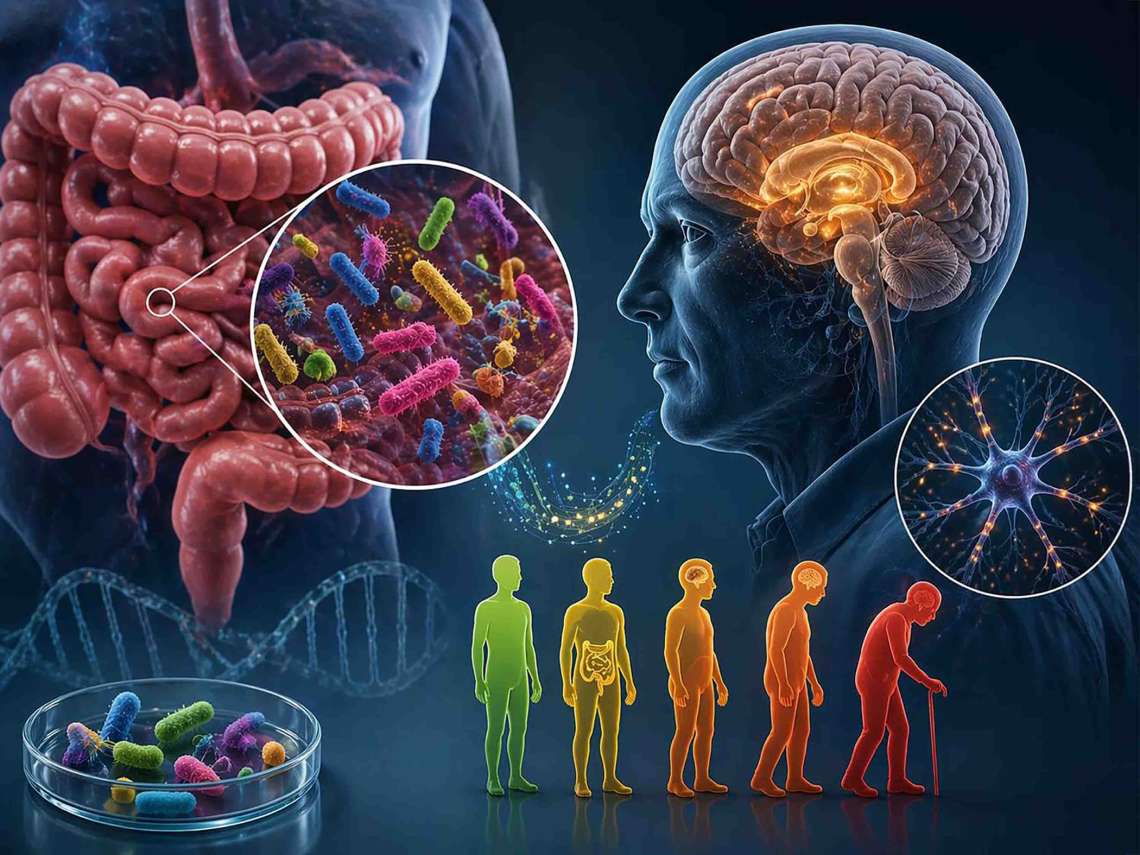
A growing body of research is pointing to the gut as a key player in neurological health, with a new study suggesting that changes in gut bacteria could act as an early warning sign for Parkinson’s disease.
The research, led by scientists at University College London, found that individuals with Parkinson’s, as well as those carrying genetic risk factors, show distinct patterns in their gut microbiome when compared to healthy individuals. These differences may appear years before the onset of physical symptoms, raising hopes for earlier detection and intervention.
The study analysed data from 271 patients diagnosed with Parkinson’s disease, alongside 43 individuals carrying a specific genetic mutation known as GBA1, which is associated with a higher likelihood of developing the condition. A further 150 healthy participants were included to provide a comparative baseline.
While it is well established that every person has a unique gut microbiome, the researchers identified clear and consistent differences in microbial composition between the groups. In fact, more than a quarter of gut bacteria types showed variation between Parkinson’s patients and healthy individuals. These differences became even more pronounced in patients with advanced stages of the disease.
Significantly, similar microbial patterns were also observed in individuals carrying the GBA1 variant, even though they had not yet developed symptoms. This suggests that changes in gut bacteria may occur early in the disease process, potentially long before clinical diagnosis is possible through traditional methods.
Professor Anthony Schapira, who led the study, said the findings add to growing evidence linking gut health with neurological conditions. He noted that understanding these connections could open new pathways for identifying Parkinson’s disease at a much earlier stage than is currently possible.
Parkinson’s disease is a progressive neurological disorder that affects movement, often causing tremors, stiffness and difficulty with balance and coordination. By the time these symptoms become apparent, significant damage to nerve cells has usually already occurred. Early detection is therefore considered crucial for improving long term outcomes and potentially slowing disease progression.
The study’s findings suggest that monitoring the gut microbiome could become a valuable tool in identifying individuals at higher risk. Researchers believe that, in the future, simple screening methods could be developed to detect these microbial changes, allowing for earlier medical intervention.
There is also growing interest in whether modifying the gut microbiome could influence disease risk. Approaches such as dietary changes, probiotics or targeted therapies may help restore balance to gut bacteria, although further research is needed to confirm their effectiveness.
While the science is still evolving, the study highlights the complex relationship between the gut and the brain. It suggests that what happens in the digestive system may play a far more significant role in neurological health than previously understood, offering new hope for earlier diagnosis and innovative prevention strategies in Parkinson’s disease.