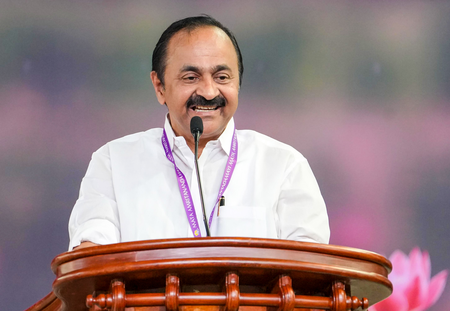
Kerala Chief Minister V.D. Satheesan has presented the state’s revised 2026-27 Budget, outlining a development-led agenda focused on investment, jobs, infrastructure, higher education and healthcare. The Budget also highlights the state’s fiscal challenges, including high debt levels and significant financial liabilities inherited from previous commitments…reports Asian Lite News Desk
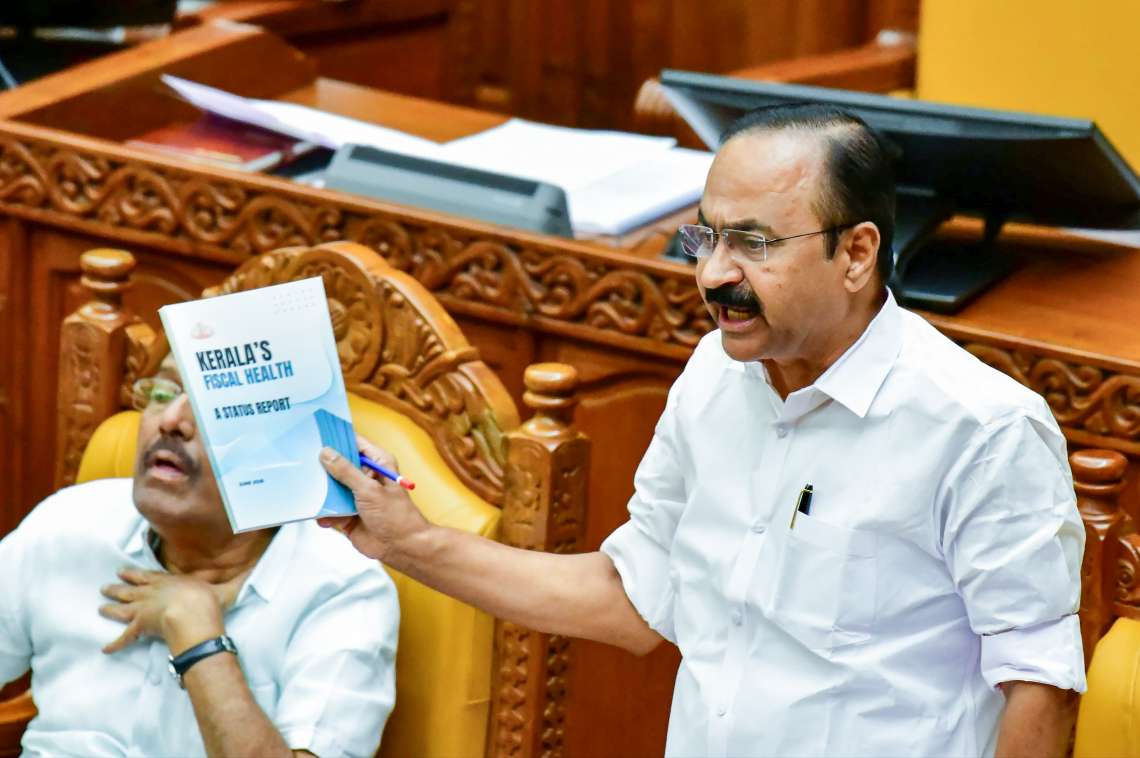
Kerala Chief Minister V.D. Satheesan on Friday presented the revised Budget for 2026-27, setting out an ambitious roadmap to reshape the state’s economy through investment, infrastructure, innovation, and employment generation, while acknowledging significant fiscal pressures facing the government.
Introducing what the government described as a vision for a “New Kerala”, Satheesan said the Budget would serve as a guide for development and welfare initiatives over the next five years. The government said it intends to strengthen healthcare and education, create more employment opportunities, improve support for older people and promote inclusive economic growth alongside environmentally responsible infrastructure development.
The Budget was presented against a backdrop of financial strain. The government said Kerala faces total liabilities of ₹5.07 lakh crore and that salaries, pensions and interest payments account for 77 per cent of revenue receipts. Interest payments alone account for 20.9 per cent of revenue. The administration also cited a revenue shortfall linked to what it described as overestimated projections in the previous Budget, resulting in a gap of about ₹20,500 crore.
According to the government, liabilities due by March 31, 2026, including arrears, pension obligations, and debt-servicing commitments, total ₹87,012 crore. It also highlighted additional funding requirements for projects financed through the Kerala Infrastructure Investment Fund Board (KIIFB).
Despite these challenges, the Budget unveiled a series of major development initiatives. A flagship programme, Mission Samudra, seeks to leverage Kerala’s 600-kilometre coastline, ports and waterways to establish the state as a major maritime economy within five years. The project includes improvements to port connectivity, logistics infrastructure, shipbuilding and maritime tourism. The government has earmarked ₹400 crore for the initiative.
The Budget also proposes the creation of an international maritime museum with an allocation of ₹50 crore and plans for a Southern Kerala Economic Corridor linking Thiruvananthapuram, Kollam and Alappuzha as an integrated economic zone. Allocations of ₹100 crore for a Rare Earth and Critical Minerals Corridor and ₹50 crore for the Southern Kerala Economic Corridor were announced.
In the aviation sector, the government plans to develop Kerala into a major aviation and logistics hub centred on its four international airports. Initial funding of ₹200 crore has been set aside for infrastructure development, pilot training facilities, aerospace services and airport-linked economic zones.
To attract investment, the government will establish an “Invest Kerala” platform designed to provide a single-window system for land acquisition, approvals and investor support. An Investment Advisory Council, chaired by the Chief Minister, will oversee the initiative.
Support for small businesses also features prominently in the Budget. A Kerala MSME Growth Scheme aims to help launch 10,000 enterprises across the state, backed by technology support, incentives and dedicated funding. An allocation of ₹100 crore has been announced for the programme.
The government also announced a Global Job Watch Tower, a future-skills and employment-intelligence mission intended to track labour market trends and align education and training programmes with emerging industries such as artificial intelligence, digital technologies, healthcare, logistics, and green sectors.
Higher education and research form another key pillar of the Budget. Plans include the establishment of Kerala Knowledge Valley, a global higher education hub intended to attract leading national and international universities, with ₹100 crore allocated to the project. Other proposals include a Wayanad Tribal University and Indigenous Knowledge Zone, a Health and Life Science City, research parks and measures to support the growing space economy.
The government said the Budget reflects its commitment to balancing economic growth with social welfare while addressing structural challenges such as youth migration, demographic change and the needs of an ageing population. It argued that investment-led growth, supported by modern infrastructure and technology, would be essential to securing Kerala’s long-term economic future.