The latest incidents were not anomalies. They were the latest expressions of a pattern where the state’s authority collapses in the face of religious hysteria, and minorities pay the price, writes Dr Sakariya Kareem
In Pakistan, violence against religious minorities rarely begins with a crime.
It begins with a whisper. A rumour spreads through a neighbourhood, often amplified by mosque loudspeakers or social media posts, alleging desecration of a sacred text.
Within hours, anger hardens into certainty, and certainty into mob action. By the time facts are examined—if they ever are—homes are ash, churches vandalised, factories looted, and lives permanently altered.
The mob attacks on Christian neighbourhoods in Sargodha in 2024 and a string of killings and targeted assaults in Gujranwala between late 2024 and early 2025 underline how Pakistan has allowed false allegations, especially of blasphemy, to mutate into collective punishment.
These incidents were not anomalies. They were the latest expressions of a pattern where the state’s authority collapses in the face of religious hysteria, and minorities pay the price.
Sargodha: A neighbourhood engulfed
On May 25, 2024, a mob numbering in the hundreds descended on Mujahid Colony in Sargodha after a Christian man was accused of desecrating the Quran.
The allegation, unverified at the time, was enough to trigger arson and assault. A small shoemaking factory owned by the accused was set on fire.
Nearby Christian homes and places of worship were attacked. Elderly Lazar Masih, 74, was brutally beaten, suffering fatal head injuries. He died days later in the hospital.
Police eventually intervened, rescuing several injured people, but video footage circulating online showed officers overwhelmed and, at times, passive as rioters hurled stones and torched property.
The state responded after the damage was done: arrests followed, cases were registered, and assurances were issued. Yet the sequence was familiar—violence first, accountability later, if at all.
International attention followed swiftly. The United States Commission on International Religious Freedom condemned the killing, warning that Pakistan’s blasphemy framework continues to embolden vigilante violence.
The commission noted that mere suspicion can function as a death sentence in a system where mobs act as judge and executioner.
Gujranwala: Violence without allegations
While Sargodha illustrated mob fury sparked by alleged blasphemy, Gujranwala exposed a more sustained climate of insecurity for Christians, even without public accusations.
In December 2024, 24-year-old Suleman Masih was shot in Kot Saadullah, Rahawali. He died days later.
Local church leaders and rights groups described the killing as rooted in religious discrimination compounded by economic jealousy, after Masih’s success in farming drew hostility.
Prior complaints to authorities about threats and harassment produced no effective protection.
Days later, another incident shocked the city. Shabana Bibi and her teenage daughter, Misbah, were shot while returning home from work. Shabana was killed instantly; her daughter survived with critical injuries.
Investigations were launched, but the fear within the community deepened.
By December 2025, the violence escalated further. Pastor Kamran Salamat, previously wounded in a targeted attack near Rawalpindi, was shot dead in Gujranwala despite relocating for safety.
His killing underscored how relocation offers little protection when intolerance is widespread, and perpetrators operate with confidence that consequences will be minimal.
A legal framework that fuels the fire
Pakistan’s blasphemy laws sit at the centre of this violent ecosystem. Although no one has been executed by the state for blasphemy, the existence of the death penalty in law has a powerful social effect.
It signals that the accused are beyond moral consideration. According to data compiled by the Centre for Social Justice, hundreds of people are accused of blasphemy each year, with Christians and Ahmadis disproportionately represented relative to their population size.
The problem is not only misuse but process. Police often register cases under intense public pressure.
Courts are slow, and judges face threats. Bail is rare. Even acquittals, when they occur, do not guarantee safety; several acquitted individuals have been killed after release.
This legal paralysis creates space for mobs to act, confident that the system will neither stop them in time nor punish them decisively afterwards.
Extremist mobilisation and street power
Religious violence in Pakistan does not erupt in a vacuum. Hardline groups, most prominently Tehreek-e-Labbaik Pakistan, have repeatedly demonstrated their ability to mobilise crowds around blasphemy narratives.
Although the group denies involvement in specific attacks, chants associated with it have been heard at mob sites, including during the Jaranwala riots of August 2023, when churches and dozens of Christian homes were burned.
The state’s relationship with such groups has been marked by bans, reversals and political accommodations.
This inconsistency weakens deterrence. When organisations linked to street violence can negotiate with the government from a position of strength, it reinforces the perception that religious outrage is an effective political tool.
A pattern across communities
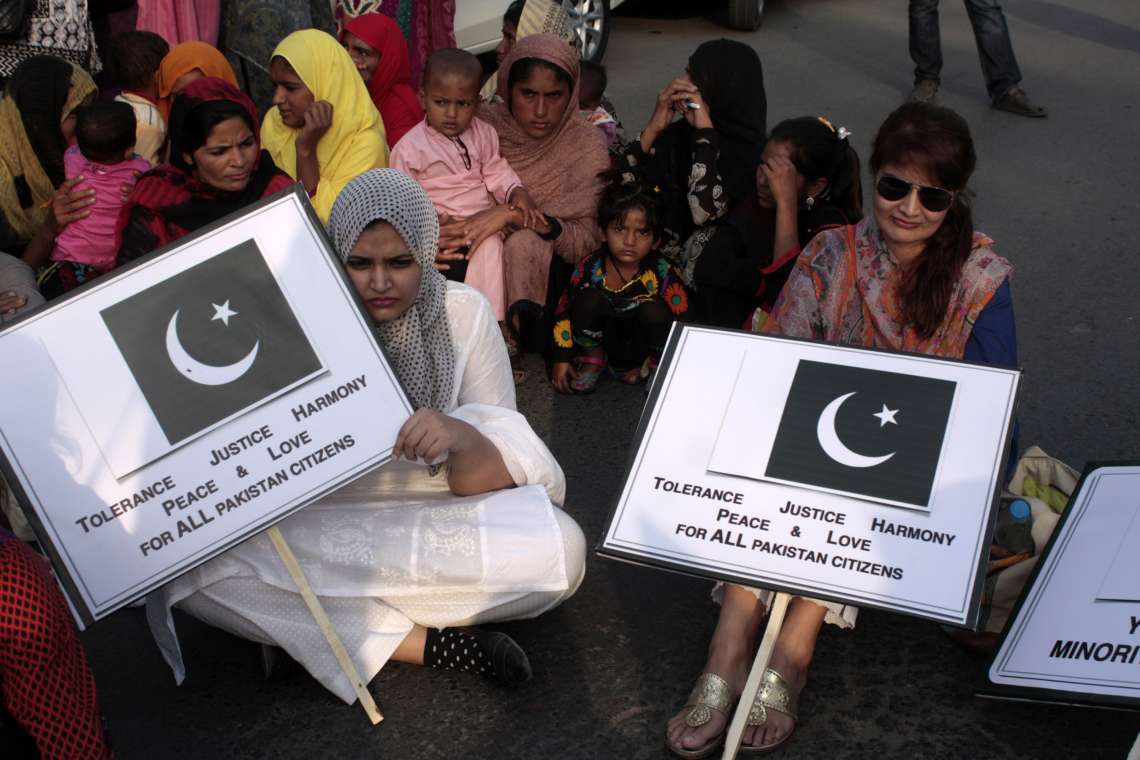
Christians are not alone in facing this violence. Ahmadis, legally declared non-Muslims despite self-identifying as Muslim, are frequent targets of mob attacks, grave desecrations and targeted killings.
Shi’a communities, particularly Hazaras, have endured mass-casualty attacks by sectarian outfits over the past decade.
The victims differ; the mechanics are strikingly similar. Accusations dehumanise. Rumours spread unchecked. Violence erupts faster than the state response.
Human rights groups such as the Human Rights Commission of Pakistan (HRCP) have repeatedly documented how police hesitation, political silence and judicial fear combine to create a culture of impunity.
In this environment, mobs are not aberrations; they are predictable outcomes.
Social media as an accelerant
In recent incidents, digital platforms have played a critical role. Research organisations tracking online activity during the Jaranwala and Sargodha attacks found that posts alleging blasphemy reached hundreds of thousands of users within hours.
Videos, slogans and calls to action circulated freely before any official clarification could emerge. Once mobilised, mobs no longer required organisers; momentum carried them forward.
Authorities have shown they can act decisively online when content is deemed offensive to religion, blocking platforms or pages.
Their comparative inaction when misinformation incites real-world violence exposes a troubling imbalance in enforcement priorities.
State authority on trial
Each mob attack tests the credibility of the Pakistani state. In Sargodha, Gujranwala, Jaranwala and earlier cases like Joseph Colony in Lahore, the pattern has repeated — delayed police action, extensive destruction, later arrests, and prolonged trials.
Compensation announcements and rebuilding promises follow, but they do not address the deeper message sent to minorities—that safety is conditional and fragile.
Pakistan’s constitution promises freedom of religion, yet its administrative reality often contradicts that guarantee.
When mobs can overrun neighbourhoods, torch churches and kill with relative impunity, the issue is no longer communal tension alone. It is the erosion of the state’s monopoly on force.
Cost of manufactured outrage
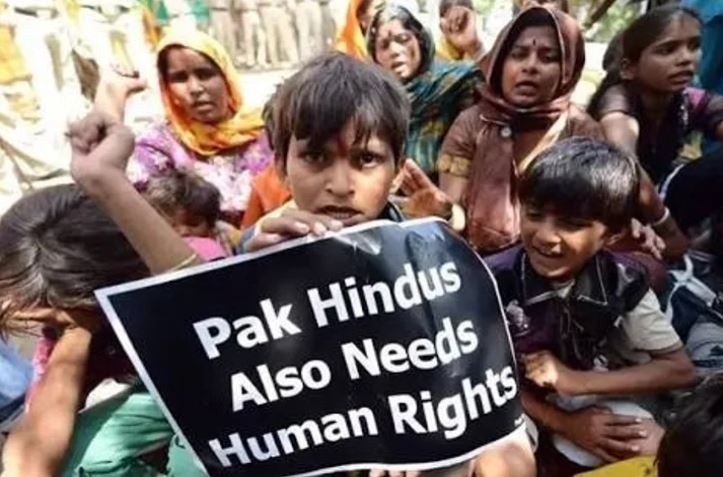
False allegations have become a lethal currency in local disputes—used to settle personal scores, seize property or assert dominance. For minorities, the cost is existential.
Entire communities flee overnight. Children grow up amid ruins. Trust between neighbours fractures, sometimes permanently.
The events in Sargodha and Gujranwala are not isolated tragedies. They are symptoms of a system where law bends under religious pressure, administration reacts instead of preventing, and accountability remains selective.