When populations that contribute to power generation remain without electricity for most of the day, while other provinces potentially benefit from that very supply, it reflects not mere inefficiency but a hierarchy of citizenship, writes Dr Sakariya Kareem
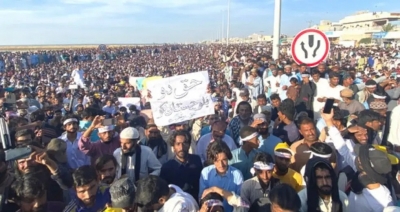
The recent protests in Rawalakot and other parts of Pakistan-occupied Jammu and Kashmir (PoJK) are an indictment of a state that has consistently failed to uphold even the most basic obligations towards its own citizens in this region. For days, residents in Rawalakot, Sudhnoti, Khaigala and neighbouring areas have poured onto the streets, holding placards and raising slogans against the Pakistan government, local authorities and the power department. Their grievances are a lived reality of 10 to 14 hours of daily power cuts, an ordeal that has become unbearable in the harsh winter months when electricity is not a luxury but a lifeline. In a region that generates electricity through local hydropower projects, the spectacle of its own people shivering in darkness is a stark symbol of structural injustice and discriminatory governance.
The protesters’ accusations are pointed and politically significant. Many residents allege that electricity produced in PoJK is being diverted to other regions, particularly Punjab province, while local communities are left to cope with prolonged outages. This pattern, if accurate, suggests a deliberate policy choice that prioritises political heartlands over peripheral populations, treating PoJK not as a constituency of equal citizens but as a resource colony. Such an extractive approach deepens the sense of alienation and reinforces the perception that the Pakistani state views the region primarily through strategic and utility lenses, rather than as a home to people with rights and aspirations.
Beyond the inconvenience of power cuts lies a broader collapse of everyday life. Schools and colleges have been badly disrupted, with online classes rendered unviable by the lack of reliable electricity, undermining the educational prospects of an already disadvantaged generation. Local businesses have suffered too, as frequent outages cripple small enterprises, reduce productivity and exacerbate existing economic fragilities. For many families, the inability to operate heating appliances in winter is not simply a discomfort; it directly endangers health and, in extreme cases, survival. The protests thus articulate a deeper demand: that the state recognise uninterrupted power as part of a bundle of basic services central to human security in PoJK.

The anger is further fuelled by what residents describe as punitive and exploitative billing practices. Even as they endure long hours without electricity, they report facing high electricity bills, steep taxes and threats of disconnection should payments lapse. Many see this as a coercive tool designed not to ensure service delivery but to discipline and suppress dissent in a politically sensitive region. When a population is simultaneously deprived of service and penalised financially, the relationship between citizen and state ceases to resemble a social contract and begins to look like institutionalised extortion.
Protest leaders have articulated their demands with clarity and a sense of forewarning. They have called for the restoration of uninterrupted power supply and priority access for local residents to electricity generated from their own region. At the same time, they have cautioned that if these demands continue to be ignored, the unrest could escalate into a more organised and sustained movement. In explicitly stating that the government and relevant authorities will be fully responsible for any further deterioration in public order, they are placing accountability squarely at the door of the Pakistani state. This framing challenges Islamabad’s long-standing narrative of control and stability in PoJK and exposes the governance deficit that lies beneath.
From a constitutional and moral standpoint, the Pakistani state bears direct responsibility for this crisis. As the authority exercising de facto control over PoJK, Islamabad is obligated to ensure equitable distribution of resources, reliable basic services and protection of fundamental rights for the region’s residents. When populations that contribute to power generation remain without electricity for most of the day, while other provinces potentially benefit from that very supply, it reflects not mere inefficiency but a hierarchy of citizenship. This hierarchy contradicts Pakistan’s own claims of representing the interests and welfare of people in this territory.
Accountability in this context must be understood on multiple levels. First, there is administrative accountability through transparent audits of power generation, allocation and billing in PoJK, and clear public disclosure of why such severe outages persist despite local hydropower capacity. Secondly elected and unelected authorities must answer for years of mismanagement, unfulfilled promises and the denial of basic civic facilities that the protests have brought into sharp focus. Lastly, acknowledging that using coercive billing practices and threats of disconnection against already deprived citizens is fundamentally unjust and corrosive to the legitimacy of the state.
The current agitation carries a powerful symbolic message. It signals that citizens in PoJK are no longer willing to remain passive recipients of neglect and misrule, and that they are prepared to challenge a governance model that deprives them of basic rights and necessities. The protests transform everyday suffering, cold homes, dark classrooms, stalled businesses, into a collective political claim for dignity and fair treatment. By coming together, residents are asserting themselves as rights-bearing citizens who expect the state to serve them, not exploit them.
For Pakistan, the events in Rawalakot and surrounding areas should serve as a serious warning. Continued disregard for the grievances of PoJK’s residents risks fuelling deeper unrest and eroding whatever trust remains between the people and the state. Meeting these protests with cosmetic measures, temporary fixes or coercion would only aggravate the situation. Genuine accountability requires structural change in investment in local infrastructure, fair prioritisation of power supply, rational and just billing frameworks, and inclusive dialogue with community representatives.