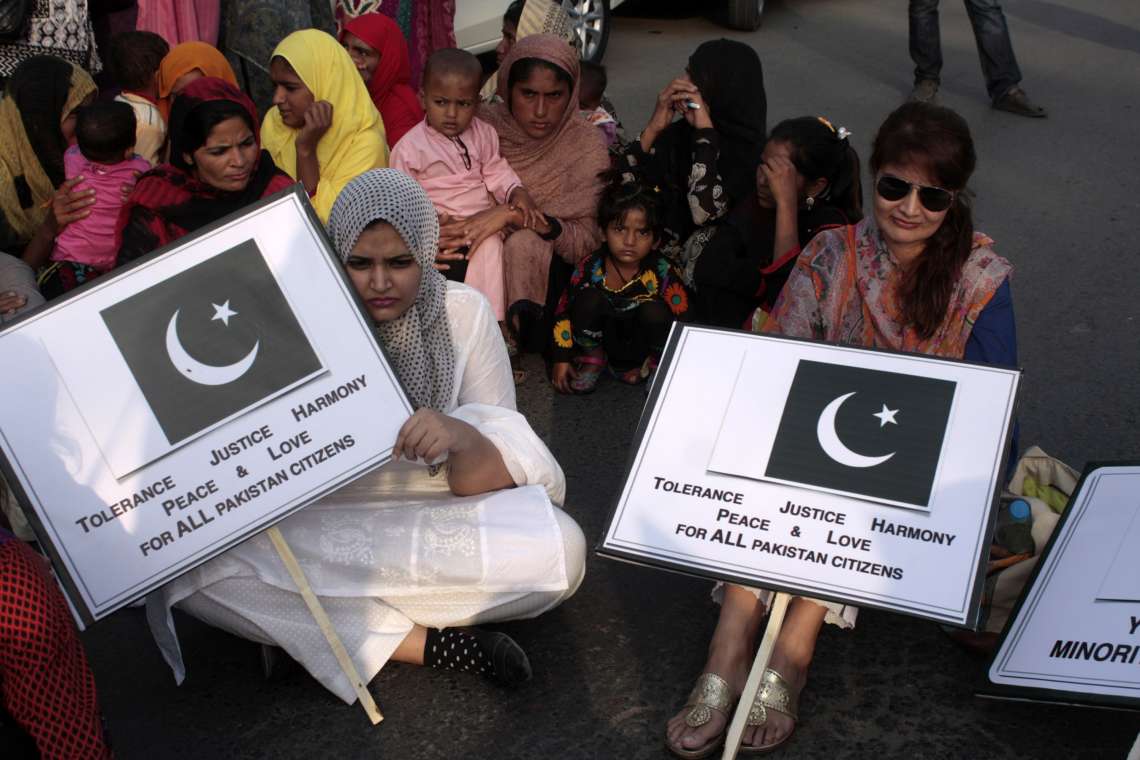
Beyond legal restrictions, the Ahmadiyya community continues to face waves of mob violence and targeted killings, writes Dr Sakariya Kareem
In Pakistan, the annual celebration of Eid is increasingly marked persecution for the Ahmadiyya Muslim community with state‑sanctioned restrictions, police raids, and public intimidation. Recent months have seen a wave of coordinated actions that prevent Ahmadis from offering Eid prayers, performing religious sacrifices, or even gathering in their places of worship, criminalising core acts of their faith. These measures, rooted in decades‑old legal and constitutional discrimination, now manifest in a pattern of cyclical harassment that rights groups warn amounts to a form of religious apartheid.
The legal framework underpinning the Ahmadiyya community’s marginalisation dates back to the 1970s and 1980s. In 1974, Pakistan’s parliament declared Ahmadis non‑Muslim through a constitutional amendment, stripping them of their self‑identity as Muslims. Under General Zia‑ul‑Haq’s regime, Ordinance XX of 1984 introduced sections 298‑B and 298‑C into the Pakistan Penal Code, which outlaw any Ahmadi from calling themselves Muslim or “posing as a Muslim,” including using Islamic terminology or performing religious rituals that might be construed as Islamic. These provisions are routinely invoked against Ahmadis offering prayers, holding conferences, or even using standard Islamic phrases in public.
In 2025, multiple districts saw authorities issuing orders and affidavits that effectively barred Ahmadis from celebrating Eid‑ul‑Adha. Human rights groups documented coercive surety bonds that Ahmadis were forced to sign, in which they pledged to refrain from purchasing sacrificial animals or performing Eid‑related rituals under penalty of fines or prosecution. District administrations in Punjab, including Chakwal, Faisalabad, Sargodha, and Lahore, issued notices instructing police to take action against Ahmadis found reciting prayers or performing sacrifices, often in response to petitions from extremist groups such as Tehreek‑e‑Labbaik Pakistan (TLP). In one case, three Ahmadi men in Chakwal were placed under preventive detention for 30 days on the grounds that they might perform an animal sacrifice, only to be released after they signed an affidavit agreeing not to do so.

This has intensified in 2026, with reports emerging that Ahmadi Muslims in several districts of Punjab were prevented from offering Eid‑ul‑Fitr prayers. According to community‑affiliated reports and media accounts, police entered Ahmadi mosques, forcibly removed congregants, and sealed prayer premises in cities such as Gujranwala, Sialkot, Faisalabad, and Sargodha. In Gujranwala, local authorities reportedly imposed a blanket restriction on Eid prayers by Ahmadis, while in Sialkot, police intervened at six separate locations and evacuated worshippers. In Faisalabad and Sargodha, prayer centres were cleared and locked, preventing any congregation from reassembling. These actions have been publicly described by Ahmadi leaders as a grave violation of Article‑20 of Pakistan’s Constitution, which guarantees the right to profess and practise religion, and of international instruments such as the Universal Declaration of Human Rights.
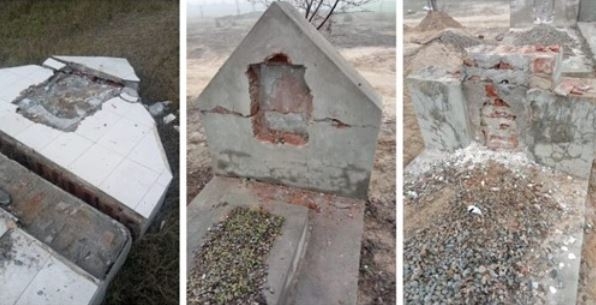
Beyond legal restrictions, the Ahmadiyya community continues to face waves of mob violence and targeted killings. In 2025, a 100‑year‑old mosque in Daska was demolished under pressure from TLP‑linked elements, signalling a broader campaign to erase Ahmadi religious landmarks. Other mosques have been sealed or vandalised, while Ahmadi graves have repeatedly been desecrated, reflecting a dehumanising social climate in which the community is treated as a pariah. In Karachi, two Ahmadi men were arrested in May 2025 for offering Friday prayers, and during a court appearance Tahir Mahmood was dragged from the courtroom and beaten to death by a mob, an incident that drew condemnation from international rights bodies. Such attacks underscore how legal discrimination dovetails with vigilante violence, creating an environment in which Ahmadis live in perpetual fear for their lives and property.
International organisations have repeatedly called on Pakistan to end the systematic persecution of Ahmadis. The US Commission on International Religious Freedom (USCIRF) has categorised Pakistan as a Country of Particular Concern, highlighting the state’s active role in criminalising the community’s faith. Amnesty International and other groups have stressed that local authorities are not merely failing to protect Ahmadis, but are themselves instrumental in restricting their religious freedom, through preventive detention orders, forced affidavits, and police‑led raids on prayer sites. The International Human Rights Committee has gone further, describing the situation as a silent genocide in which Ahmadis are subjected to apartheid‑like practices and social exclusion.
The annual cycle of Eid has become a test of endurance. Where most Muslims experience Eid as a moment of communal unity and spiritual reflection, Ahmadis confront the prospect of police harassment, legal threats, and the enforced closure of their places of worship. The combination of discriminatory laws, administrative orders, and violent mob action has created a climate in which the right to practise religion is effectively conditional on whether the practitioner belongs to the correct religious label. As long as Pakistan’s constitutional and penal framework continues to treat Ahmadis as legal outsiders within their own country, incidents such as the blocking of Eid prayers will remain not isolated episodes but predictable features of a broader campaign of religious persecution.