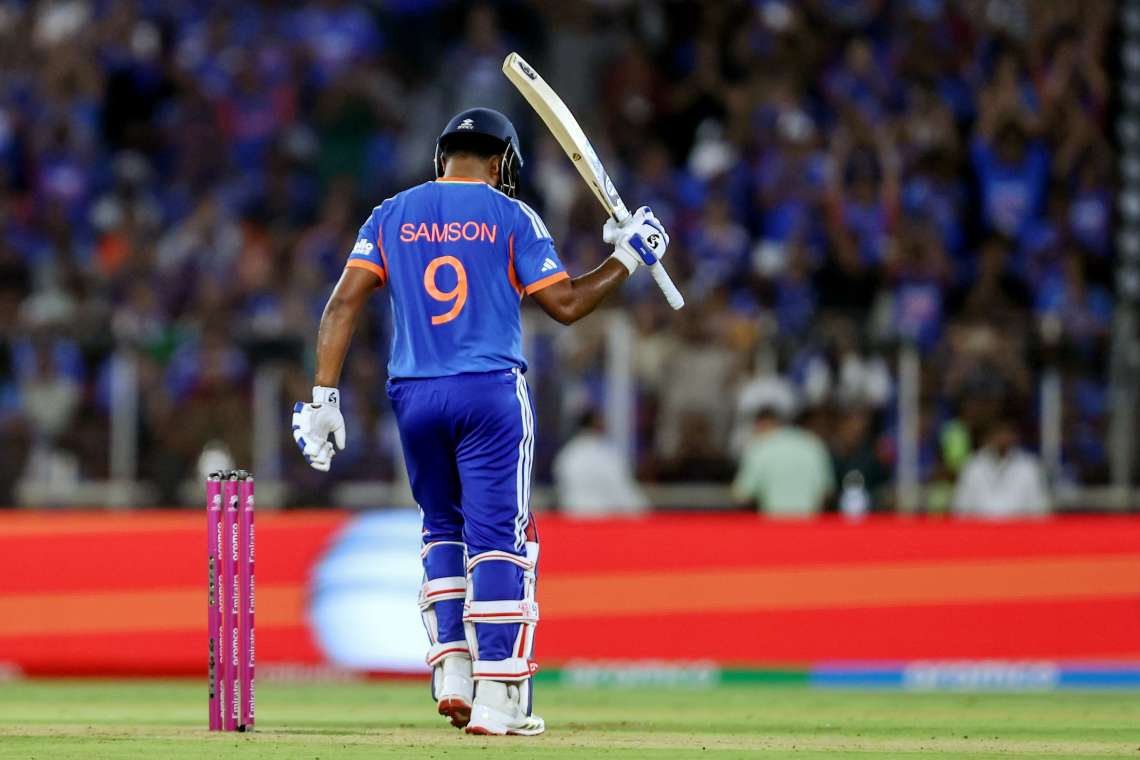
By the time India lifted the trophy in Ahmedabad, Samson had scored 321 runs in five innings at a strike rate of 199, earning the Player of the Tournament award and silencing doubts about his consistency….reports Asian Lite News
For much of the 2026 Men’s T20 World Cup, it seemed Sanju Samson’s story in the tournament would follow a frustratingly familiar pattern. The stylish Kerala batter spent most of the league stage watching from the sidelines, featuring in just one match against Namibia in New Delhi. It raised the possibility that Samson might once again play only a peripheral role in a World Cup campaign — much like he did during India’s triumphant run in 2024.
At that stage, many feared the tournament might pass him by again, adding another chapter to a career often defined by unfulfilled promise and limited opportunities. But cricket has a way of producing dramatic turnarounds, and Samson’s moment finally arrived when India redrafted him into the playing XI during the Super Eights clash against Zimbabwe.
From that point on, Samson did not merely fit into the team — he transformed into its most explosive match-winner. Over the course of a breathtaking week between March 1 and March 8, Samson produced a series of innings that not only helped India lift their third T20 World Cup title but also rewrote the narrative of his international career.
His resurgence began with a remarkable unbeaten 97 against the West Indies in Kolkata, an innings played under immense pressure that immediately shifted the spotlight onto him. It was a knock filled with authority, elegance and fearless strokeplay — a reminder of the immense talent that had long made Samson one of the most exciting batters in Indian cricket.
If that innings announced his arrival in the tournament, the next two performances cemented his legacy. Samson followed it up with identical scores of 89 in both the semi-final against England and the final against New Zealand. On the biggest stage of the competition, he delivered two composed yet devastating innings that dismantled world-class bowling attacks.
By the time India lifted the trophy at the Narendra Modi Stadium in Ahmedabad, Samson had accumulated 321 runs in just five innings at an astonishing strike rate of 199. His remarkable run earned him the Player of the Tournament award and, more importantly, silenced years of questions surrounding his ability to perform consistently at the highest level.
The Kerala batter also etched his name into the tournament’s record books. Samson smashed 24 sixes during the competition — the most ever by a batter in a single edition of the Men’s T20 World Cup. For a player who has often been labelled as talented but inconsistent, the achievement served as a powerful statement.

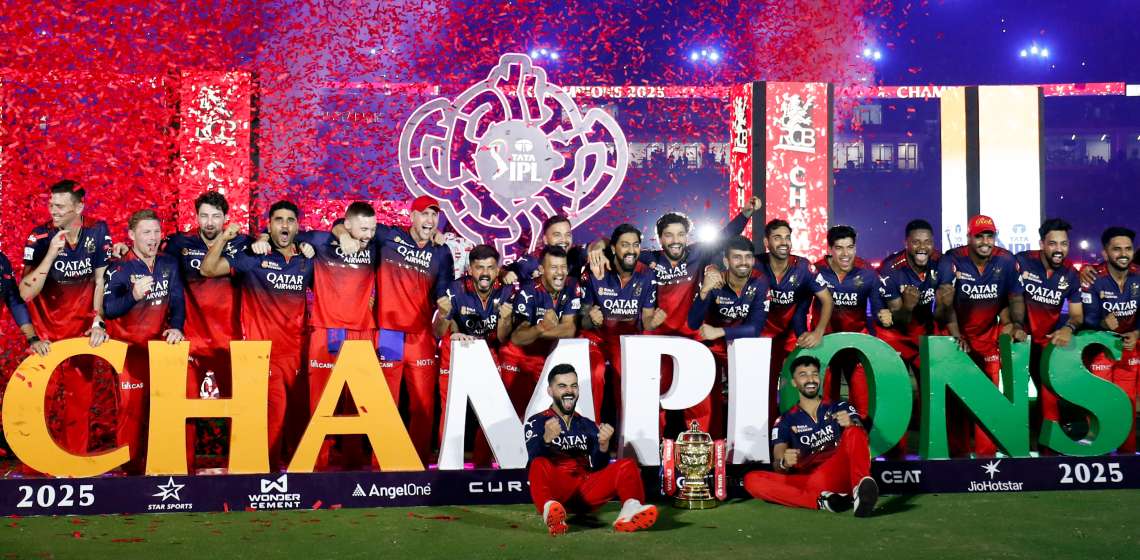
India’s commanding 96-run victory over New Zealand in the final will be remembered as a historic moment, as the team became the first to win the Men’s T20 World Cup three times. Yet beyond the statistics and the celebrations, one of the defining images of the tournament will remain Samson finally shining on the global stage. As fireworks illuminated the Ahmedabad sky on March 8, it felt like a fitting backdrop for a player whose journey had been shaped by patience, perseverance and belief.
Few people understand Samson’s journey better than Biju George, who first saw him bat as an 11-year-old practising at the Medical College Ground in Thiruvananthapuram. Samson would travel nearly 25 kilometres from his home in Vizhinjam to train there, already displaying a talent that stood out even at a young age.
George vividly remembers the day Samson received his first call-up to the Indian team for the tour of England in 2014.
“When that happened, I can still imagine him walking across the ground with his kit bag on his shoulder. He came close to me, hugged me and said, ‘Sir, we have done that,’” George recalled.
More than a decade later, the coach found himself overwhelmed with pride as he watched Samson’s World Cup heroics unfold.
“I am extremely happy for Sanju. He has seen the lows in life, and now he is seeing the highs. I only hope the highs stay longer than the lows,” George said.
He believes Samson’s performances in the tournament have fundamentally changed how people view him.
“People are now looking at him in a different light. What he has done in this World Cup is similar to what players like Virat Kohli and Rohit Sharma have done for India in past tournaments, and even what MS Dhoni did in his time.”
Samson’s opportunity came partly because India wanted to break the pattern of having too many left-handers in the top order. But once he returned to the side, he needed little time to make an impact.
“Every class player just needs one good break,” George explained. “Sanju got that break and took it from there.”
Another factor that worked in Samson’s favour was his familiarity with several of the bowlers he faced, thanks to his years of experience in the IPL.
“He has already faced many of those bowlers — from Zimbabwe, West Indies, England and New Zealand — in the IPL. That knowledge definitely helped him,” George added.
To watch Samson bat when he is in full flow is to witness a rare blend of grace and power. Zubin Bharucha, who has mentored Samson since he was 17, believes the elegance of his batting lies in his distinctive technique.
According to Bharucha, Samson’s high backlift is a defining feature of his game.
“The longer and higher the backlift, the purer the strike. But it also brings complications because the bat has to travel a longer distance,” he explained.
“In Sanju’s case, the toe of the bat often goes past his head. When the bat comes down from that coil, the ball leaves the bat with a very different sound. That’s why his shots look so effortless.”
However, the lead-up to the World Cup had been far from smooth. In the series against New Zealand before the tournament, Samson struggled for runs, scoring just 46 in five innings. Technical issues, including an exaggerated trigger movement and positioning himself too deep in the crease, were affecting his balance.
Working closely with the Indian coaching staff, Samson focused on stabilising his base and simplifying his movements at the crease.
“Once the base became strong again, his bat path became clear. With his natural high backlift and fluent follow-through, all he needed to do was let his hands work freely,” Bharucha explained.
While the technical corrections were important, Samson’s biggest battle was often mental. Years of scrutiny and doubts had created immense pressure.
That burden seemed to lift when he knelt down and made a cross after completing his unbeaten 97 in Kolkata — a gesture of gratitude and relief after a long wait for recognition.
In Kerala, Samson enjoys a deep emotional connection with fans that goes beyond cricket. George recalled a story that perfectly illustrates the affection people feel for him.
A household helper once told his wife that while she could handle personal struggles like illness in the family or financial pressures, there was one thing that truly worried her.
“She said, ‘All those tensions in life I can manage. But why is our Sanju not scoring runs?’ That is the kind of connection he has with people here,” George said.
In preparation for the World Cup, Samson had spent long hours practising on grounds provided by the Kerala Cricket Association, often batting under lights late into the evening. Support from his wife Charulatha Remesh, close friend Iqlas Naha and guidance from Sachin Tendulkar also played a role in keeping him focused.
For George, Samson’s story is ultimately one of resilience and perseverance.
“In those three knockout matches, Sanju didn’t just change the story of his career — he wrote his name into World Cup history,” he said.
“And as a coach, what more could I ask for? Seeing him reach this stage makes me happier than ever.”