Lall points to China’s construction of 34 nuclear reactors, with plans for nearly 200 more, as part of a coordinated effort to power energy-intensive AI models….reports Asian Lite News
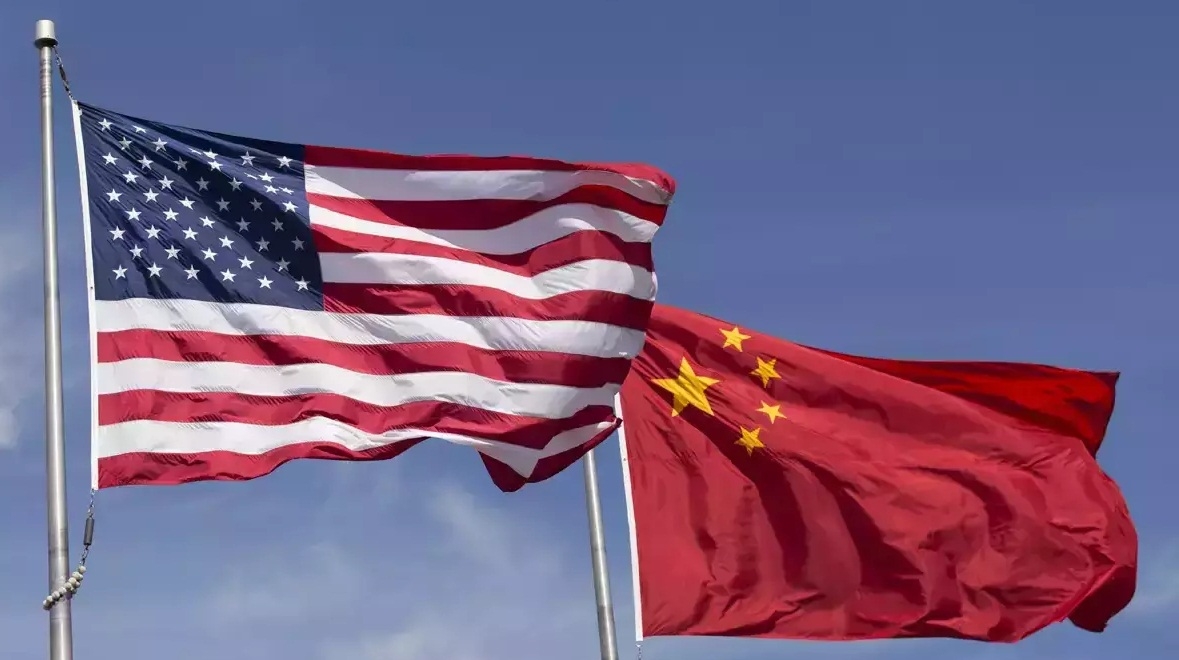
The United States needs to urgently roll out a coordinated national strategy to advance nuclear energy, artificial intelligence and autonomous systems if it is to maintain its technological edge over China in next-generation military capabilities, according to a new commentary by leading aerospace and defence executive Vivek Lall.
In the article in National Review, Lall argues that while China publicly revealed its nuclear triad in September 2025, its faster and more consequential progress has been in what he describes as a “tech triad” integrating nuclear energy, AI and autonomous systems.
He says Beijing has moved “at lightning speed” to link these technologies, while the United States has only begun to recognise how interconnected they are.
“You can say this for the Chinese Communist Party: It sees the big picture,” Lall writes, noting that China views nuclear energy, AI and autonomous systems as the three pillars of future military power.
He says nuclear energy provides the steady electricity required for advanced AI, while AI enables autonomy across platforms ranging from coordinated drone swarms to unmanned aircraft.
Lall points to China’s construction of 34 nuclear reactors, with plans for nearly 200 more, as part of a coordinated effort to power energy-intensive AI models. He says China is already using large amounts of electricity to deploy AI for autonomous technologies with military applications, including robot scout dogs and war-game simulations. As more nuclear plants come online, he adds, Chinese AI programs such as DeepSeek are expected to improve rapidly, enabling power projection across land, sea, air, space and cyberspace.
By contrast, Lall says the US approach has been fragmented. While private American companies lead globally in AI development, he notes there is no comparable national commitment to powering it, and that zero large-scale nuclear reactors are currently under construction in the United States.
He says President Donald Trump’s new National Security Strategy offers a foundation, as it states that the “future of military power” will be decided by “AI, quantum computing, and autonomous systems, plus the energy necessary to fuel these domains.”
Lall calls on the administration to direct the Department of War and the Department of Energy to implement a National Integration Initiative without delay.
Such an initiative, he writes, should remove regulatory roadblocks, streamline licensing and reviews, ease export restrictions with allies, and fund high-impact demonstration projects, while empowering — not replacing — the private sector.