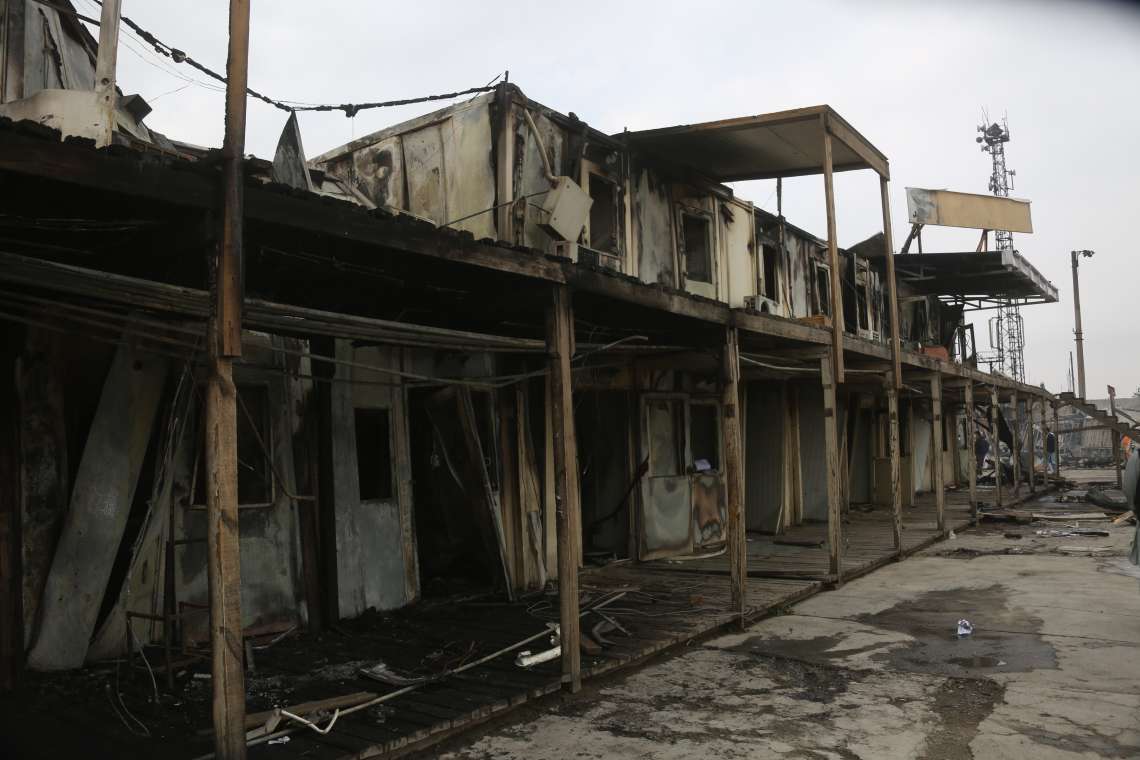
Fresh rocket strike claims in Kunar deepen Afghanistan-Pakistan tensions, as failed talks, rising displacement, and fragile Chinese mediation efforts underscore a worsening humanitarian and security crisis, reports Asian Lite Newsdesk
Tensions along the Afghanistan–Pakistan border have sharpened once again after residents in eastern Afghanistan accused Pakistani forces of carrying out rocket strikes in Kunar province, triggering panic and renewed fears of escalation in an already volatile region.
According to local reports cited by Afghan media, projectiles struck the Shali Dara area in Khas Kunar district on Monday. Residents described scenes of confusion and fear as explosions echoed across the mountainous terrain. There were no immediate confirmed reports of casualties or damage, but the incident has heightened anxiety among communities that have repeatedly borne the brunt of cross-border hostilities.
Authorities under the Taliban administration in Kabul have not yet issued an official response to the reported strikes. However, similar incidents have been documented in recent months across Afghanistan’s eastern border provinces, underscoring a pattern of intermittent military flare-ups between Kabul and Islamabad.
The latest episode comes in the wake of inconclusive talks between Pakistani officials and Taliban representatives held in Urumqi, China. The dialogue, aimed at easing tensions and addressing cross-border security concerns, reportedly ended without a breakthrough, leaving underlying disputes unresolved.
Despite the lack of tangible progress, China has maintained that diplomatic efforts are ongoing. Chinese Foreign Ministry spokesperson Mao Ning recently stated that Beijing has been actively facilitating communication between the two sides. She emphasised that both Afghanistan and Pakistan have expressed willingness to continue dialogue and that the consultation process is “being implemented and advanced steadily,” reflecting cautious optimism from Beijing’s perspective.
On the ground, however, the humanitarian consequences of the tensions continue to mount. Afghan officials have raised alarm over the scale of displacement caused by recent military activity. Earlier this month, Afghanistan’s Minister of Economy Qari Din Mohammad Hanif reported that more than 27,000 families have been displaced across nine provinces, including Kunar, Nangarhar, Khost and Kandahar.
Speaking at a coordination meeting with representatives from United Nations agencies and international organisations, Hanif described the situation as a growing humanitarian crisis. He noted that thousands of displaced families are struggling without access to basic necessities such as food, shelter, healthcare and clothing.
Hanif also accused Pakistani forces of conducting operations involving heavy weaponry in residential areas, leading to civilian casualties and mass displacement. He characterised such actions as a violation of humanitarian norms and called on international partners to step up emergency assistance efforts.
The meeting, convened by Afghanistan’s Ministry of Economy, brought together domestic and international stakeholders to mobilise urgent aid for internally displaced persons affected by the recent bombardments. Officials stressed the need for coordinated relief operations as communities grapple with the fallout of continued instability.