The US-Iran war, in many ways, became a testing ground for ideas, tactics and strategies that were hitherto considered only possibilities, writes Vivek Mishra
The Iran-US war has revealed the strengths and limitations of the military and geopolitical strategies of major and regional powers. For one, the Iran-United States war constituted a definitive turning point in the changing nature of modern warfare that began with the Russia-Ukraine war. From the use of drones, lessons in attrition and a glimpse into a nation fighting for its existence, to testing the credibility of extended conventional deterrence by the US, the US-Iran war has been demonstrably revealing. The two-week ceasefire struck in the eleventh hour between the US and Iran may have brought a temporary reprieve, but the war balance remains dangerously poised for a return. The ceasefire was much needed, especially as Donald Trump was inching towards a narrative that many reckoned was akin to a potential use of nuclear weapons.
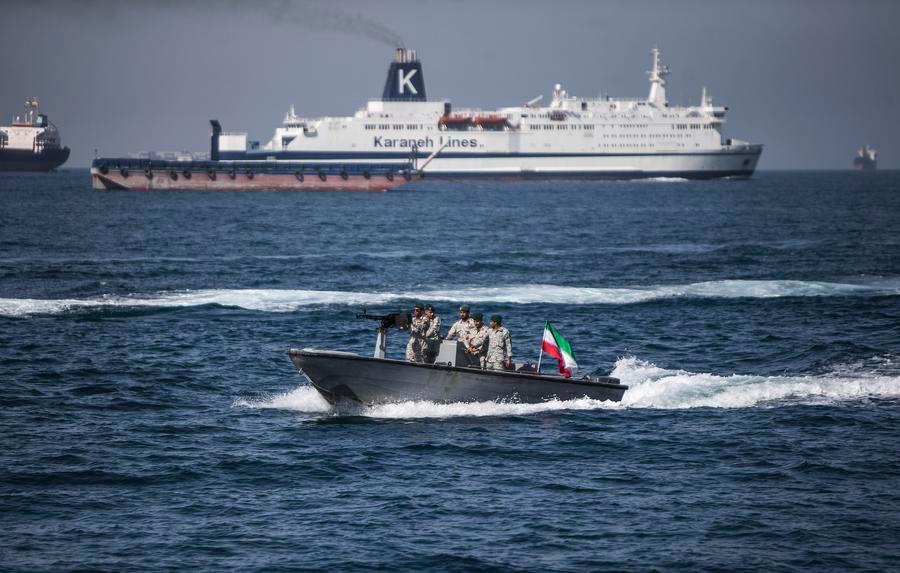
Most starkly, the halt in warring has come without any side capitulating and walking away with their hubris salvaged, at least in their own eyes. Then comes the question of the 10-point conditions that Iran has laid out, which appear to be on thin ice to begin with. While both sides may have used the opportunity to cease warring, some of the conditions laid out by Iran seem to be non-starters – preeminent among them, Iran’s continued control of the Strait of Hormuz and the US acceptance of Iran’s enrichment. If the rest of the points are used to initiate a conversation between the two sides, it is a good opportunity to bring the war to an end and address the disruptions across supply chains, energy, trade, and connectivity.

It is going to be extremely challenging for the Trump administration to impose conditions on Iran or accept Tehran’s conditions. What appeared to be initially doable by the Trump administration – galvanising internal opposition against the Islamic regime – now seems more distant. Continued bombing of Iran and its strategic assets by both Israel and the US has created internal consternation against the Trump administration, even among people who initially thought the attacks to be an opportunity for regime replacement with a democratic system. In fact, the Iranian people responded to the regime’s call and formed human chains around power plants in Iran in a show of strength. One of the primary concerns among people is the disruption of critical services, such as water supply, that have been negatively affected. As it is, Tehran was reeling under a water crisis even before the war began.
The US-Iran war, in many ways, became a testing ground for ideas, tactics and strategies that were hitherto considered only possibilities. The closure of the Strait of Hormuz and the use of 30,000-pound GBU-57 bunker buster bombs, also known as Massive Ordnance Penetrator, until now a valuable proposition for study and assessments, became a reality. Even as the war in the Middle East raged, one of the most prominent assessments was that it could fundamentally change the region for the foreseeable future. In turn, this also meant that America’s own role in the region would have changed. In light of the cessations, both these propositions stand true. Iran is at a crossroads, where its regional proxies have been weakened, its own economy and polity ravaged, its relationship with regional countries in a spiral and most of all, regional trust blown away. For the United States and its allies, Iran’s transitional reality from a regional menace to an existential threat is now palpable. Furthermore, with Israel discounting the ambit of the ceasefire to its actions inside Lebanon, the daylight between Tel Aviv and Washington may grow. These rapid transitions, from when the war started to now, have compounded difficulties in economic growth, connectivity, mobility, and, most of all, in the transition of the order that looked imminent since the spate of conflicts that began with the Russia-Ukraine war.

The expanding crisis in the Middle East brought intense conflicts closer to India and tested its strategic autonomy in ever-new ways, further straining Delhi’s energy choices – a process that began with sanctions on Russian oil since the Russia-Ukraine war. As the Iran-US-Israel war impacted India’s Liquefied Petroleum Gas (LPG) imports directly, the crisis was felt more intimately in households than ever before. As the world’s second-largest importer of LPG, India imports about 60 per cent of its needs primarily from three Gulf countries – Qatar, the UAE, and Kuwait. With a relatively high dependence on energy flows from the Middle East, India falls in a high-risk zone of countries affected by disruptions to energy flows through the Strait of Hormuz.
The ongoing crisis in the Middle East has created opportunities for India in various ways, ranging from augmenting strategic petroleum reserve capacities at home to diversifying imports. Argentina and the US became important sources for India’s LPG imports during the current crisis, with the former more than doubling its exports to India in the first quarter of 2026 year-on-year, and the latter climbing rapidly in its LPG exports to India in March alone. In the first three weeks of March this year, India’s LPG imports from the US were 176,000 tonnes, surpassing the 89,000 tonnes received from the Middle East. Subsequent waivers on Iranian and Russian crude and petroleum products widened India’s options. Yet, negotiations in Islamabad remain key to how both Iran and the US position themselves apropos the ceasefire. Furthermore, the talks in Islamabad can best yield a temporary modus vivendi to open the Strait of Hormuz. On the downside, the more intractable ends that have kept the US and Israel embroiled in the region, such as the question of uranium enrichment by Iran, possible extraction or removal of enriched nuclear material from Iran, removal of sanctions on Iran, and other issues outlined in the Iranian 10-point agenda, are issues that cannot be resolved in a few meetings. For reference, the JCPOA, while being negotiated in peacetime, took more than 2 years under the Obama administration.
For India, everything that has unfolded since the Gaza war and culminated in the Iran-US-Israel conflict should serve as a lesson in preparing to live in a perpetual era of conflict punctuated by peace. Both war and diplomacy are changing their character in ways that seem to render the traditional toolkits anachronistic.
(Dr Vivek Mishra is Deputy Director, Strategic Studies Program, ORF. The views expressed here are personal.)