New official figures show that every one of Britain’s 10 busiest railway stations is in London, underlining the capital’s unrivalled grip on the national rail network…reports Asian Lite News
London’s dominance over Britain’s rail network has been laid bare by new figures showing that the 10 most popular railway stations in the UK are all located in the capital, underlining the city’s central role in national mobility, commuting and economic activity.
Data based on station entries and exits in Great Britain during 2024–25, published by the Office of Rail and Road, place Liverpool Street at the top of the rankings, handling 98 million passenger movements over the year. It is followed by Waterloo with 70.4 million and Paddington with 69.9 million, confirming the continued primacy of London’s major termini despite shifts in working patterns since the pandemic.
The list highlights not only the scale of demand for rail travel in the capital but also the growing importance of London’s cross-city links. Stations served by the Elizabeth line feature prominently, reflecting how the new east–west artery has reshaped travel patterns and redistributed passenger flows across central London.

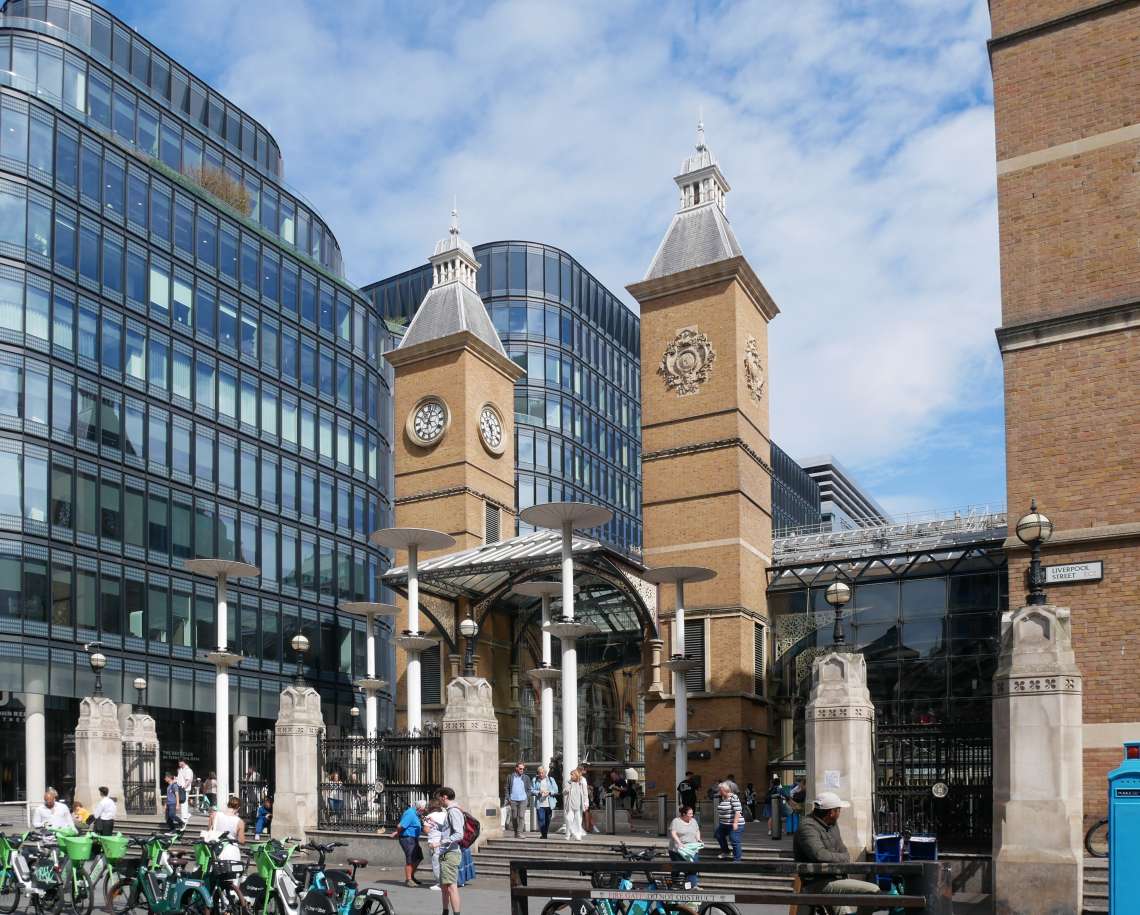
Liverpool Street’s position as the UK’s busiest station reflects its dual role as a City gateway and a major hub for services to Essex, Hertfordshire and East Anglia. Its exceptionally high footfall is driven by a mix of daily commuters, leisure travellers and long-distance passengers, as well as interchange traffic from the Underground and Elizabeth line.
Waterloo, traditionally the busiest station in Britain, now ranks second but remains a cornerstone of the capital’s transport system. Serving much of south-west London and the wider South East, the station continues to process more than 70 million entries and exits a year, demonstrating the resilience of suburban rail demand even as hybrid working has become more common.
Paddington, in third place, illustrates how infrastructure investment has altered London’s rail geography. Long associated with services to the West Country and South Wales, Paddington has been transformed by the Elizabeth line into a major east–west interchange, boosting passenger numbers and extending its catchment well beyond its historic role as a terminus.
Tottenham Court Road, ranked fourth with 68.1 million entries and exits, is the highest-placed station that is not a traditional mainline terminus. Its rise reflects the impact of the Elizabeth line and the station’s location at the heart of the West End, linking shopping districts, cultural venues and major employment centres. The figures underline how central London stations that facilitate interchange and short-distance travel can rival, and in some cases surpass, long-established termini.
London Bridge comes fifth with 54.7 million, reinforcing its status as a critical node for services into south London and the south coast, as well as a major interchange with the Underground. Its continued high usage points to the enduring importance of rail for densely populated commuter corridors south of the Thames.
Victoria follows closely behind in sixth place with 53.8 million passenger movements. Serving routes into Kent, Sussex and south London, Victoria remains essential for both commuter and leisure travel, including access to Gatwick Airport. The figures suggest steady demand across multiple travel purposes rather than reliance on a single market.
Stratford, ranked seventh with 51.5 million, exemplifies the shift towards multi-modal transport hubs in outer London. Once primarily a regional station, Stratford has been reshaped by regeneration, major retail development and its role as an interchange for national rail, Underground, Docklands Light Railway and the Elizabeth line. Its position in the top 10 reflects the growing importance of east London within the capital’s economic landscape.
Farringdon, eighth with 50.2 million, highlights the success of cross-London connectivity. As the only station where the Elizabeth line intersects with the Thameslink north–south route, Farringdon has become one of the most strategically significant stations in the country, enabling rapid journeys across London and beyond without the need to pass through traditional termini.
Bond Street, ninth with 42.8 million, demonstrates how the Elizabeth line has driven footfall in central shopping and commercial districts. The station’s inclusion in the top 10 underscores the role of rail in supporting London’s retail and tourism economy, particularly in areas that attract both domestic and international visitors.
Euston completes the list in tenth place with 40.2 million entries and exits. While its ranking is lower than some other major termini, the figures still point to substantial usage, even amid disruption and redevelopment linked to the planned High Speed 2 project.
Taken together, the rankings reinforce London’s overwhelming dominance within the UK rail system. Every station in the top 10 lies within the capital, a reflection of London’s population size, employment density and the structure of the national rail network, which remains heavily oriented towards journeys into and across the city.
The prominence of Elizabeth line stations in particular signals a long-term shift in how Londoners and visitors move around the capital. By reducing journey times and improving connectivity, the line has not only absorbed demand but also generated new travel, helping to redistribute passenger flows and ease pressure on older routes.
As Britain debates the future of transport investment, the figures provide a clear reminder that London’s rail network is not just a local asset but a national one. The scale of passenger movement through the capital’s stations illustrates how closely the health of the UK economy remains tied to the efficient functioning of London’s railways.