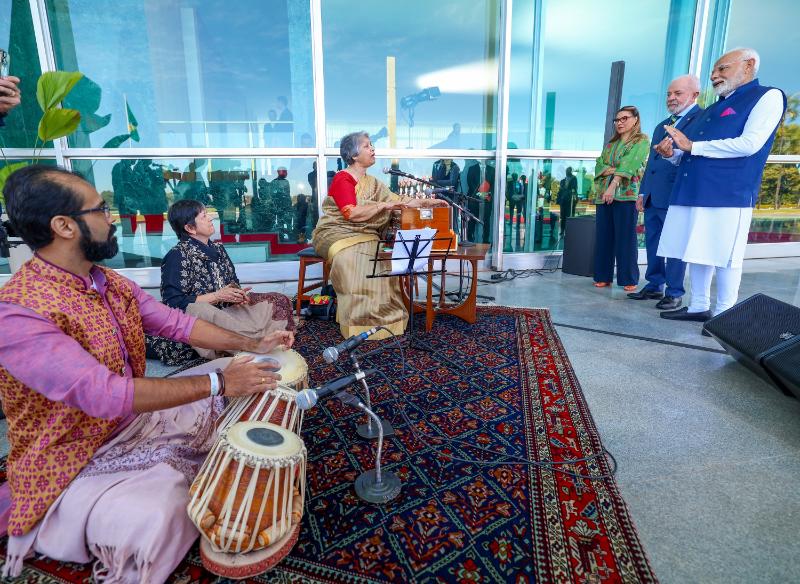
In the present conflict-ridden world, culture and P2P exchanges have the potential to foster mutual understanding and strengthen trust among people and countries, the expert said…reports Asian Lite News
BRICS can strengthen its long-term cohesion by placing greater emphasis on cultural cooperation and people-to-people exchanges alongside economic and political partnerships, according to a policy expert.
India assumed the BRICS Chairship for the fourth time in 2026, with the grouping’s agenda structured around three core pillars: political and security; economy and finance; and culture and People-to-People (P2P) exchanges.
In the present conflict-ridden world, culture and P2P exchanges have the potential to foster mutual understanding and strengthen trust among people and countries, the expert said.
People-to-people exchanges have remained an essential component of BRICS. Prime Minister Narendra Modi had said during last year’s BRICS Summit that India would advance the forum with a people-centric approach and in the spirit of ‘Humanity First’.
India’s chairship theme, ‘Building for Resilience, Innovation, Cooperation and Sustainability’, also reflects this vision, the expert noted.
BRICS countries have rich historical connections, with shared experiences providing a potential basis for greater cohesion. India, China and Russia, for instance, were connected through the ancient Silk Routes, which facilitated the movement of goods as well as religions, philosophies, knowledge and artistic traditions.
Many BRICS countries have also experienced colonialism, struggles for independence, economic inequality and the challenges of modernisation. While their histories are not identical, these experiences have contributed to similarities in their aspirations for sovereignty, development and a more representative international order.
The expert said such historical links demonstrate that interaction among BRICS societies is not a new phenomenon, while stronger P2P relations could help create more durable bonds than government-to-government relations alone.
The cultural diversity of BRICS countries could also support efforts to address contemporary challenges, as indigenous knowledge and traditions contain valuable lessons on biodiversity, agriculture, community organisation and sustainable living.
The BRICS Civil Forum 2026 brought together nearly 80 civil society organisations from across BRICS countries, including 26 from India. Discussions in the culture working group highlighted the need for institutional continuity and predictable financing for the long-term success of BRICS cultural cooperation.
The forum suggested that BRICS consider establishing a culture fund to strengthen people-to-people ties through regular programmes and partnerships rather than relying primarily on one-time events.
Another key recommendation was to use emerging technologies, including digitisation and Artificial Intelligence, to preserve tangible and intangible cultural heritage and support its transmission between generations.
Tourism was also identified as a practical avenue for combining cultural cooperation with local economic development. BRICS could explore Cultural Tourism Corridors connecting heritage destinations across member countries, potentially creating employment and income opportunities for local communities.
A BRICS Interactive Heritage Map, combined with Geographical Indicators, digital marketplaces and e-commerce, could help local artists, artisans and cultural entrepreneurs access wider domestic and international markets, the expert suggested.
The expert also called for greater participation of young people and women in cultural cooperation, including through initiatives such as an Annual BRICS Culture Festival and Culture Diplomacy Fellowships for artists, curators and researchers under the ICCR framework.
Regular exchanges, fellowships and collaborative projects could help create enduring relationships among young people and turn cultural cooperation into a lived experience, the expert said.
The grouping’s cultural diversity means that cooperation does not require uniformity, but rather recognition and respect for differences while creating opportunities for dialogue, exchange and mutual learning.
The expert said culture should not be treated as a peripheral aspect of BRICS diplomacy, describing it as a strategic resource that can foster mutual respect, strengthen people-to-people ties and create a shared sense of purpose.
“BRICS has long been understood as a bloc of states, however, it is time for it to be understood equally as a bloc of cultures and civilisations,” the expert said.
The expert added that India’s cultural diversity places it in a strong position to lead the conversation, given the country’s hundreds of living languages, thousands of dialects and diverse traditions in art, performance, textiles, cuisine and spiritual expression.
The author is a consultant at New Delhi-based Research and Information System for Developing Countries. Views expressed are personal.