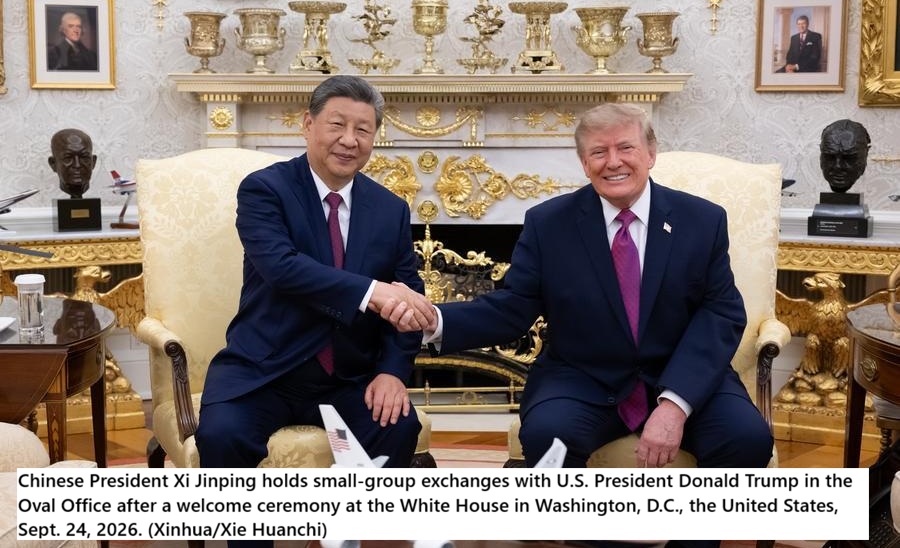
Beijing says Xi Jinping and Donald Trump have agreed on a framework for greater “strategic stability” in China-US relations….reports Asian Lite News Desk
China and the United States have agreed to work towards a “constructive” relationship of strategic stability based on respect, fairness and reciprocity, Chinese Foreign Minister Wang Yi said following President Xi Jinping’s state visit to the US.
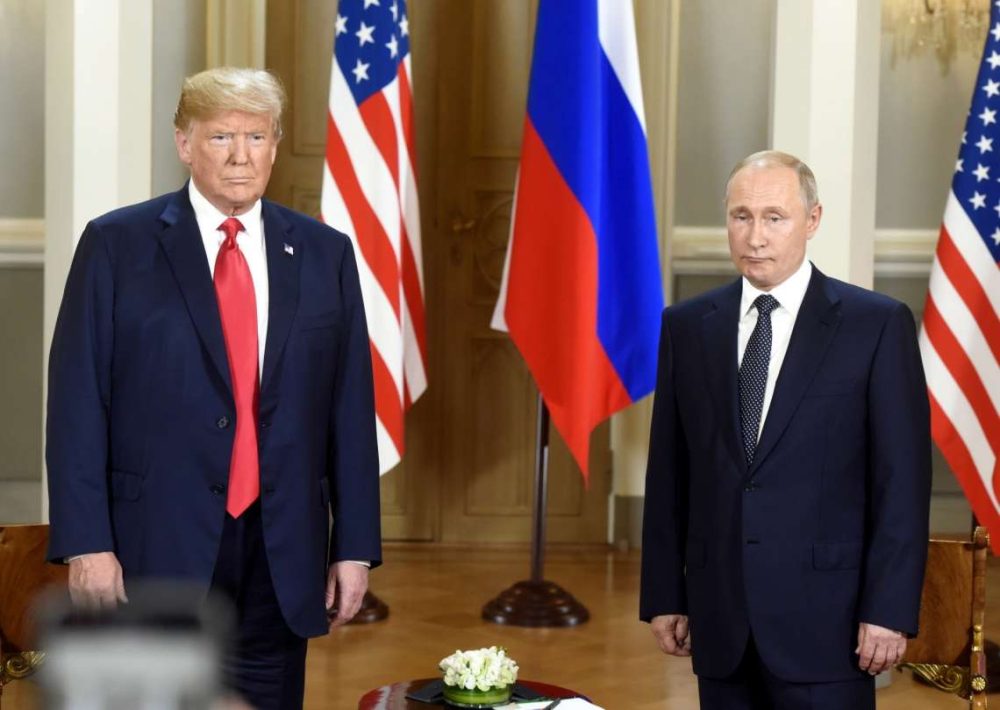
Wang said the understanding was an important political outcome of Xi’s September 23-25 visit, during which the Chinese leader met US President Donald Trump and held discussions on bilateral ties and wider international issues.
“An important political outcome of President Xi Jinping’s state visit to the US is that President Xi and President Trump have agreed to build a constructive China-US relationship of strategic stability based on respect, fairness and reciprocity,” Wang told Chinese state media.
He said respect would involve recognising each other’s sovereignty and territorial integrity, as well as each country’s choice of social system and development path, while taking account of each side’s core interests and major concerns.
Wang described fairness as pursuing mutually beneficial cooperation and resolving differences through consultation rather than a zero-sum approach.
“Fairness means pursuing mutually beneficial cooperation and handling differences through consultation, rejecting a zero-sum game in which one side’s gain comes at the expense of the other’s, and not seeking unilateral absolute advantage,” he said.
On reciprocity, Wang said both countries were equal in sovereignty and should address each other’s concerns on an equal basis while avoiding what he described as hegemonic or bullying behaviour.
According to Xinhua, Wang made the remarks while briefing reporters on Xi’s visit. He said Xi and Trump had held a “candid and in-depth exchange of views in a friendly atmosphere of mutual respect” on China-US relations and wider global developments.
Wang said the two leaders had maintained close contact since Trump began his second term, including three face-to-face meetings and five telephone conversations. He described their interaction, which he said was characterised by “mutual respect and sincerity”, as “the most valuable strategic asset in China-US relations.”
On trade, Wang said Xi had stressed the need to expand areas of cooperation while reducing the number of disputes between the two countries. He said Washington should treat Chinese companies fairly and resolve differences through dialogue and negotiations.
On the fentanyl issue, Wang said China was not responsible for the drug abuse problem in the US, while adding that Beijing had sought to assist Washington in tackling the crisis. He said the two countries would continue cooperation between their law enforcement agencies to combat transnational crime.
Wang also highlighted measures aimed at increasing people-to-people exchanges, including Xi’s proposal to invite 100,000 young Americans to China for study and exchange programmes over the next five years. He added that two pandas, Ping Ping and Fu Shuang, would soon arrive at Zoo Atlanta.
The two leaders also discussed international and regional issues, with Wang saying they had agreed to strengthen coordination on global peace and development.
On artificial intelligence, Wang said the two countries agreed to “leverage respective strengths rather than guard against each other” and use existing dialogue mechanisms while working to prevent the misuse and abuse of AI.
He said China and the US, as permanent members of the UN Security Council, had a shared responsibility to uphold the post-war international order and prevent the resurgence of militarism.
The comments followed a summit at which Washington and Beijing agreed on more favourable tariff treatment for $30 billion of non-sensitive goods in each direction and established a new dialogue on emerging technologies, according to a White House fact sheet.
Wang’s remarks come amid continuing efforts by the two countries to manage differences across trade, technology, security and other areas while maintaining high-level diplomatic engagement.