Colombia’s recognition of Israeli sovereignty over the Golan Heights has drawn sharp Arab condemnation, reviving a decades-old dispute over Syria’s occupied territory, reports Asian Lite News Desk
Bogotá’s decision to recognise Israeli sovereignty over the occupied Syrian Golan Heights has triggered strong condemnation from Syria and several Arab states, with Saudi Arabia, Egypt, Qatar and the Gulf Cooperation Council saying the move violates international law and cannot change the territory’s legal status.
Colombia has recognised Israeli sovereignty over the Golan Heights, breaking with the longstanding international position that regards the strategic territory as occupied Syrian land.
The decision, announced by Colombia’s Foreign Ministry on August 10, comes just days after President Abelardo de la Espriella took office and represents a major shift in Bogotá’s policy towards Israel and the Middle East.
Colombia said its decision was based on what it described as the Golan Heights’ strategic importance to Israel’s security and its assessment of the territory as an essential component of Israel’s national defence.
The move has been welcomed by Israel but strongly rejected by Syria and Arab governments, which say recognition by Colombia cannot alter the territory’s status under international law.
What Colombia declared
In its statement, the Colombian government said that, in view of continuing instability in the Middle East and the strategic importance of the Golan Heights to Israel’s security, it recognised Israeli sovereignty over the territory.
Bogotá also recognised Israel’s right to defend itself against external threats and said continued Israeli control and sovereignty over the Golan constituted an important part of Israel’s national security.
The announcement came shortly after the inauguration of de la Espriella, a conservative president who took office on August 7 after winning Colombia’s June presidential election.
The new administration has promised a significant foreign-policy shift after the presidency of Gustavo Petro, whose government sharply criticised Israel over the Gaza war, severed diplomatic relations with Israel and halted Israeli arms imports.
De la Espriella has pledged to restore closer relations with Israel and the United States. The two countries have already agreed on a series of measures, including the restoration of diplomatic relations, the appointment of ambassadors and plans to move Colombia’s embassy from Tel Aviv to Jerusalem.
Colombia has also agreed to withdraw from South Africa’s case against Israel at the International Court of Justice and from the Hague Group, according to Israel’s Foreign Ministry.
Israel welcomed Colombia’s decision as a significant diplomatic development.
Israeli Foreign Minister Gideon Sa’ar described the recognition as a “historic” decision and said it followed his meeting with de la Espriella shortly before the Colombian president’s inauguration.
Sa’ar said he would work to encourage other countries to follow the United States and Colombia in recognising Israeli sovereignty over the Golan Heights.
The decision therefore has significance beyond Colombia-Israel relations, as it potentially opens another front in the long-running diplomatic dispute over the status of the territory.
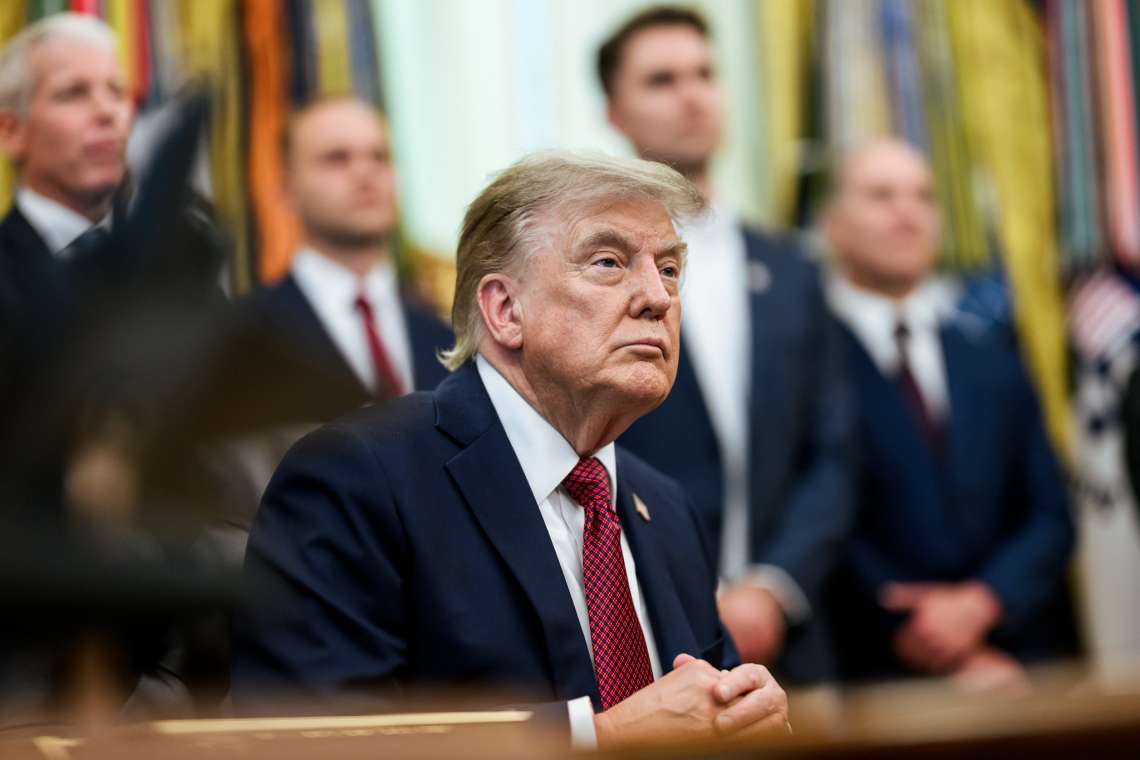
The United States remains the only other country to have formally recognised Israeli sovereignty over the Golan Heights. President Donald Trump’s administration announced the US recognition in 2019, reversing decades of American policy.
Why the Golan Heights matters
The Golan Heights is a strategically important plateau overlooking northern Israel and southwestern Syria.
Israel captured most of the territory from Syria during the 1967 Six-Day War. Syria attempted to regain the Golan during the 1973 Arab-Israeli war, but the territory remained under Israeli control.
A 1974 disengagement agreement established a United Nations-monitored buffer zone between Israeli and Syrian forces.
Israel later passed legislation extending its laws, jurisdiction and administration to the Golan in 1981, effectively annexing the territory.
The move was rejected by the United Nations.
UN Security Council Resolution 497, adopted unanimously in December 1981, declared Israel’s decision to impose its laws, jurisdiction and administration on the occupied Syrian Golan “null and void and without international legal effect”. The resolution also demanded that Israel rescind the decision.
The international legal position has remained unchanged despite Israel’s continued control of the territory.
Why Arab states rejected Colombia’s decision
Saudi Arabia was among the strongest voices condemning the Colombian announcement.
The Saudi Foreign Ministry said the recognition violated the UN Charter and relevant international resolutions, particularly Security Council Resolution 497.
Riyadh reaffirmed its position that the Golan Heights is occupied Syrian Arab territory and said actions intended to alter its legal status cannot create rights or legitimacy.
Saudi Arabia also called on Colombia to reconsider its decision and comply with international law and UN resolutions.
Egypt also issued a categorical rejection of the Colombian move.
Cairo said measures aimed at entrenching Israel’s occupation or legitimising the annexation of the Golan have no legal effect and do not change the territory’s status. Egypt called for Israel to withdraw from the occupied Syrian territory.
Qatar likewise condemned Colombia’s recognition.
Doha said recognition of Israeli sovereignty would not alter the fact that the Golan remains occupied Arab territory and warned that such unilateral moves could undermine efforts to achieve peace in the region.
The Gulf Cooperation Council also rejected Colombia’s decision.
GCC Secretary-General Jasem Mohamed Albudaiwi said the recognition violated international law and international treaties and strongly condemned the move.
He said recognitions that contradict international and UN resolutions were unacceptable and could undermine regional peace and security.
The GCC called on Colombia to withdraw its recognition and urged Israel to comply with international resolutions and withdraw from occupied Arab territories, including the Golan Heights.
The Gulf bloc also reaffirmed its support for Syria’s sovereignty, independence and territorial integrity.
An inseparable part, says Syria
Damascus responded with an equally strong rejection.
The Syrian Foreign Ministry said it “categorically” rejected Colombia’s recognition of Israeli sovereignty over the Golan and described the decision as a violation of international law and relevant UN resolutions.
Syria said the Golan is an inseparable part of Syrian territory and rejected the Colombian argument that security considerations could justify recognition of Israeli sovereignty.
Damascus also pointed to the principle that territory cannot legitimately be acquired by force, as well as Security Council Resolution 497.
The Syrian government said it would continue to use diplomatic and legal means to defend its sovereignty and territorial integrity and seek the recovery of occupied territory.
UN position remains unchanged
The central issue behind the Arab condemnation is that Colombia’s recognition does not change the position established through decades of UN resolutions.
The United Nations continues to regard the Golan Heights as occupied Syrian territory.
UN Security Council Resolution 497 remains a key reference point. It states that Israel’s 1981 decision to impose its laws, jurisdiction and administration on the Golan is null and void and has no international legal effect.
UN resolutions have repeatedly called on Israel not to take measures designed to alter the physical character, demographic composition, institutional structure or legal status of the occupied Syrian Golan.
That position was reiterated by UN Secretary-General António Guterres in 2026, according to reporting on the latest dispute. The UN continues to recognise the Golan as Syrian territory.
Trump’s 2019 decision changed US policy
Colombia’s move is particularly significant because it follows the precedent established by the United States.
In March 2019, Trump formally recognised Israeli sovereignty over the Golan Heights, making the United States the first country to take that position.
The decision represented a major departure from the prevailing international consensus.
Before the US recognition, successive American administrations had treated the Golan as territory occupied by Israel rather than sovereign Israeli territory.
Trump’s decision was welcomed by the Israeli government but rejected by Syria and other Arab governments.
Colombia has now become the second country to formally recognise Israeli sovereignty over the territory.
A wider shift in Colombia’s foreign policy
The Golan declaration is also part of a broader transformation in Colombia’s foreign policy.
Under former President Gustavo Petro, Bogotá adopted a sharply critical position towards Israel, particularly over the Gaza conflict.
Petro’s government severed diplomatic relations with Israel and halted arms imports from the country.
The arrival of de la Espriella has brought a rapid reversal.
The new administration has indicated that it wants closer strategic, security and economic ties with Israel and Washington.
The restoration of diplomatic relations, plans to move the Colombian embassy to Jerusalem, a proposed free-trade agreement and increased security cooperation form part of that broader realignment.
The Golan recognition therefore goes beyond a single territorial dispute. It signals Bogotá’s intention to establish a substantially different relationship with Israel from that pursued under Petro.
A new regional phase
The timing of the decision is also significant.
Israel’s military presence in Syria has expanded following the collapse of Bashar al-Assad’s government in December 2024. Israeli forces have moved into areas around the UN-monitored buffer zone and taken control of strategic positions, including territory around Mount Hermon.
The developments have added new tension to the longstanding dispute between Israel and Syria.
At the same time, Syria’s new authorities have sought to rebuild relations with Arab states and engage internationally after the fall of Assad.
The question of the Golan remains one of the most sensitive issues in any future Israeli-Syrian settlement.