President Donald Trump has said his personal sense of morality is the only real constraint on his power to order military action around the world…reports Asian Lite News
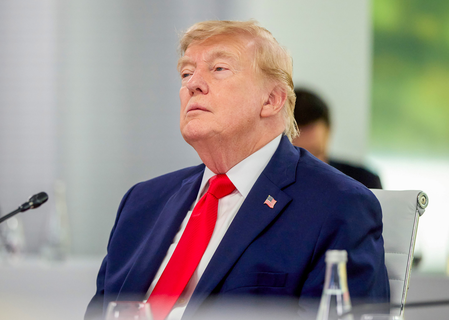
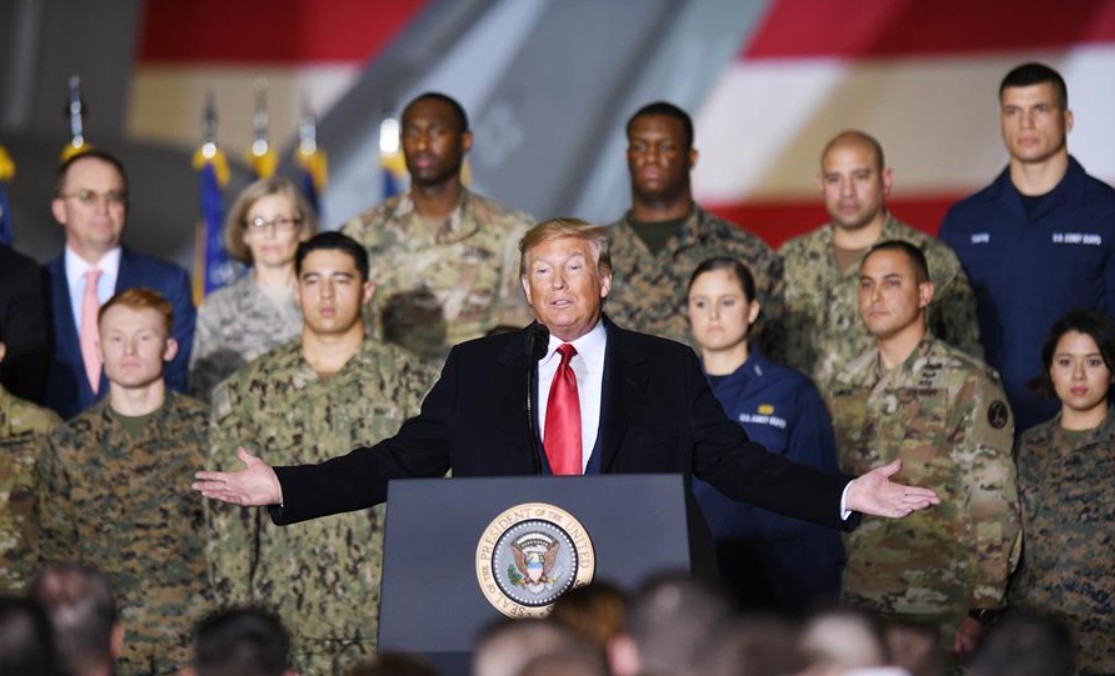
President Donald Trump has said that his “own morality” is the only limit on his authority to order military action globally, dismissing international law as a meaningful restraint on his power. The comments were made in an interview with The New York Times published days after the United States launched a rapid military operation to topple Venezuelan leader Nicolas Maduro and amid threats directed at several other countries and the autonomous territory of Greenland.
Asked whether there were any limits on his global powers, Trump said: “Yeah, there is one thing. My own morality. My own mind. It’s the only thing that can stop me.” He added: “I don’t need international law,” while also insisting: “I’m not looking to hurt people.” The remarks have drawn sharp attention in Washington and among US allies, coming as Trump’s second presidential term has been marked by frequent and far-reaching uses of military force.
Trump later qualified his position by saying that he did need to abide by international law, but added that “it depends what your definition of international law is.” The United States is not a member of the International Criminal Court, which prosecutes individuals accused of war crimes, and has repeatedly rejected rulings from the International Court of Justice, the United Nations’ highest judicial body. Successive US administrations have argued that such institutions infringe on American sovereignty, a stance Trump has taken further in asserting personal judgement as the decisive check on presidential action.
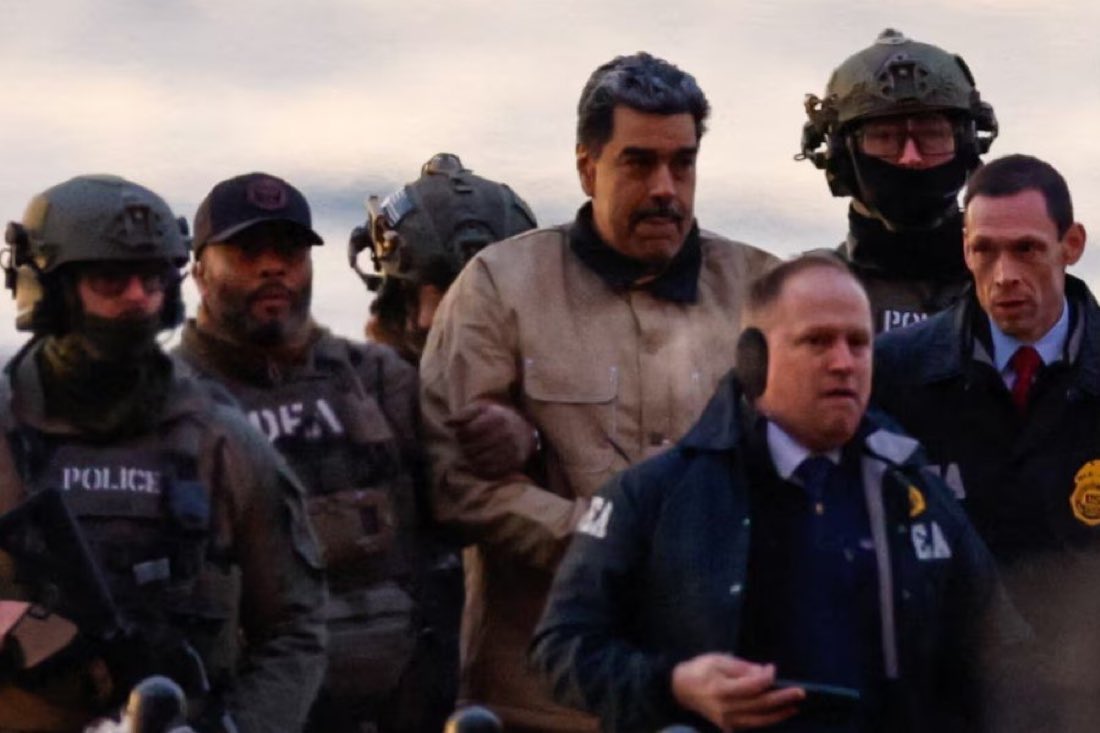
The interview followed a lightning US operation in Venezuela that resulted in the capture of President Nicolas Maduro. Since Maduro’s detention, Trump has adopted an increasingly assertive tone, threatening a string of other countries including Colombia, and raising again the prospect of the United States acquiring Greenland, which is administered by Denmark, a fellow NATO member. Asked whether preserving the NATO military alliance or acquiring Greenland was his priority, Trump told the Times: “it may be a choice.”
Trump described potential US ownership of Greenland as something he felt was “psychologically needed for success”, a comment that has unsettled European allies already strained by Washington’s increasingly unilateral approach. Greenland’s strategic location in the Arctic and its natural resources have long attracted US interest, but previous suggestions by Trump that the territory could be acquired were dismissed by Denmark as absurd. His renewed comments have revived concerns about the future of transatlantic relations.
While portraying himself as a “peace president” and continuing to express interest in winning the Nobel Peace Prize, Trump has authorised a series of military actions since returning to office. In June, he ordered attacks on Iran’s nuclear programme, and over the past year the US has carried out strikes in Iraq, Nigeria, Somalia, Syria and Yemen. The operation in Venezuela marked the most dramatic escalation yet, involving the removal of a sitting head of state.
At home, Trump’s remarks and actions have prompted renewed debate about the limits of presidential power. Some members of Congress, including a handful of Republicans, have sought to curb his authority to launch military operations without legislative approval. The Senate has advanced a measure aimed at reining in presidential military action in Venezuela, reflecting concerns that the executive branch is bypassing constitutional checks. Even if the measure reaches his desk, however, Trump is widely expected to veto it.
The president’s approach to power has also been shaped by his own history with the law. Trump has been impeached twice and faced a series of federal charges, including allegations of conspiring to overturn the 2020 election. Those charges were later dropped after his re-election. He has also been convicted in a separate case involving the cover-up of a hush money payment to a porn star. Critics argue that his dismissal of legal constraints abroad mirrors a pattern of testing, and at times defying, legal limits at home.
In the interview, Trump also defended his family’s involvement in foreign business dealings since his return to office. “I prohibited them from doing business in my first term, and I got absolutely no credit for it,” he said. “I found out that nobody cared, and I’m allowed to.” The comments have raised fresh questions about conflicts of interest, particularly as US foreign policy decisions increasingly intersect with economic and strategic interests overseas.