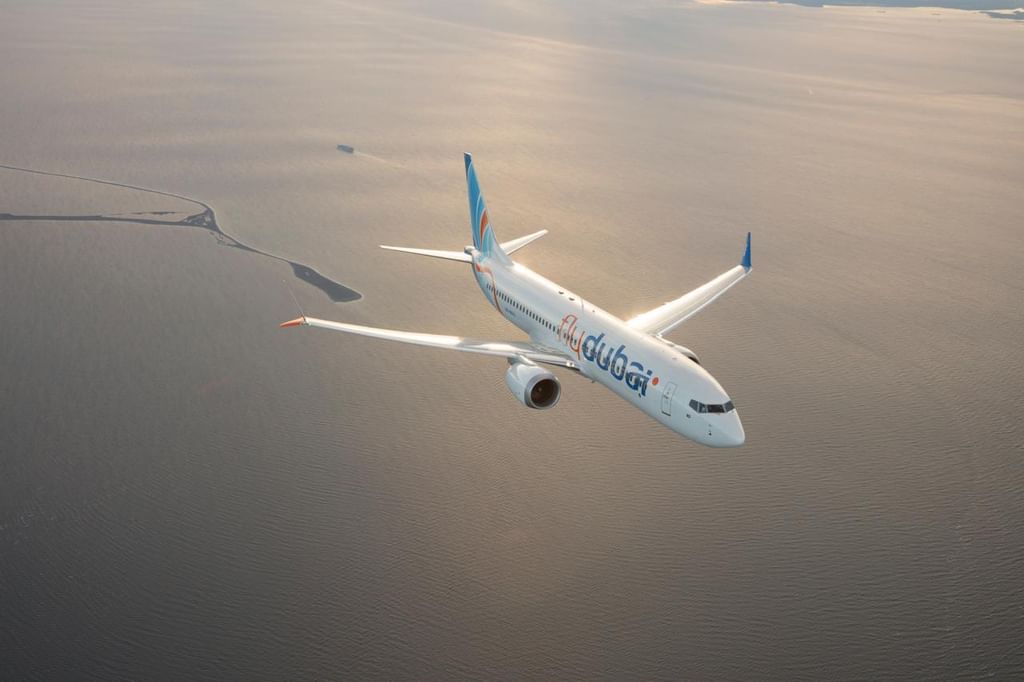
flydubai posts AED1.9 billion profit for 2025, carries record 15.7 million passengers, expands global network, strengthens fleet, reinforces Dubai’s aviation growth momentum
Dubai-based carrier flydubai has delivered another year of strong financial performance, reporting a net profit after tax of AED1.9 billion for the financial year ending 31 December 2025. The airline recorded a pre-tax profit of AED2.2 billion, while total revenue rose 6 per cent year-on-year to AED13.6 billion, reflecting sustained travel demand, network expansion and disciplined cost management.
The results mark flydubai’s fifth consecutive year of solid profitability, reinforcing its growing importance within Dubai’s aviation ecosystem and broader economic strategy.
Record passengers power profits
The airline carried a record 15.7 million passengers in 2025, driven by robust demand across business and leisure segments. Business Class performance was particularly strong, with uptake rising 19 per cent compared with 2024.
Passenger growth was supported by increased frequencies across existing routes and the launch of nine new destinations, expanding flydubai’s network to 140 destinations in 58 countries. Regional performance was led by the Middle East, which saw a 17 per cent increase in passenger numbers, followed by Africa at 12 per cent and Europe at 12 per cent.
The airline operated 126,604 flights during the year, making it the second-highest operator by flight numbers serving the UAE. During peak travel in December 2025, flydubai recorded more than 400 departures in a single day.
Overall network capacity, measured in Available Seat Kilometres, increased by 6 per cent. Revenue Passenger Kilometres also rose by 6 per cent, while passenger yield improved by 3 per cent year-on-year. On-time departure performance improved by 6 per cent compared with 2024, underscoring operational gains.
Fleet expansion fuels global reach
flydubai continued to invest heavily in fleet modernisation. In 2025, the carrier took delivery of 12 Boeing 737 MAX 8 aircraft, expanding its fleet to 97 aircraft with an average age of 5.5 years. Three older Boeing 737-800 aircraft were retired and returned to lessors.
The airline also completed its retrofit programme, upgrading eight additional Next-Generation aircraft and bringing the total number of retrofitted aircraft in the fleet to 25. These upgrades have enhanced cabin comfort and onboard product consistency across the network.
At the Dubai Airshow, flydubai placed major aircraft orders, including 150 Airbus A321neo aircraft and 75 Boeing 737 MAX aircraft, signalling confidence in long-term growth. The airline further announced the introduction of complimentary high-speed Starlink inflight connectivity across its fleet from 2026, aiming to elevate the passenger experience.
Financially, flydubai maintained a robust EBITDA of AED4.0 billion. Fuel costs accounted for 25 per cent of total operating expenses. The airline ended the year with AED5.6 billion in cash and bank balances, including pre-delivery payments, providing strong liquidity support.
Strategic partnerships strengthen Dubai hub
The strategic partnership between Emirates and flydubai continued to play a central role in expanding connectivity through Dubai. In 2025, more than 2.5 million passengers benefited from seamless travel across a joint network of 243 destinations in 103 countries.
flydubai also signed 11 new interline agreements, bringing its total to 42 partners. Combined with codeshare agreements with Air Canada, Emirates and United Airlines, customers now have access to more than 300 destinations worldwide.
The airline’s workforce grew by 11 per cent to 6,763 employees, supported by new initiatives such as the Ab Initio Pilot Training Programme and an Aircraft Maintenance and Engineering Apprenticeship. These programmes are designed to build long-term in-house capability and support expansion plans.
Looking ahead to 2026, flydubai expects delivery of 12 additional aircraft, including seven Boeing 737 MAX 9 aircraft and five Boeing 737 MAX 8 aircraft, subject to manufacturer schedules. Management said travel demand remains healthy despite geopolitical uncertainty and supply chain pressures.