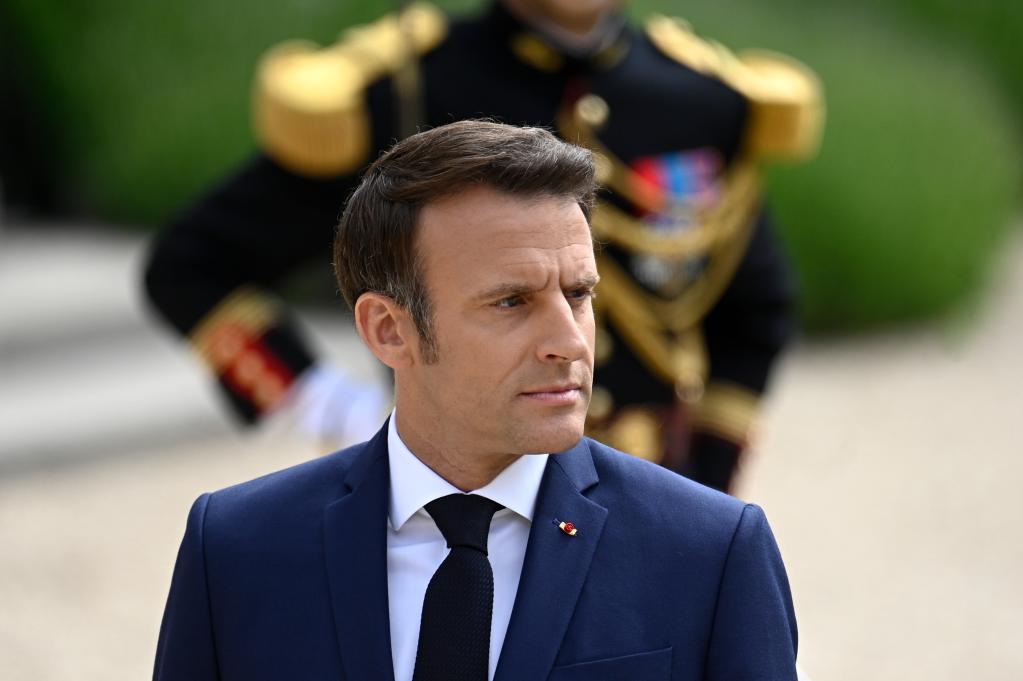
French President Emmanuel Macron has called for a swift agreement between the United States and Iran, stressing the need to reopen the Strait of Hormuz in line with international law. His remarks come amid ongoing regional tensions and parallel diplomatic efforts involving Gulf and international partners…reports Asian Lite News Desk
French President Emmanuel Macron has urged the United States and Iran to reach a rapid agreement aimed at easing tensions and restoring stability in the Gulf region, with particular emphasis on reopening the Strait of Hormuz without conditions and in accordance with international law.
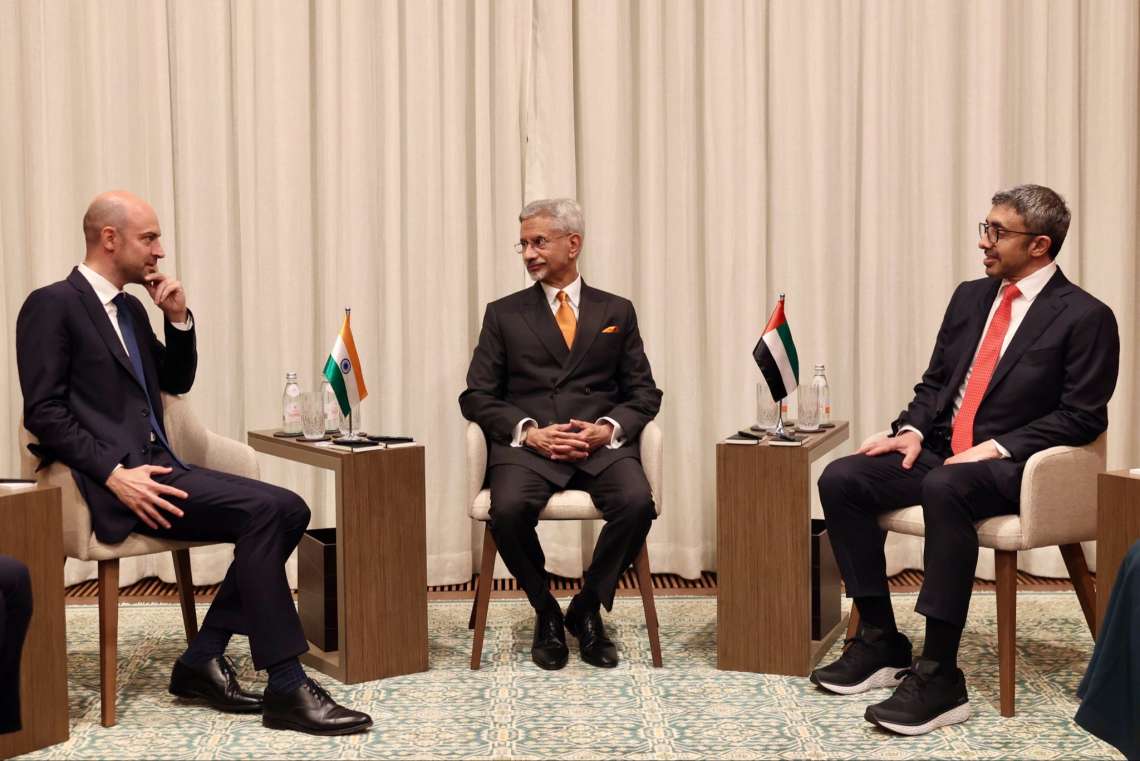
In a series of messages posted on social media on Sunday local time, Macron said he had spoken with several regional leaders, including Saudi Arabia’s Crown Prince and Prime Minister Mohammed bin Salman bin Abdulaziz Al Saud, Oman’s Sultan Haitham bin Tariq, United Arab Emirates President Sheikh Mohamed bin Zayed Al Nahyan, and Egyptian President Abdel Fattah al Sisi.
He said he had delivered the same message to all counterparts, underlining what he described as the importance of a swift agreement between Washington and Tehran. According to Macron, the immediate priority should be securing a ceasefire and reopening the Strait of Hormuz, a critical global shipping route that connects the Gulf to the Arabian Sea.
Macron added that any initial steps should be followed by broader negotiations aimed at achieving what he described as a comprehensive and robust agreement covering a range of issues, including Iran’s nuclear programme, ballistic missile development, and wider regional security concerns.
He also said France stood ready to contribute to efforts to protect maritime traffic through the Strait of Hormuz, including through a multinational initiative jointly led with Britain. The proposal is intended to reinforce security in one of the world’s most strategically sensitive shipping corridors, where any disruption can have significant global economic consequences.
The French President also emphasised that regional stability must begin with Lebanon, calling for an immediate end to hostilities. He reiterated France’s commitment to supporting Lebanon in restoring state sovereignty and territorial integrity.
His comments came on the same day that Lebanon’s Public Health Emergency Operations Center reported that an Israeli airstrike near Hiram Hospital in the southern city of Tyre had injured 13 hospital staff and caused significant damage to the facility. The incident highlights continuing cross-border tensions in the region and the impact on civilian infrastructure.
Meanwhile, international media reports have suggested that discussions between the United States and Iran remain ongoing but complex. According to reporting cited by American outlets, the White House is considering adjustments to the terms of a potential agreement aimed at de-escalation, while Iran is also preparing to introduce new elements into the negotiating process.
Officials involved in the discussions have described a fluid process in which both sides are awaiting responses that could reshape the structure of the proposed framework. The negotiations are reportedly complicated by internal decision-making structures in Tehran, where final authority rests with senior leadership.
Analysts cited in reports have suggested that renewed proposals from either side could effectively reset parts of the talks, prolonging the timeline for any agreement. The process is further complicated by differing priorities, with Washington focused on limiting nuclear development and regional influence, while Tehran is seeking broader revisions to the draft framework.
Macron’s intervention reflects wider European concerns about the potential for escalation in the Gulf and its impact on global trade routes. The Strait of Hormuz remains one of the most important chokepoints for global oil shipments, and any disruption is widely viewed as having immediate international economic consequences.
France has repeatedly called for coordinated diplomatic efforts involving both regional and international partners, arguing that only a comprehensive agreement can address the multiple dimensions of the crisis.