As Beijing eyes advanced lithography machines from Europe, EU closes ranks against coercive Chinese ways…writes Dr Sakariya Kareem
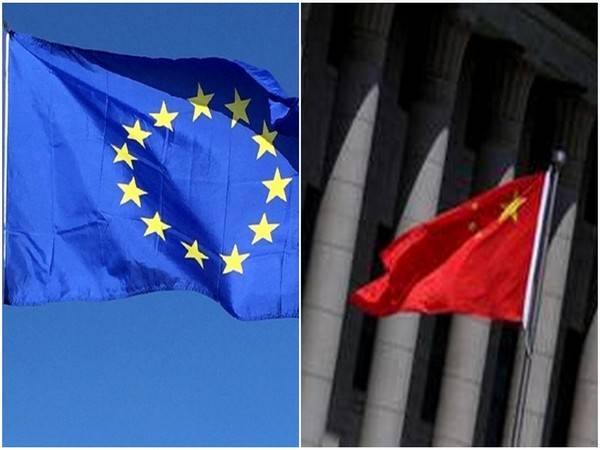
With members of the European Union closing ranks to combat unethical trade practices by China, Beijing’s ploy to address the imbalance in trade faced by EU conditional on softening control on the export of advanced lithography machines from Dutch giant ASML may not meet with success.
The trade deficit faced by the EU with China was about $35 billion in September this year, working out to over $1 billion of additional deficit in a day. On October 9, after four months of negotiations, a deal was signed between Brussels-headquartered EU and Beijing.
Under this, China agreed to limit the export of its hybrid cars to the European market to 350,000 units annually over four years and to ease restrictions on licensing for the export of rare earth materials.
China has subsequently accused EU of blaming Beijing for trade imbalances while overlooking its own export restrictions. The Global Times, mouthpiece of the Chinese Communist Party, has accused EU of restricting, in particular, the export of advanced lithography machines to China.
These concessions that Beijing has offered in the course of the trade deal are negligible for EU compared to the total deficit EU faces vis-à-vis China. The export of Chinese cars to EU in 2025 was worth around Euro 15 billion; a small amount when compared with total bilateral trade deficit of the EU China of about Euro 360 billion.
The promise to ease restrictions on export of rare earths will in any case depend on the whims and fancies of the mandarins of the Chinese Communist Party. The creation of a ‘green channel’ to facilitate issuance of licences for export of rare earths and permanent magnets to EU does not guarantee the supply of rare earths when needed, analysts say.
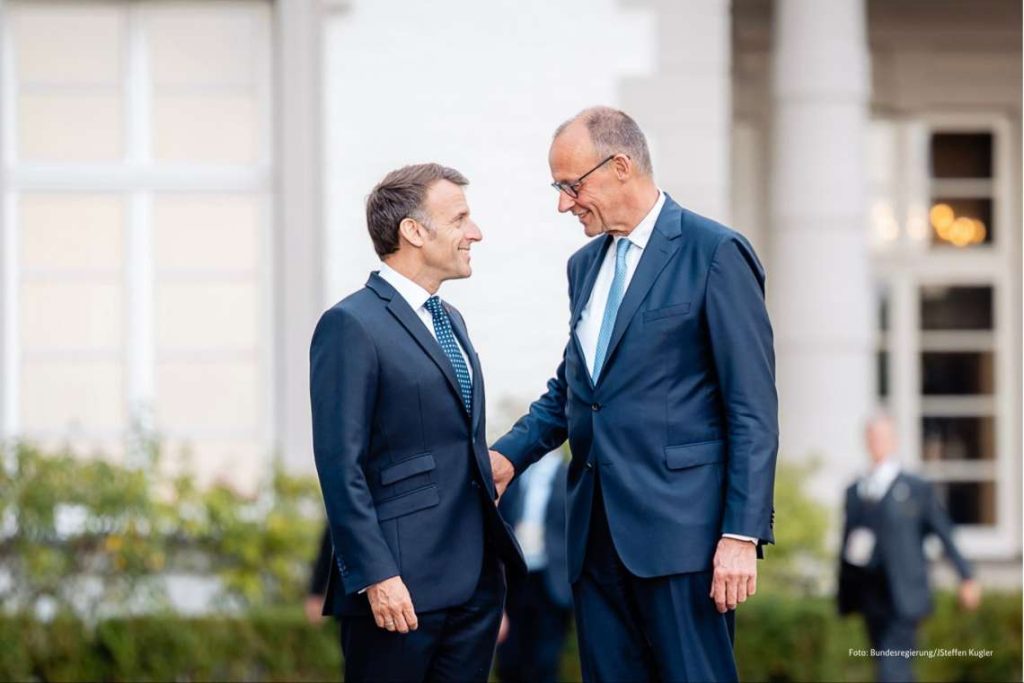
The intangible but not inconsiderable gain of EU, however, is that all its member countries now see eye to eye on the need to take the bull by its horn. What set the ball rolling was a joint letter and policy paper submitted by French President Emmanuel Macron and German Chancellor Friedrich Merz to EU President Ursula von der Leyenon October 5, on the eve of the trade talks, marking a decisive shift towards a more consolidated stance of EU on relations with China.
The letter by Merz and Macron did not mention China by name but called for cutting a trade partner off from the EU market if unfair trade practices continued. It warned that measures to restrict access to the European market were necessary against countries that deliberately sought to undermine fair market conditions by political and economic means.
Taking note of the tenor of the letter from Merz and Macron, particularly the call to EU to develop a new ‘trade defence tool box’ against unfair trade practices, Beijing has warned France and Germany against resorting to “protectionist measures” and “politicizing economic issues.” These are all, however, meant to hedge the real intention of Beijing, which is to get the advanced lithography system from EU which is required for manufacturing the most advanced semiconductors in the world.
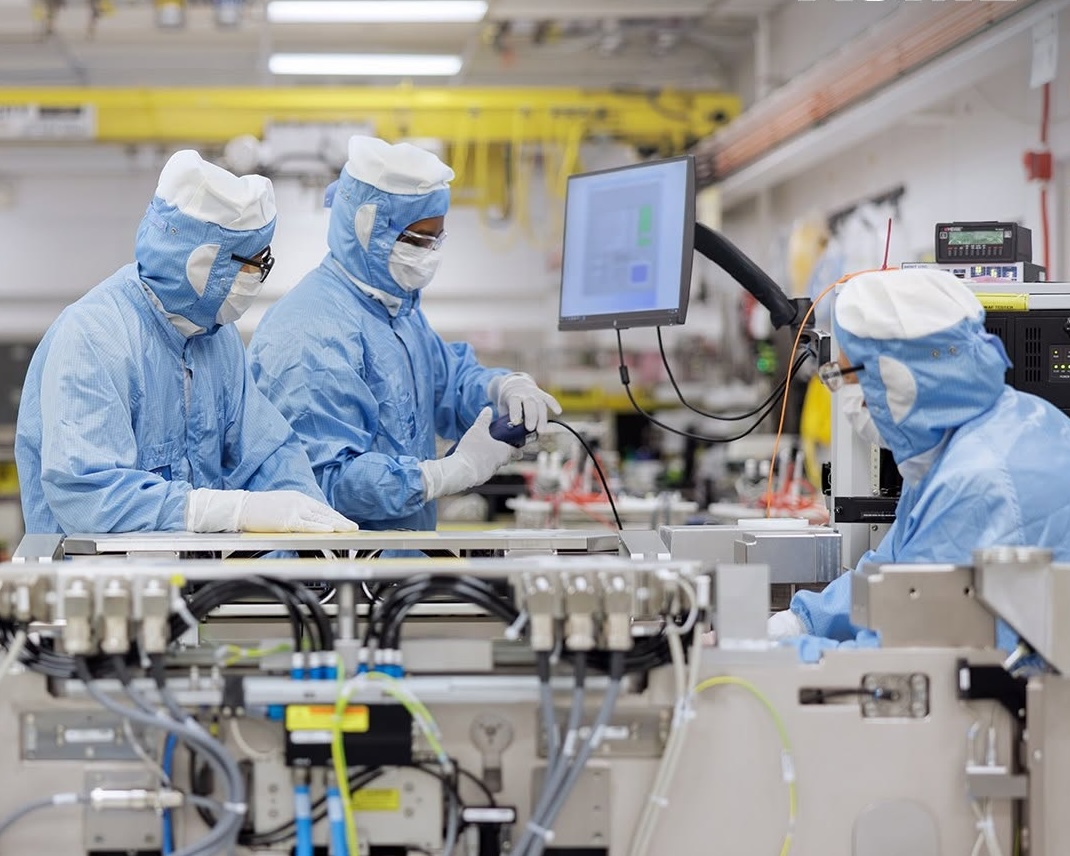
These machines print on microchips small, complex designs that determine what each microchip will do. These advanced microchips give access to high performance computing, which is a central requirement for China’s technological and military competition with the US. Dutch company ASML (Advanced Semiconductor Materials Lithography) is the only company in the world that is capable of assembling the revolutionary machine that is relied upon by makers of the most advanced microchips in the world.
The Chinese move in course of trade talks to offer to EU sops like putting limits on export of hybrid cars and ease restrictions on export of rare earth materials, according to analysts, has been made as a conciliatory gesture to ensure that EU does not deploy against China a ‘trade defence tool-box’ as suggested by Macron and Merz, and ease restrictions on export of advanced lithography machines to China.
The clause in the joint communique issued by the EU after the trade talks that “the EU side will continue to work with member State authorities to facilitate specific priority licences to China among dual-use sectors” could refer to the possible relaxation of the control on ASML’s exports of advanced lithography machines to China.
Analysts have said that there is considerable pressure on ASML from the US not to export to China lithography machines even of the older generation nor to service the already supplied machines. The MATCH Act (Multilateral Alignment of Technology Control on Hardware Act) introduced in the US Congress has been designed so that allied nations follow American export policies. In this backdrop, the unified stand of Germany and France on a stronger stance on trade relations with China may stand in the way of Beijing accessing these Dutch lithography machines.
The issues raised by the French President and the German Chancellor are similar to the concerns expressed by the US over a variety of trade practices employed by China, like intellectual property theft, government subsidies to state-owned enterprises and market access restrictions that are viewed as unfair and harmful to global economic competition. There is thus a degree of convergence in approach between EU and US on the issue of trade relations with China.
This approach on the issue of the pitfalls of trading with China is a U-turn for Germany. For a long time, there were significant differences between France and Germany, the two most powerful members of the EU, on how to deal with China in terms of economic exchanges.For years, Berlin had blocked a harder line of the EU against unfair trade practices of China and opposed the imposition of duties on the import of electrical vehicles from China to avoid retaliations against German carmakers.
With German car makers lately losing their export market in China, Berlin may have been forced to change its stand. Buoyed by much lower costs due to cheap labour and subsidies offered by the Chinese state, manufacturers of electrical vehicles in China are offering stiff competition to German car makers both in China and in Germany. Manufacturers of electrical vehicles in China have managed to close the technology gap with German cars too.
The problems faced by German industries in China are similar to the risks of forced technology transfer and cyber espionage that US companies that operate in China often face. Extensive subsidies provided by the Chinese government to domestic industries in key sectors like steel, solar panel and electrical vehicles distort the global market and give Chinese firms a competitive edge over foreign competitors. Though China is a member of the World Trade Organization, foreign companies still face restrictions in critical sectors such as finance, telecommunication and cloud computing.
With the EU and the US facing similar issues in trade relations with China, they will be in a stronger position to tackle the coercive ways of Beijing if they move in tandem.