Millions of people across France gathered to mark the arrival of 2026, with authorities deploying extensive security arrangements to ensure celebrations took place peacefully
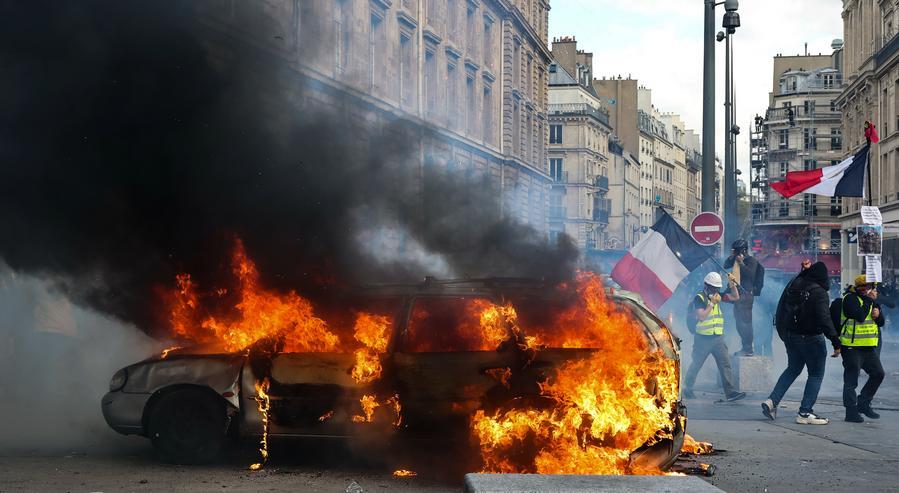
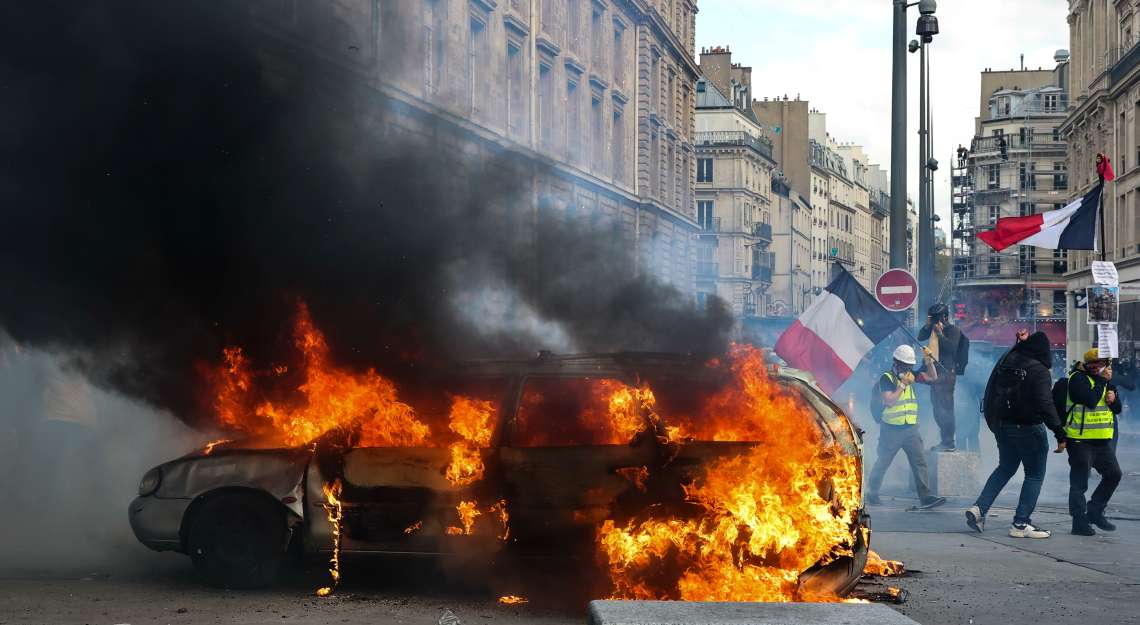
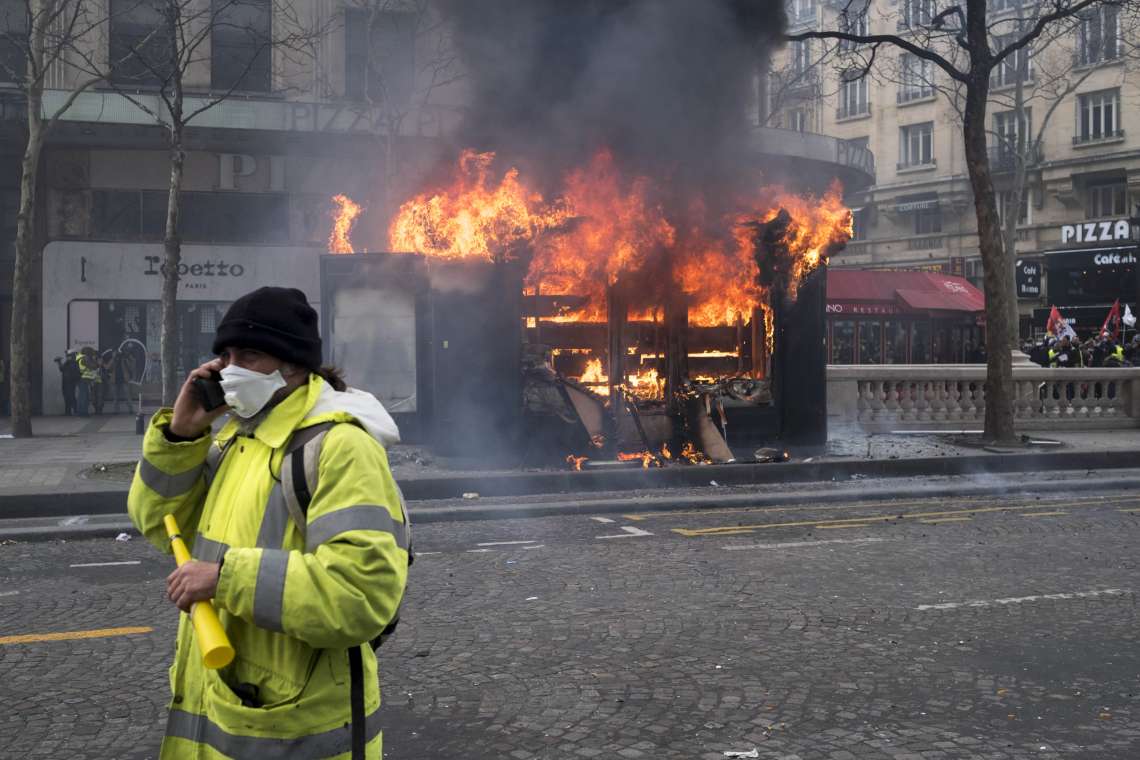
More than 1,100 vehicles were set on fire and over 500 people were detained across France during New Year’s Eve celebrations, according to figures released by the country’s Interior Ministry, highlighting persistent challenges linked to year-end unrest despite a heavy security presence nationwide.
In a statement issued on Thursday, the ministry said 1,173 vehicles were burned during the night, an increase from 984 recorded during last year’s celebrations. Authorities also reported 505 arrests, up from 420 in 2024, with 403 people taken into custody compared with 310 the previous year.
The Interior Ministry said law enforcement agencies had been instructed to respond with a high degree of mobility and speed to incidents of violence or vandalism. “In accordance with the Interior Minister’s firm instructions, law enforcement intervened immediately,” the statement said, adding that 1,262 collective defence measures were deployed as part of a systematic national response.
Millions of people across France gathered to mark the arrival of 2026, with authorities deploying extensive security arrangements to ensure celebrations took place peacefully. Prefects and internal security forces were placed on full alert under the authority of the Interior Minister, with officers mobilised throughout the country to oversee festivities and protect public safety.
In Paris, more than one million people assembled along the Champs-Elysees to watch the traditional fireworks display. Other popular locations, including the Trocadero and the Champ de Mars, were also crowded. The ministry said that, as in many city centres nationwide, large public gatherings in the capital passed off peacefully without major incidents.
Despite the rise in vehicle fires, the Interior Ministry said overall conditions were calmer in many neighbourhoods compared with last year. Regional prefects reported a less turbulent night, with reduced urban violence and fewer attacks on law enforcement officers in several areas.
The prefect of the western defence zone noted that cities such as Brest, Evreux, Orleans and Tours, which experienced serious incidents during previous New Year celebrations, saw virtually none this time. In the northern zone, officials said the rapid response of internal security forces helped quickly contain aggressive behaviour, particularly in the Lille metropolitan area, as well as in Amiens and Calais.
However, authorities acknowledged that some areas experienced more challenging situations. In Strasbourg, unrest was reported in the Meinau, Koenigschoffen and Neuhof districts, requiring a large-scale deployment of police. Similar difficulties were observed in Mulhouse, particularly in the Bourtwiller, Drouot and Coteaux neighbourhoods, where additional law enforcement resources were mobilised.
The ministry also highlighted the continued dangers linked to the illegal use of fireworks and mortars. By Wednesday evening, police and gendarmerie had seized around 96,000 mortars in an effort to prevent their misuse during celebrations or as improvised weapons against officers.
Despite these efforts, the ministry said the use of mortars once again resulted in serious injuries. Several people suffered severed fingers, hand injuries and facial wounds. In eastern France alone, the prefect reported multiple casualties, including nine injured in the Bas-Rhin department, five in Moselle – including one child – and eight in Haut-Rhin, among them two children aged 12 and 13.
While officials stressed that overall security management had improved in some areas, the figures underscore the recurring challenges faced by French authorities each New Year as they attempt to balance mass celebrations with public safety.