India called on OIC member states to consider reforming the grouping rather than allowing it to be used for politically motivated campaigns…reports Asian Lite News Desk
India has rejected references to Jammu and Kashmir in resolutions adopted at a meeting of the Organisation of Islamic Cooperation (OIC), accusing Pakistan of using the grouping to advance an anti-India agenda and deflect attention from its domestic challenges.
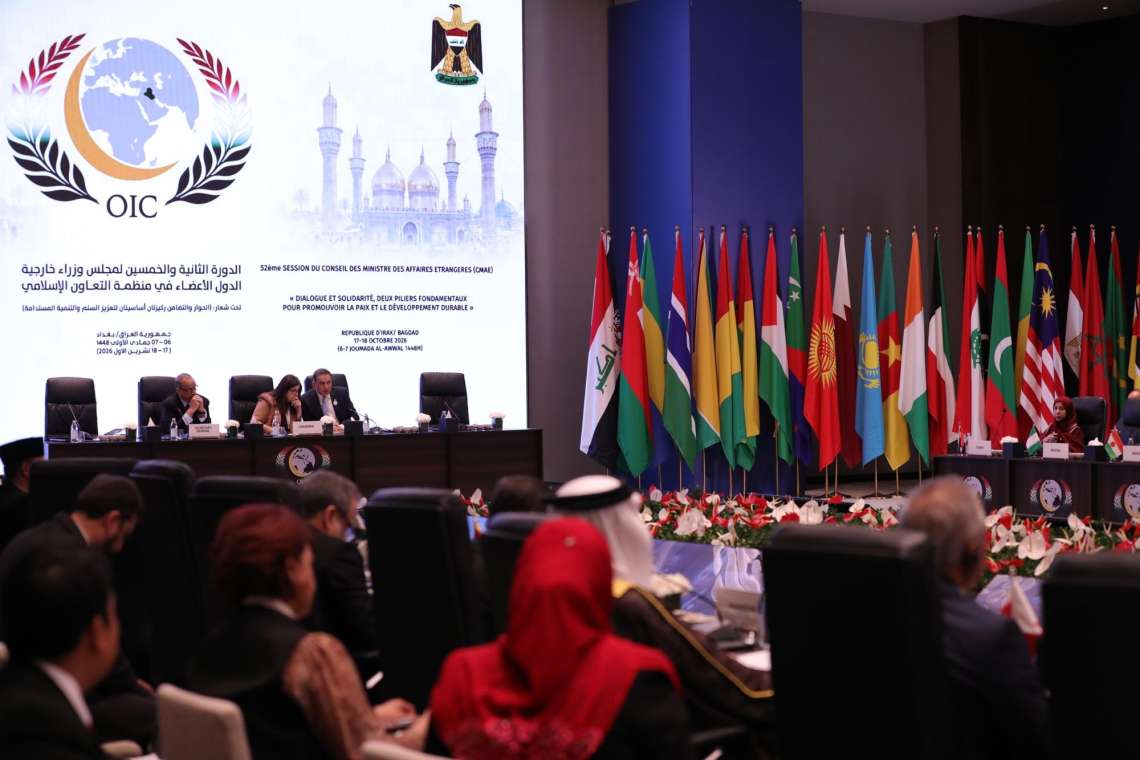
The Ministry of External Affairs (MEA) issued the response on Monday after the OIC Council of Foreign Ministers met in Baghdad on 17 and 18 October 2026. New Delhi described the references to India as “malicious, biased, and false”, arguing that the organisation had once again allowed itself to be used by Pakistan for politically motivated purposes.
“We categorically reject the anti-India references in the resolutions,” the MEA said, adding that the OIC had no authority to comment on matters it considers India’s internal affairs.
The ministry reiterated that the Union Territories of Jammu and Kashmir and Ladakh are integral parts of India, maintaining that political statements and international resolutions would not alter their status.
India challenges OIC’s position on Kashmir
The latest diplomatic exchange centres on the OIC’s repeated references to Kashmir, a longstanding source of tension between India and Pakistan.
India has consistently opposed the organisation’s statements on the region, arguing that they interfere in its internal affairs. Pakistan, meanwhile, has continued to raise Kashmir at international forums, calling for attention to the dispute and the rights of Kashmiris.
The dispute intensified after India revoked Jammu and Kashmir’s special constitutional status under Article 370 in August 2019 and reorganised the former state into the Union Territories of Jammu and Kashmir and Ladakh.
Defending its record since the constitutional changes, the MEA said the region had experienced economic growth, infrastructure development and improvements in tourism and connectivity, with benefits reaching local communities.
The ministry rejected what it described as politically motivated attempts to challenge India’s position on the territory.
Pakistan’s human rights abuses
The MEA also turned its criticism towards Pakistan’s administration of Pakistan-occupied Jammu and Kashmir (PoJK), accusing authorities there of using violence and repression against civilian protesters.
The ministry alleged that protesters, including women and children, had been killed and said restrictions on media coverage had failed to conceal what it described as serious human rights violations.
The statement did not provide a breakdown of the alleged deaths or further details of the incidents.
India maintained that the outstanding issues relating to Jammu and Kashmir concerned Pakistan ending its control over territories under what New Delhi describes as illegal occupation and stopping its support for cross-border terrorism.
Pakistan has historically rejected India’s position on Kashmir and disputes New Delhi’s claims over the territory.
The MEA also criticised references in the OIC resolutions concerning Islamophobia, describing them as part of what it called Pakistan’s attempt to divert international attention from its own domestic problems.
New Delhi accused Pakistan of having a poor record on minority rights and sectarian violence, as well as governance failures and political instability.
The ministry argued that the OIC’s repeated endorsement of what it termed hostile narratives against India raised questions about the organisation’s credibility and integrity.
It also called on OIC member states to consider reforming the grouping rather than allowing it to be used for politically motivated campaigns.