India’s Chief Election Commissioner Gyanesh Kumar faces mounting opposition pressure after reported internal disagreements over voter-roll revisions and the nationwide Special Intensive Revision exercise, reports Asian Lite News Desk
India’s Chief Election Commissioner Gyanesh Kumar is facing growing political pressure after reports of internal disagreements within the Election Commission over voter-roll revisions triggered demands for his removal.
The controversy centres on the Special Intensive Revision (SIR) of electoral rolls, a nationwide exercise being conducted by the Election Commission of India to verify and update voter lists.
A report by The Indian Express has alleged that Election Commissioners Sukhbir Singh Sandhu and Vivek Joshi formally raised objections at least 14 times over a 10-month period to decisions and procedures linked to the exercise. The report said some of the objections concerned voter registration, deletion and restoration of names, access to electoral-roll data and changes to the systems used to manage the rolls.
The report has intensified an already bitter political dispute over the SIR process, with opposition parties accusing the Election Commission of undermining voters’ rights. The commission has rejected the suggestion that the reported exchanges represent a breakdown in its functioning, saying differing views and observations are part of institutional deliberations.
Disagreement inside the poll panel
According to the Indian Express investigation, Sandhu and Joshi objected to a number of decisions that they said had been taken without their knowledge or approval.
One issue involved changes to Form 6, the application used by citizens to register as voters. The newspaper reported that a new question relating to whether an applicant or their parents or grandparents appeared on an earlier electoral roll was introduced as part of the SIR process.

Sandhu reportedly described the change as “unauthorised and illegal” and called for it to be removed. The report also said both commissioners raised concerns about changes to the allocation of responsibilities for the information technology systems underpinning electoral-roll management.
The two commissioners were also reported to have approached the Cabinet Secretary over concerns about changes affecting oversight of the electoral-roll database.
The Election Commission has maintained that the SIR decisions were taken through its established decision-making process and that differences of opinion are normal in an institution where members are expected to scrutinise proposals.
In a response following the Indian Express report, the commission said written notes, technical suggestions and internal checks and balances were part of its normal functioning.
Why the SIR exercise matters
The dispute comes as the SIR process has become one of India’s most politically contentious electoral issues.
The exercise began in Bihar in 2025 before being expanded across the country. According to the Indian Express, more than 13 crore names have been struck from draft electoral rolls across 30 states and Union territories during the nationwide process.
The Election Commission says the purpose of electoral-roll revision is to ensure that voter lists are accurate and contain eligible voters, while removing entries that are no longer valid, including those relating to deceased, duplicate or relocated voters.
Opposition parties have raised concerns about the potential impact on legitimate voters, particularly where citizens face difficulties producing documentation or completing verification procedures.
The disagreement has consequently developed into a wider argument over how electoral rolls should be updated while protecting citizens’ right to vote.
Opposition seeks CEC’s removal
The latest controversy has also prompted the opposition to revive efforts to remove Kumar from the post of Chief Election Commissioner.
Opposition parties are preparing a fresh motion in Parliament seeking Kumar’s removal, according to reports. It would be the third such attempt by opposition parties since he became CEC. A draft motion is reportedly being prepared with legal experts before notices are submitted in both the Lok Sabha and Rajya Sabha.

Congress and other opposition parties have stepped up their campaign against Kumar, calling for his removal and an independent review of decisions and electoral-roll changes made during his tenure.
Congress also organised protests across several parts of the country on September 25, with demonstrators demanding Kumar’s removal and greater scrutiny of the SIR exercise.
The political response has not been limited to Parliament. Opposition leaders have called for judicial scrutiny and, in some cases, a halt to the SIR process.
BJP defends the EC
The ruling BJP has defended the Election Commission and Kumar, arguing that disagreements within an institution should not automatically be interpreted as evidence of wrongdoing.
BJP leaders have also praised Kumar’s handling of elections, particularly the West Bengal Assembly election held earlier this year. West Bengal BJP president Samik Bhattacharya said Kumar deserved recognition for overseeing the election and defended the poll panel against opposition criticism.
The dispute therefore reflects sharply contrasting interpretations of the same institutional developments.
The opposition views the reported objections by two election commissioners as evidence of serious concerns about the way the SIR process and electoral data are being managed. The Election Commission says differences of opinion are part of its internal deliberations and has maintained that its decisions were unanimous.
Who is Gyanesh Kumar?
Kumar became India’s 26th Chief Election Commissioner on February 19, 2025, after serving as an Election Commissioner.
A former civil servant, he has held senior positions in the central government, including roles in the Ministry of Home Affairs and the Ministry of Cooperation.
His appointment itself had attracted political controversy because he was the first CEC selected under the 2023 law governing appointments to the Election Commission. The legislation changed the composition of the selection panel, replacing the Chief Justice of India with a Union Cabinet minister. Opposition parties had objected to the change and to Kumar’s appointment.
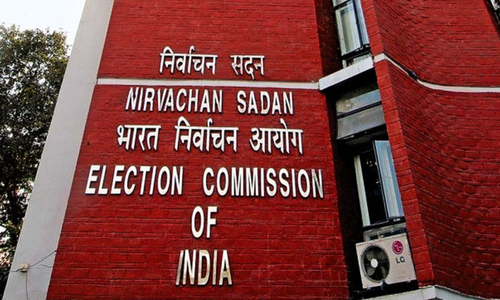
The Election Commission is a constitutional body established under Article 324 of the Indian Constitution. The CEC and the other Election Commissioners collectively oversee the country’s electoral machinery.
Under the law, where commissioners differ on a matter, decisions can be taken according to the majority view. The reported dispute has therefore raised questions about how authority, oversight and internal decision-making operate within the three-member commission.