Trump and Xi agree a new channel for AI incidents and a Super Intelligence dialogue, alongside trade, energy and international security commitments, reports Asian Lite News Desk
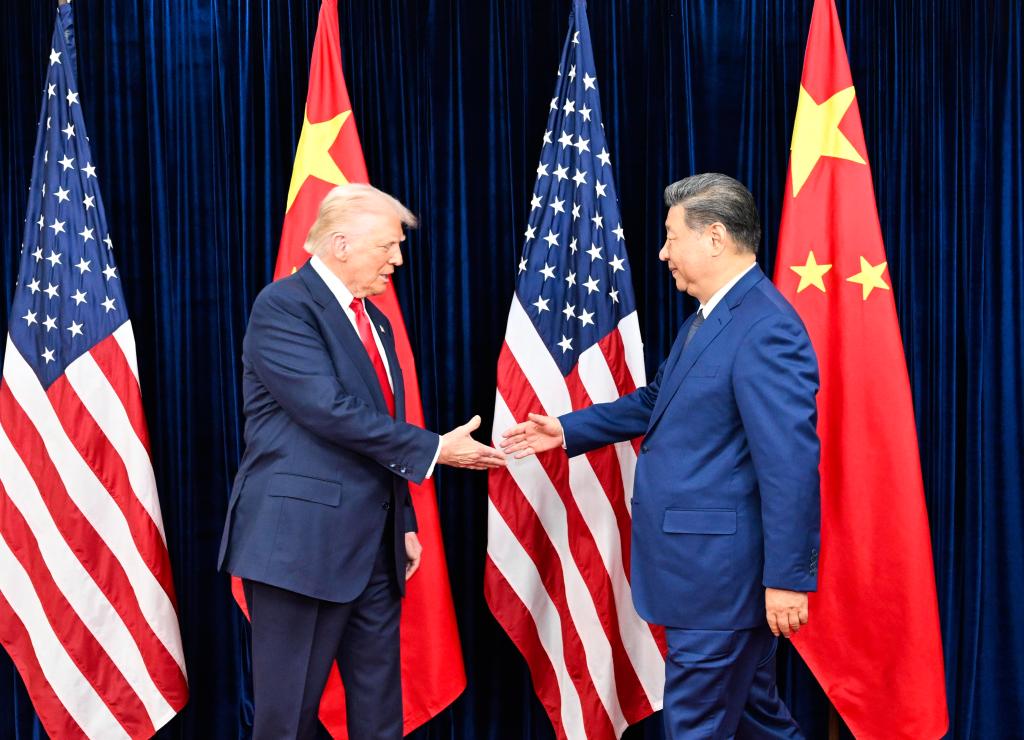
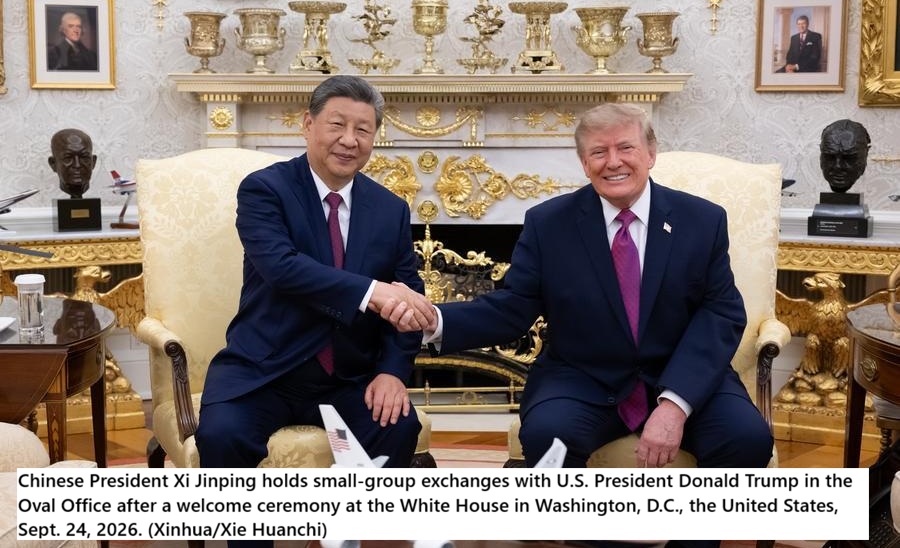
US President Donald Trump and Chinese President Xi Jinping have agreed to establish a bilateral communication channel for incidents involving advanced artificial intelligence, as the two leaders sought to manage growing technological competition during their Washington summit.
The White House said the United States and China had established a “Super Intelligence” (SI) Dialogue to exchange views on the risks and benefits of emerging technologies. The next exchange is expected by November 2026.
The two countries also agreed to use the term “super intelligence” rather than “artificial intelligence” for the technologies covered by the new dialogue.
Trump has promoted the term SI, arguing that describing advanced machine intelligence as “artificial” makes it sound less authentic. Xi, meanwhile, has called for AI development to remain under human control, highlighting the need for the two powers to manage the risks associated with increasingly capable systems.
The new communication channel is intended to provide a direct mechanism for the two governments to discuss significant SI incidents. The agreement follows months of discussions over proposals for an AI incident notification system between Washington and Beijing.
Beyond AI, the summit covered trade, energy and several international security issues, including Russia, North Korea and Iran.
Trump and Xi agreed that Iran must not acquire a nuclear weapon. They also agreed that no country or institution should be allowed to impose tolls on international waterways. The White House fact sheet did not specifically name the Strait of Hormuz, despite the strategic importance of the waterway to global energy supplies.
Trump also urged Xi to increase Chinese production of refined petroleum products to help stabilise global supplies, according to the White House.
Trade remained another major element of the summit. The two governments operationalised the bilateral Board of Trade and Board of Investment, mechanisms created during the leaders’ previous summit in Beijing in May.
Under the Board of Trade, the countries reached consensus on recommendations for more favourable tariff treatment covering $30 billion of non-sensitive goods in each direction. The board also launched a working group to address market access barriers affecting agricultural trade.
China is also expected to import at least 10 million metric tonnes of US coal in both 2027 and 2028. Washington and Beijing said they would continue working on supply-chain concerns involving rare earths and other critical minerals.
The leaders agreed to build what the White House described as a constructive relationship of strategic stability based on respect, fairness and reciprocity.
The three-day state visit was Xi’s first trip to Washington in more than a decade and marked his third in-person meeting with Trump since the US president returned to office.
The summit comes as Washington and Beijing continue to compete over advanced technology while seeking mechanisms to prevent economic and security tensions from escalating. Analysts have noted that AI safety has become an increasingly important area for dialogue despite wider disagreements over technology, trade and strategic interests.
The two leaders are expected to meet again later this year, with the next SI exchange due by November.