As Washington signals warmer ties with India, Beijing urges cooperation with the US, warning that confrontation between the world’s two largest economies risks unsettling global stability and growth.
China has called for renewed cooperation with the United States, striking a conciliatory tone even as strategic tensions persist, in a move seen as a calibrated response to shifting geopolitical signals from Washington, including a perceptible thaw in US–India relations.
An article published on Friday by People’s Daily Online, the state-controlled outlet of the Chinese Communist Party, emphasised the importance of stabilising China–US ties, particularly in the economic and trade sphere, warning against framing the relationship purely through the lens of rivalry or confrontation. The commentary came just a day after Beijing sharply criticised a Pentagon report that accused China of preparing for a possible military confrontation with India along the Line of Actual Control.
The People’s Daily article argued that international relations are rarely smooth and require “wisdom and responsibility” to steer through turbulent times. It stressed that, despite differences, China and the United States share a responsibility to cooperate for global stability, noting that history offered clear lessons on the costs of prolonged confrontation.
The article drew on symbolism from history, recalling that 2025 marks the 80th anniversary of the victory in the World Anti-Fascist War. It said China and the US had once fought side by side, making significant contributions to peace and justice during one of humanity’s darkest periods, and suggested that this shared legacy should inform present-day engagement.
The call for cooperation comes against the backdrop of renewed trade friction. Earlier this year, the Trump administration reimposed and raised tariffs on Chinese imports, citing concerns over trade imbalances, fentanyl-linked exports and national security risks tied to technology transfers. Beijing responded with retaliatory measures targeting key American exports, including agricultural products, industrial equipment and rare earth materials, deepening uncertainty across global markets.
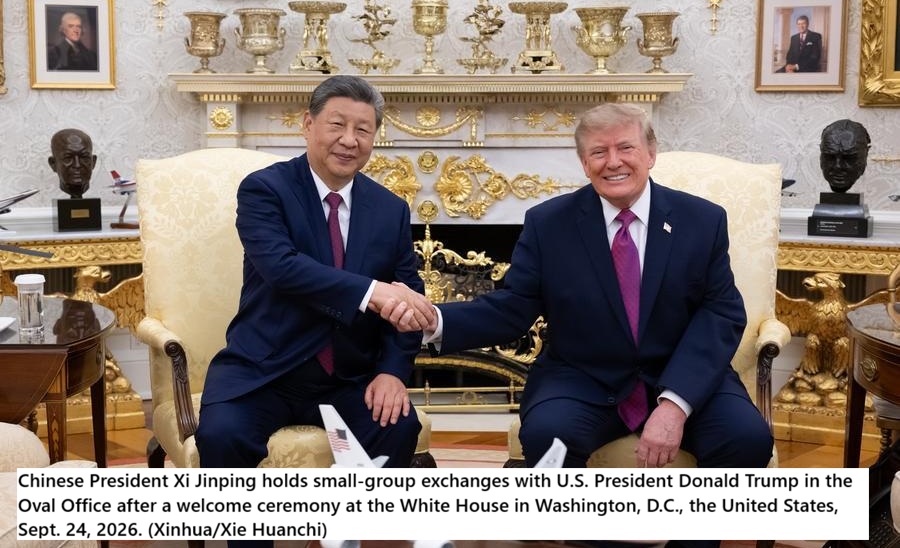
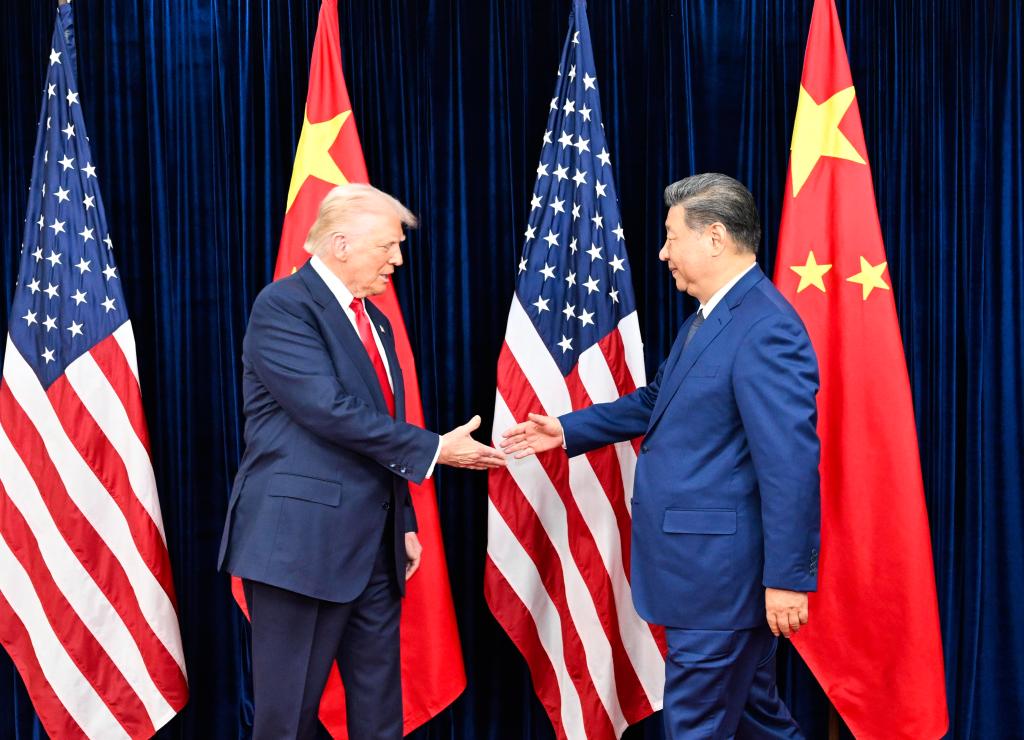
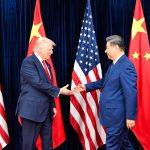
Diplomatic efforts have since attempted to arrest the slide. President Donald Trump’s meeting with Chinese President Xi Jinping in South Korea last month helped ease tensions modestly, though it stopped short of producing a comprehensive trade agreement. The People’s Daily column described such head-of-state diplomacy as an anchor that helps calibrate bilateral relations during periods of strain.
The conciliatory messaging also follows Beijing’s strong reaction to a recent US Defence Department report, which China accused of distorting its defence policies and interfering in its relations with other countries. The report claimed that China continues to prepare for potential conflict with India despite diplomatic efforts to stabilise ties, cautioning that recent disengagement agreements do not signal any fundamental change in China’s long-term military posture.
China’s remarks come at a time when Washington appears to be recalibrating its approach towards New Delhi, a development closely watched in Beijing. The Pentagon report’s references to India, along with broader US strategic documents, have reinforced Chinese concerns about Washington’s intent to align allies and partners to counter what it views as a single dominant competitor.
Tensions have also been fuelled by other flashpoints, including US commitments to record arms sales to Taiwan and language in the US National Security Strategy that points to preventing domination by any one power. Beijing has repeatedly objected to such moves, viewing them as direct challenges to its core interests.
In its commentary, People’s Daily cautioned that reducing China–US relations to a simplistic narrative of competition or confrontation was a misreading of reality and risked creating new global problems rather than resolving existing ones. It argued that the state of relations between Beijing and Washington shapes not only the global strategic landscape but also the health of the world economy, with direct consequences for ordinary livelihoods.
The article concluded with a stark contrast, suggesting that when China and the United States cooperate, the world feels reassured, but when they confront each other, global anxiety deepens. The message appeared designed to project Beijing as a stabilising force at a moment when geopolitical alignments, particularly involving India and the Indo-Pacific, are undergoing visible shifts.