Pakistan’s military is gaining deeper constitutional, political and economic influence under Asim Munir, raising fresh questions over civilian authority, dissent and democratic institutions, reports Asian Lite News Desk
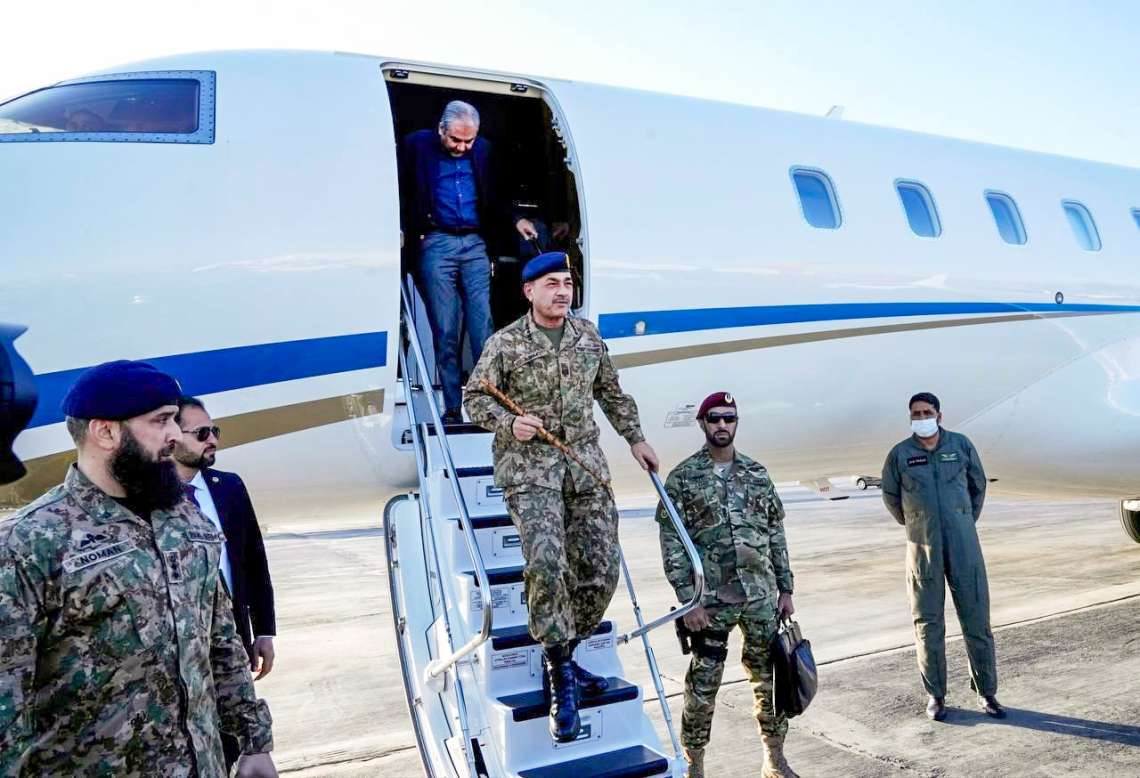
Pakistani Army chief Field Marshal Asim Munir is presiding over what has been described as a gradual consolidation of military power in Pakistan, with constitutional amendments and institutional changes giving the armed forces a greater role in the country’s political, judicial and economic affairs.
An analysis published by online magazine American Thinker argues that Pakistan has experienced a “quiet” transformation rather than a conventional military coup, with the military’s influence increasingly being incorporated into the country’s formal constitutional and legal framework.
The report points to the Defence Forces of Pakistan Act, 2026, passed on August 20 amid an opposition walkout, as the latest major development. According to the analysis, the legislation gives the Chief of Defence Forces (CDF) broad operational authority over the country’s armed forces, including organisation, administration, readiness, joint operations and personnel matters.
Munir holds the CDF position while also serving as Chief of Army Staff. The arrangement, according to the report, effectively places the army, navy and air force under a single senior command.
Munir became Pakistan’s Army Chief in November 2022 for an initial three-year term. Parliament extended his tenure to five years in November 2024, while he was subsequently elevated to the rank of Field Marshal in May 2025.
The report argues that the constitutional changes surrounding his position have been more consequential than the elevation in rank. Pakistan’s 27th Amendment, passed in November 2025, created the CDF position and provided for the army chief to hold the post concurrently.
The changes have attracted attention from outside Pakistan. The report cites British think tank Chatham House as describing the powers associated with the position as “unprecedented”, particularly in relation to the CDF’s seniority over the naval and air chiefs, protections from legal action and the higher threshold for removal.
The military’s expanding role in economic policymaking is another area highlighted by the report. The Special Investment Facilitation Council (SIFC), established in 2023 to accelerate investment and improve coordination between government institutions and investors, includes the Army Chief on its Apex Committee and a serving military officer as National Coordinator.
American Thinker said Munir has also personally engaged with foreign investors and Gulf leaders. However, it noted that Pakistan’s investment performance remained under pressure, citing State Bank data that foreign direct investment fell 34 per cent in FY2025-26 to $1.637 billion.
The report also raises concerns about the shrinking space for political and civic activity. It cites Human Rights Watch, which documented increased restrictions in 2025, including arbitrary detentions, pressure on media organisations and communication blackouts.
An August 2026 joint appeal led by Amnesty International was also cited as documenting restrictions affecting journalists and lawyers, along with prolonged internet shutdowns in Pakistan-Occupied Kashmir.
The report further points to concerns over alleged pressure on critics living outside Pakistan. It cites Freedom House, which warned in March 2026 of growing transnational repression, including life sentences handed down in absentia to seven exiled journalists and dissidents.
Reporters Without Borders was also cited as documenting several such sentences, as well as passport cancellations and frozen bank accounts. The organisation linked the deteriorating media environment to the expansion of Munir’s powers, according to the report.
Taken together, the developments cited by American Thinker suggest a significant shift in the balance between Pakistan’s civilian institutions and its powerful military establishment. Rather than relying solely on direct military rule, the report argues, the country’s power structure is increasingly being reshaped through constitutional amendments, legislation and institutional mechanisms that formalise the military’s influence.
The developments are likely to remain closely watched as Pakistan navigates the competing demands of civilian governance, economic recovery, political opposition and the military’s longstanding role in the country’s affairs.