The development comes amid heightened regional tensions following Operation Epic Fury by the United States and Operation Roaring Lion by Israel…reports Asian Lite News
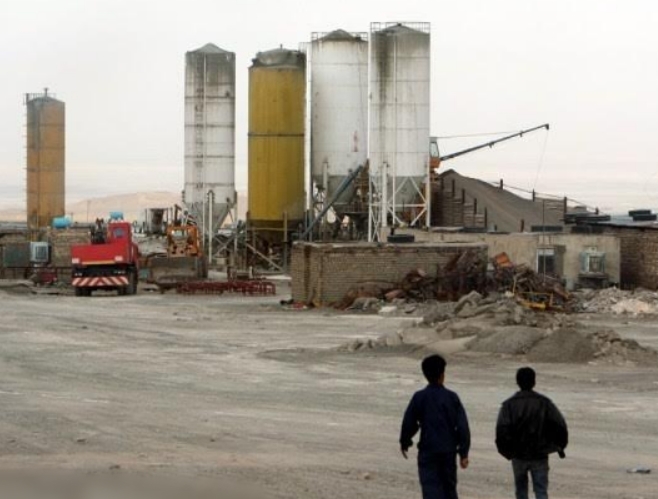
A Reuters report claims Iran has made a significant international military action allegation. It alleges that its extensive nuclear complex at Natanz was targeted during joint operations by the United States and Israel.
The allegation was raised on Monday during a session of the International Atomic Energy Agency’s (IAEA) 35-nation Board of Governors, where Iran’s envoy to the UN nuclear watchdog confirmed the strike.
Reza Najafi, representing Tehran, told journalists, “Again they attacked Iran’s peaceful, safeguarded nuclear facilities yesterday.”
When asked specifically by Reuters which site had been affected, he responded: “Natanz.”
The development comes amid heightened regional tensions following Operation Epic Fury by the United States and Operation Roaring Lion by Israel, which reportedly led to the killing of Iran’s Supreme Leader Ayatollah Ali Khamenei.
In response, Iran launched a series of attacks targeting US-Israeli infrastructure across several nations in West Asia.
Against this backdrop, IAEA Director General Rafael Mariano Grossi on Monday expressed deep concern over the deteriorating security situation in the region, warning that the possibility of a radiological release with serious consequences cannot be ruled out.
Addressing the IAEA Board of Governors meeting, Grossi said, “The IAEA has extensive knowledge of the nature and location of nuclear and radiological material in the region, and we have clear guidance for actions necessary in case of an attack or an accident causing a radiological release as well as the ability for hands on help if it is required.”
He added, “Let me underline that the situation today is very concerning. We cannot rule out a possible radiological release with serious consequences, including the necessity to evacuate areas as large or larger than major cities.”
Grossi further stated that the agency is working in tandem with member countries and stands ready to react immediately if nuclear safety is compromised.
He noted that several countries in the region that have been subjected to military attacks operate nuclear power plants and research reactors, increasing the overall risk to nuclear safety.
“Iran and many other countries in the region that have been subject to military attacks have operational nuclear power plants and nuclear research reactors, as well as associated fuel storage sites, increasing the threat to nuclear safety. The United Arab Emirates has four operating nuclear reactors. Jordan and Syria have operational nuclear research reactors. Bahrain, Iraq, Kuwait, Oman, Qatar, and Saudi Arabia have also been attacked. These countries all use nuclear applications of some sort or another. We therefore urge utmost restraint in all military operations,” Grossi said.
While raising concerns, Grossi clarified that there has been no elevation of radiation levels in countries bordering Iran.
However, he said the regional safety monitoring network has been placed on alert and is in continuous liaison with the IAEA.
On the specific status of Iran’s nuclear infrastructure, Grossi stated that there is currently no indication that any nuclear installation has been damaged.
“Regarding the status of the nuclear installations in Iran up to now, we have no indication that any of the nuclear installations, including the Bushehr nuclear power plant, the Tehran research reactor, or other nuclear fuel cycle facilities have been damaged or hit,” he said.
He further said, “Efforts to contact the Iranian nuclear regulatory authorities through the IEC continue with no response so far,” and called for communication channels to be reestablished at the earliest.
Grossi drew attention to the diplomatic initiatives currently in progress, noting that he has been summoned for discussions in Geneva.
“Diplomacy is hard, but it is never impossible. Nuclear diplomacy is even more difficult, but it’s never impossible,” he said.