Drone and missile attacks linked to Iran strike Fujairah’s vital oil hub and areas near Dubai airport, disrupting flights and energy operations as Gulf tensions intensify.
The United Arab Emirates faced a fresh wave of attacks on Monday as drones and missiles linked to Iran struck critical infrastructure, including the country’s key oil storage hub in Fujairah and areas close to Dubai’s international airport, underscoring the widening regional fallout from the ongoing conflict involving the United States, Israel and Iran.
Authorities confirmed that a drone strike ignited a fire at a petroleum facility in the strategically important Fujairah Oil Industry Zone, one of the region’s largest oil storage and bunkering hubs. Civil defence teams responded swiftly, bringing the blaze under control and confirming that no injuries were reported.
The incident came as tensions across the Gulf continue to rise following weeks of missile and drone launches targeting transport routes, energy infrastructure and urban centres.
Fire at Fujairah oil hub
Officials said the Fujairah site has now been targeted multiple times in recent days. The latest attack follows a similar drone strike and fire reported last Saturday, raising concerns about the vulnerability of vital energy facilities that help sustain global oil supply.
Located on the UAE’s eastern coastline along the Gulf of Oman, Fujairah plays a critical role in the international energy trade. Unlike ports inside the Persian Gulf, vessels reaching Fujairah do not need to pass through the Strait of Hormuz, one of the world’s most strategically sensitive shipping lanes. This makes the port a key export and storage hub for UAE crude oil and an essential refuelling point for ships travelling between Asia, Europe and Africa.

While emergency teams contained the fire quickly, authorities temporarily halted oil loading operations while damage assessments were carried out at the site.
Drone incident disrupts Dubai airport
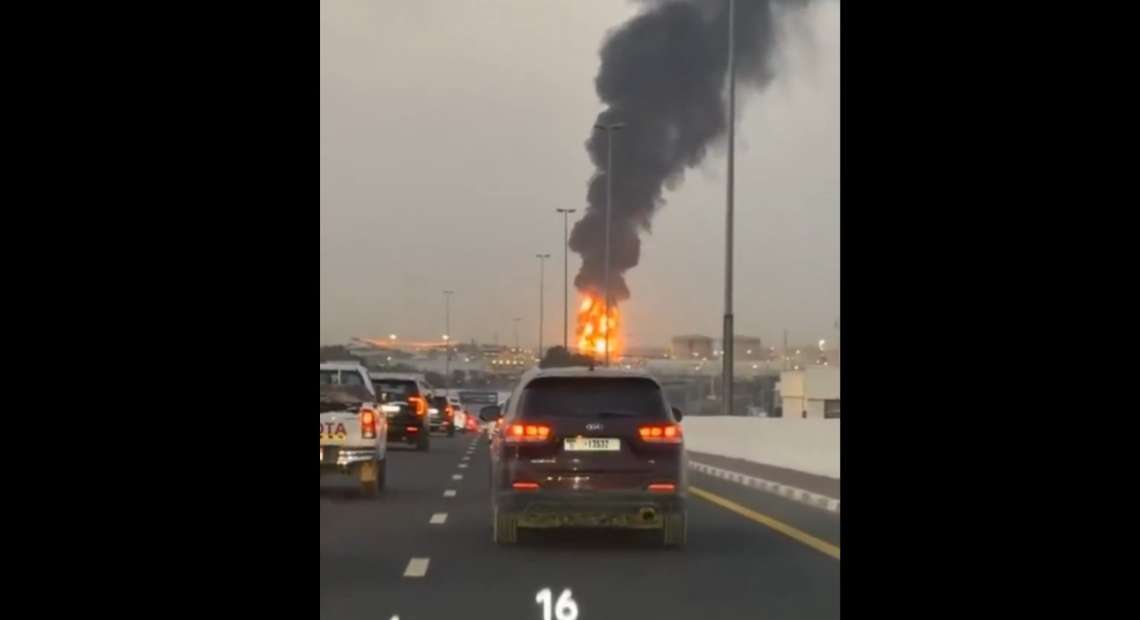
At the same time, aviation operations in Dubai were briefly disrupted following a “drone-related incident” near the airport. A fire broke out in the vicinity, prompting authorities to temporarily suspend flights as a precautionary measure.
Dubai International Airport, widely recognised as the world’s busiest airport for international passengers, experienced delays and several cancellations before normal operations gradually resumed. The incident marked the third security-related episode near the airport since the start of the regional conflict.
Security concerns intensified further after a rocket strike on a vehicle killed a Palestinian national on the outskirts of Abu Dhabi. The Abu Dhabi Media Office said the attack took place in the Al Bahia area, north of the UAE capital.
Air defences intercept missiles and drones
The UAE’s Defence Ministry reported that its air defence systems intercepted six ballistic missiles and 21 drones during Monday’s wave of attacks. Officials say the country has faced an unprecedented barrage since the escalation of hostilities in late February.
According to authorities, more than 1,900 missiles and drones have been launched toward the UAE since the outbreak of the conflict involving US and Israeli strikes on Iran. Defence systems across the country have intercepted the vast majority of the incoming threats.
The attacks have placed Gulf states on heightened alert, as governments seek to shield critical infrastructure and reassure residents and investors of the region’s stability.
Despite the continued threats, UAE authorities emphasised that emergency response mechanisms remain fully operational and that national security systems are functioning effectively. Officials also urged the public to rely on verified information from official sources and avoid spreading rumours that could cause unnecessary panic.
Gulf leaders call for de-escalation
The escalating crisis has also triggered urgent diplomatic engagement among Gulf leaders.
During a phone call on Monday, UAE President H.H. Sheikh Mohamed bin Zayed Al Nahyan and Saudi Crown Prince Mohammed bin Salman discussed the rapidly deteriorating regional situation and the risks posed to global security.
According to the Emirates News Agency, both leaders stressed the urgent need to halt military escalation and called for a return to dialogue and diplomacy to resolve the crisis.
They warned that continued conflict could destabilise not only the Middle East but also global energy markets and international security.